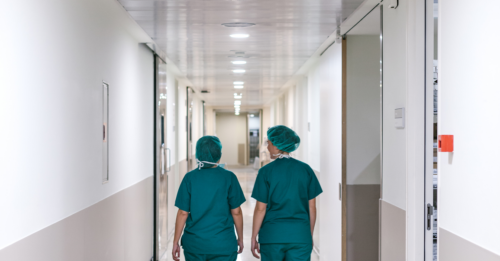
With pressure mounting on healthcare systems across the United States due to the coronavirus outbreak, it has been the country’s larger population centers that have been especially hard hit. Cities are experiencing or anticipating severe shortages of healthcare workers and in many cases, immigrants are helping to fill those gaps. While immigrants make up 16.4 percent of all workers in the healthcare industry nationally, they make up nearly twice this share in the largest 15 metro areas in the United States. For example, in the current epicenter of coronavirus outbreak, the New York City metropolitan area, 41.8 percent of all healthcare workers—or more than 480,000 healthcare workers—are immigrants.
Figure 1: Immigrant Healthcare Workers in the Largest 15 Metropolitan Areas Source: NAE Analysis of 5-year sample from the 2018 American Community Survey
Metropolitan Area
Number of Immigrant Healthcare Workers
Immigrant Share of All Healthcare Workers
Miami
163,433
51.0%
New York
480,742
41.8%
Los Angeles
233,270
40.1%
San Francisco
82,811
36.6%
Washington, DC
100,441
30.2%
Riverside-San Bernadino
47,363
26.4%
Houston
82,854
26.3%
Boston
101,723
23.4%
Seattle
42,615
22.3%
Chicago
105,552
21.0%
Dallas-Fort Worth
64,737
18.8%
Phoenix
32,362
15.0%
Philadelphia
55,128
14.4%
Atlanta
41,720
13.5%
Detroit
28,636
11.6%
Unfortunately, a shortage of healthcare workers is not new news. Already in 2018, the United States had an average of 12.3 open healthcare jobs per unemployed healthcare worker. For healthcare practitioners — occupations that require higher levels of training and certification, including physicians, surgeons, registered nurses, and specialists — the ratio was even higher, with 27 open healthcare practitioner jobs for each unemployed healthcare practitioner.
We find that across different metro areas, the severity of the shortage varies from moderate to critical. The shortage of healthcare workers is especially pronounced in Atlanta, Boston, Phoenix, Riverside, San Francisco, and Seattle metro areas. In Atlanta and Seattle, there were over 20 open healthcare jobs per unemployed healthcare worker, about twice as many as the national average of 12.3. Similar to the national picture, healthcare practitioners were in high demand with 10 of the 15 largest metro areas having more than 20 open healthcare practitioner jobs for every unemployed healthcare practitioner. Atlanta had the largest shortage with 60.3 open healthcare practitioner jobs per unemployed healthcare practitioner.
Figure 2: Shortage of Healthcare Workers in the Largest 15 Metropolitan Areas Source: Burning Glass Labor Insights and NAE Analysis of 5-year sample from the 2018 American Community Survey *The number of unemployed healthcare practitioners in the Seattle metropolitan area were so few were are unable to generate reliable estimates for this ratio.
Metropolitan Area
Ratio of Open Healthcare Jobs to Unemployed Healthcare Worker
Ratio of Open Healthcare Practitioner Jobs to Unemployed Healthcare Practitioner
Atlanta
27.8
60.3
Seattle
21.1
n.a.*
Boston
18.6
41.7
Phoenix
16.3
32.7
San Francisco
15.3
28.2
Riverside-San Bernadino
15.0
26.9
Dallas-Fort Worth
12.2
22.2
Detroit
12.0
33.3
Houston
9.4
21.0
Los Angeles
8.4
17.4
Miami
8.4
17.7
Chicago
7.6
20.6
Philadelphia
7.6
16.4
Washington, DC
4.7
10.8
New York
3
7.9
Looking at individual occupations, we see that in almost every one of the largest 15 metro areas, immigrants make up at least 20 percent of the nurses, physicians, and surgeons. The immigrant share of the healthcare workforce is even larger for metro areas on coasts both sides of the country. In Los Angeles, Miami, New York, Riverside, San Francisco, and Washington D.C., over 30 percent of health aides, nurses, physicians, and surgeons were immigrants in 2018.
In New York, the current epicenter of the outbreak, these numbers are even larger, with 69 percent of health aides, 42.5 percent of nurses, 39.8 percent of physicians & surgeons, and 44.1 percent of respiratory therapists being immigrant workers.
Figure 3: Immigrant Share of Select Occupations in the 15 Largest Metros Source: NAE Analysis of 5-year sample from the 2018 American Community Survey
Metropolitan Area
Health Aides
Nurses
Physicians and Surgeons
Respiratory Therapists
Atlanta
20.6%
14.0%
29.0%
n.a.
Boston
46.3%
15.8%
31.7%
n.a.
Chicago
23.3%
22.8%
33.8%
28.9%
Dallas-Fort Worth
23.0%
21.9%
31.4%
18.2%
Detroit
9.2%
12.0%
33.6%
n.a.
Houston
25.6%
30.8%
46.3%
n.a.
Los Angeles
56.3%
45.2%
41.5%
41.0%
Miami
77.1%
51.2%
47.6%
54.3%
New York
69.0%
42.5%
41.5%
44.1%
Philadelphia
21.5%
13.6%
27.1%
n.a.
Phoenix
21.0%
14.8%
28.5%
n.a.
Riverside-San Bernadino
32.1%
32.5%
43.9%
n.a.
San Francisco
60.1%
40.0%
29.5%
n.a.
Seattle
45.0%
20.3%
28.7%
n.a.
Washington, DC
46.6%
32.8%
34.5%
n.a.
During an ongoing health crisis, such as Covid-19, the ability to communicate with each patient is crucial — especially in large urban areas with diverse populations. We find that immigrant healthcare workers are especially well-suited to this challenge. We find that the majority of them are bilingual, speaking both English and at least one more language. In the New York metro area, three-fourths of all physicians, surgeons, and respiratory therapists speak more than one language, making them especially able to effectively serve the population around them.
Figure 4: Share of Immigrant Workers that Are Bilingual Source: NAE Analysis of 5-year sample from the 2018 American Community Survey
Metropolitan Area
Health Aides
Nurses
Physicians and Surgeons
Respiratory Therapists
Atlanta
49.3%
59.2%
62.6%
n.a.
Boston
67.4%
75.5%
73.0%
n.a.
Chicago
75.0%
80.1%
76.3%
n.a.
Dallas-Fort Worth
68.7%
77.0%
76.7%
n.a.
Detroit
64.1%
71.8%
82.8%
n.a.
Houston
72.3%
77.1%
76.5%
n.a.
Los Angeles
71.1%
84.4%
74.8%
n.a.
Miami
47.5%
66.4%
79.1%
n.a.
New York
38.9%
63.2%
76.9%
73.5%
Philadelphia
54.4%
69.9%
73.7%
n.a.
Phoenix
73.2%
70.5%
71.6%
n.a.
Riverside-San Bernadino
71.1%
79.5%
77.8%
n.a.
San Francisco
75.1%
79.9%
73.1%
n.a.
Seattle
80.6%
74.1%
58.6%
n.a.
Washington, DC
71.8%
68.5%
79.2%
n.a.
The fight against Covid-19 has only increased the burden on our healthcare system, increasing the size of these labor shortages, and making our immigrant healthcare workers even more essential to making it through this crisis.