 The American Immigration Council is a non-profit, non-partisan organization.
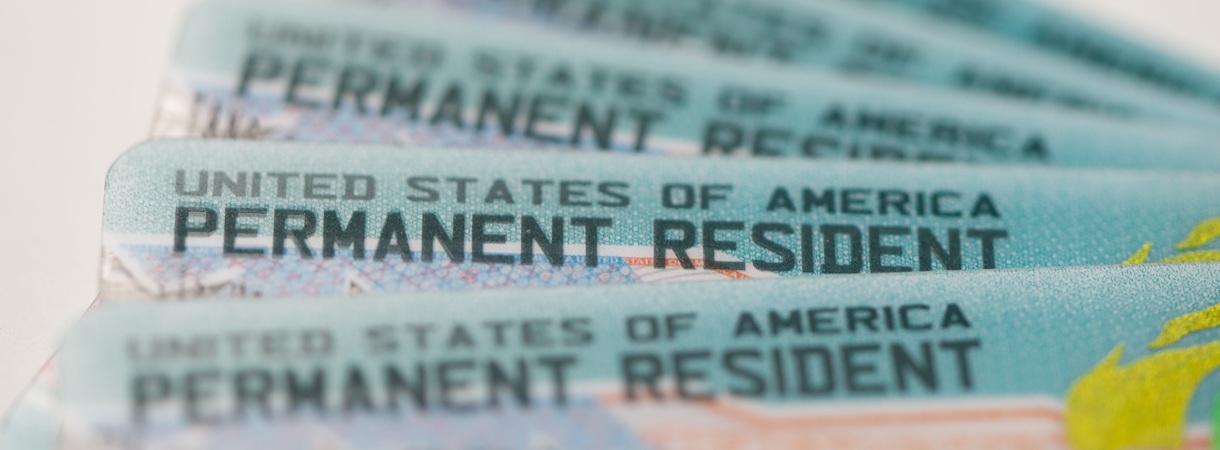
 Under the second Trump administration, U.S. Citizenship and Immigration Services (USCIS) has repeatedly paused the processing of applications for all types of immigration benefits, including applications for legal permanent residency, commonly referred to as adjustment of status or getting your green card.
One of the first suspensions occurred between March and April 2025, particularly impacting people with asylum or refugee status who were in the process of applying for their green cards. The Trump administration claimed it implemented this pause to conduct additional vetting of those applicants. However, it remains unclear what additional vetting the administration implemented since these green card applicants had already been extensively vetted at the time immigration authorities approved their asylum or refugee applications.
To find out exactly what happened, the American Immigration Council and the American Immigration Lawyers Association filed a request for agency records under the Freedom of Information Act (FOIA). This is what the agencies disclosed.
USCIS paused the processing of adjustment of status applications without telling the public
Discussions about placing a hold on green card applications had been ongoing as of March 7, 2025. At that point, the Refugee Operations unit of USCIS was conducting a review of individuals applying for green cards who had refugee status and were nationals of Ecuador, Venezuela, El Salvador, Honduras, and Guatemala.
Our FOIA request surfaced emails discussing this potential pause. As the subject of the email suggests, the re-review was happening because of suspected gang affiliations of certain applicants.
Then on March 25, 2025, media reports surfaced confirming that USCIS suspended the processing of green card applications filed by people with asylum and refugee status. USCIS failed to inform the public about this suspension or give any details about how it would be implemented.
In fact, documents obtained through the FOIA request revealed that the pause began on March 21 and lasted two weeks.
A March 21 email to agency staff instructed USCIS district and field offices to place a hold on “all” green card application adjudications.
However, the pause in processing of adjustment of status applications applied much more narrowly. A memo from USCIS’ Field Operations Directorate indicated that the re-reviews of refugee cases were focused on applicants from Ecuador, Venezuela, El Salvador, Honduras, and Guatemala.
According to the government’s records, there were 115,454 green card applications filed by asylees and refugees pending with USCIS as of March 26, 2025. All of these applicants initially would have been impacted by the suspension. USCIS circulated a spreadsheet with the applications that were subject to the hold. The spreadsheet shows that the number of applicants placed on hold was much lower, i.e. over 18,000 applications. The data demonstrates that the suspension also impacted applicants from Bolivia, Brazil, Chile, Colombia, Ecuador, El Salvador, Guatemala, Honduras, Mexico, Peru, and Venezuela. While the vast majority of impacted applicants were from the originally designated countries, roughly 17% were from countries other than the original five. The highest number of applicants who experienced pauses in their applications were from Venezuela at 26.2%.
USCIS lifted the suspension, but not for everyone
Records show that USCIS lifted the suspension of green card application processing for these individuals on April 10, 2025. Unsurprisingly, the agency did not notify the public that the suspension was over.
On April 14, despite USCIS lifting the suspension, the agency circulated a list of 467 individuals whose green card applications remained on hold due to “public safety concerns.”
According to agency officials, the concerns were based on the Trump administration’s Executive Order 14157, which designated “international cartels” and gangs such as Tren de Aragua and MS-13 as foreign terrorist organizations. Notably, these green card applications were filed by refugees rather than asylees. The records reviewed do not reveal whether USCIS lifted the holds on these applications.
The final outcome of this suspension in processing green card applications
In its final statement to the press in March 2025, USCIS justified the pause by claiming it needed to do additional vetting of these applicants. In November 2025, agency officials issued a memo to staff instructing them to implement new worksheets that would help officers determine whether an applicant for adjustment of status required an interview. Some of the questions on the worksheets confirm that any links between the applicant and a cartel could lead to an interview. For example, an interview would be required if:
- “Evidence in the record, to include evidence or testimony provided in support of the underlying asylum claim, suggests that the alien may have encounters or membership with any terrorist organization or entity known to engage in terrorism including designated transnational criminal organizations.”
- “Evidence in the record suggests that the alien may have entered the United States with assistance from any terrorist organizations, including designated transnational criminal organizations.”
- “Evidence in the record suggests that the alien may be an egregious or non-egregious public safety concern.”
Complete copies of the worksheets can be found here.
The suspension in processing green card applications had applicants on edge. Applicants and their legal representatives were left in the dark about whether the suspension applied to their cases as the agency failed to provide them, or the public, with any information about this suspension. Further, the suspension added to the wait time of individuals whose applications had been pending for years and who already faced “vetting” during the process they endured to gain asylum or refugee status.
If not for the media coverage, the suspension would have been implemented without any oversight. As the Trump administration implements pauses in the adjudication of other types of benefit applications and implements other vetting measures, the details uncovered through this FOIA request are crucial. With this information, elected officials and the public can demand to know if these suspensions and vetting are necessary or whether they are simply another section of the Trump administration’s invisible wall.