 The American Immigration Council is a non-profit, non-partisan organization.
 The Supreme Court issued its first immigration opinion of the current term in Blanche v. Lau on Tuesday. The case is about what protections green card holders receive when they come home to the United States after traveling abroad.
Muk Choi Lau has been a green card holder (a lawful permanent resident or LPR) for nearly two decades. In 2012, Mr. Lau was charged with selling counterfeit shorts. While those charges were still pending, he took a brief trip to China. When he returned home, a border officer at the airport asked him about his pending charge and Mr. Lau denied committing a crime. But the agent still paroled rather than admitted him into the United States and took away his physical green card. The government kept him in parolee status for years until he was eventually convicted of counterfeiting. Then they started removal proceedings based on that conviction, arguing that because he had left the country and returned, he was subject to stricter grounds of deportation than if had he never left the country in the first place.
In the Lau opinion, the Supreme Court said that what the government did was legal.
Why does this matter?
It matters because the government left Mr. Lau in legal limbo without any actual evidence that he committed a crime. By paroling him, instead of admitting him, the government left him without reliable proof of his status, exposed him to harsher removal grounds, and prevented him from further travel—all without any certainty as to whether he would ever be convicted or how long he would remain in parolee status. By treating Mr. Lau this way, the government undermined the special protections LPRs are supposed to receive when they travel. And, as Justice Jackson noted in her dissent, the Supreme Court’s decision may be a “massive blank check” to the government to do the same thing to the millions of other LPRs living in this country who want to take a trip abroad.
What does this all mean?
Congress gave LPRs special protections when they travel. This is because an LPR has gone through a complicated application process and thorough vetting to obtain their status, which gives them permission to live and work in the United States permanently—among other special privileges.
LPRs—unlike other noncitizens—generally cannot be treated like they are applying for admission when they return to the United States. They have already been “admitted.”
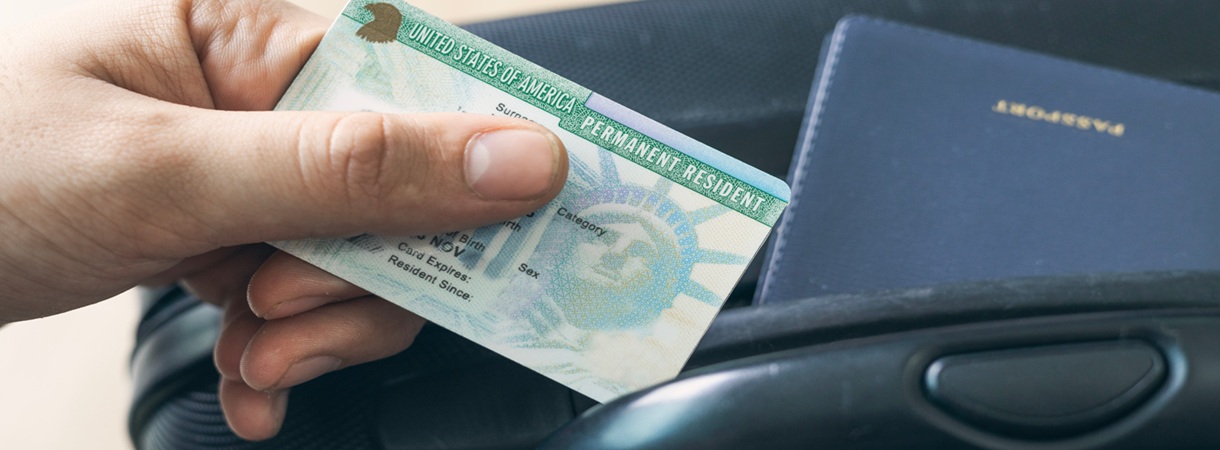
This is important for many reasons. The government can detain someone who is applying for admission. The government can remove someone who is applying for admission based on inadmissibility charges, which are generally more severe than the deportability charges that apply to people who have been admitted. The government can parole someone who is applying for admission, which puts them in a legal limbo and, for LPRs, means they lose their physical green card. Without their physical card, LPRs lack reliable proof of identity and immigration status needed to work, open bank accounts, obtain health insurance, and enroll in school.
There are six exceptions to the rule that LPRs are not applying for admission when they return from abroad: (1) if they’ve abandoned their LPR status; (2) if they left the U.S. for more than 180 days; (3) if they committed a crime during their travel; (4) if they left the U.S. while they were in deportation or extradition proceedings; (5) if they committed certain crimes in the U.S. that make them inadmissible; and (6) if they try to enter the U.S. without inspection. Mr. Lau’s case was about exception number five – whether he had committed a crime that made him inadmissible.
Importantly, however, even an LPR who is applying for admission gets full immigration court proceedings before they can actually be removed from the United States.
What were the arguments in Mr. Lau’s case? And what did the Supreme Court decide?
Mr. Lau argued that the border officer needed clear and convincing evidence that he actually committed the crime charged at the time he arrived at the airport in order to treat him as if he were applying for admission. A pending charge alone is not proof of guilt—we are all innocent until proven guilty. The government argued that it was enough to have that evidence at the time of his immigration court hearing years later.
The Supreme Court held that border officers at the airport did not need clear and convincing evidence that he committed the crime and that the government properly treated Mr. Lau as an applicant for admission.
What will be the impact of the decision on other LPRs?
At a minimum, it is likely that border officers will treat more LPRs as applicants for admission based only on pending criminal charges—and those LPRs will face legal limbo while their criminal proceedings move forward.
But the Supreme Court decision left open a lot of questions. What standard, if any, are border officers supposed to apply when they decide whether to treat an LPR as applying for admission? Can border officers parole LPRs without even evidence of a pending criminal charge?
Almost certainly, the government will argue that the Lau decision applies to the other five exceptions to the protections for returning LPRs. This means that border officers could treat LPRs as applying for admission for abandoning their status or committing a crime abroad without clear and convincing evidence of those charges. This could mean more LPRs will be detained following brief trips abroad and face charges of inadmissibility in immigration court proceedings.
Whether this ruling will deter more LPRs—many of whom must go abroad for work or to see family—from exercising their right to travel remains to be seen. But giving more power to border officers—agents who routinely abuse the power they already had—is likely to be chilling to LPRs who fear losing their right to live permanently in the United States, the country they consider their home.