Agriculture
Agriculture and farming is a cherished part of American identity and remains an important part of the American economy. In 2020, the agriculture, fishing, and forestry industries contributed more than $175 billion to U.S. GDP and supported more than 2.3 million workers. The health of America's farms and the agriculture industry, however, is tied directly to immigration. Farmers frequently worry about finding enough workers as few Americans seem willing to take on the most difficult and physical farm jobs—particularly those harvesting fresh fruits and vegetables. Yet the H-2A visa, the only agricultural visa currently available to American farms, is too expensive and cumbersome to work for many U.S. growers. We explore this issue—and the way it costs our economy—below.

Farm Journal’s AG Pro: Trump Administration Immigration Policies Could Hamper Some Ag Sectors
In addition to trade issues, potential uncertainty associated with Trump administration immigration policies has some sectors of the agricultural economy anxious. Immigration Policies: Agricultural Implications Caitlin Dickerson and Jennifer Medina reported in Friday’s New York Times that, “Jeff Marchini and others in the Central Valley here [Merced, Calif.] bet their… Read More
How this garlic farm went from a labor shortage to over 150 people on its applicant waitlist
The biggest fresh garlic producer in the nation is giving its employees a hefty raise, reflecting the desperation of farmers to attract a dwindling number of farmworkers. Christopher Ranch, which grows garlic on 5,000 acres in Gilroy, Calif., announced recently that it would hike pay for farmworkers from $11 an… Read More
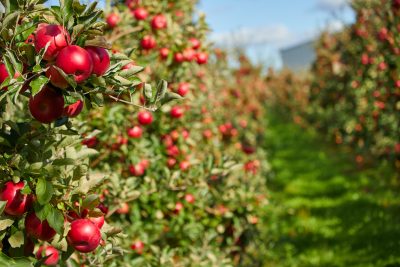
American Apple Pickers? Not Anymore, Says Sixth-Generation Grower
For the past six generations, Kenny Barnwell’s family has been in the apple-growing business; in fact, Barnwell has never lived more than 100 yards from an apple orchard. As a young boy, he remembers his grandmother’s sisters visiting to help pick apples, along with a… Read More
Western Michigan University’s Director of the College Assistance Migrant Program is Thankful for President Reagan
From the age of 12, Adriana Cardoso-Reyes spent her summers and weekends picking blueberries alongside her parents and siblings. She was one of the almost 100,000 migrant workers who support Michigan’s $100-billion-a-year food and agriculture industry. Now a trained social worker and the director of Western… Read More
Third-Generation Apple Farmer Barney Hodges Can’t Find Enough Americans to Harvest His 200-Acre Farm
Barney Hodges III is a third-generation apple farmer and the second generation to run his family’s farm in Vermont. Like his father and his grandfather before him, Hodges depends on migrant labor to keep the family business alive—a farm that pumps $3 million into the local economy each year. These… Read More
Immigrant Labor Is Vital to the Survival of Michigan’s Farmers, Says Farm Bureau President
Michigan has more than 52,000 farmers sustaining its agricultural economy — but without immigrant labor, that could start to decline, says Michigan Farm Bureau president Carl Bednarski. In recent years, it’s gotten much harder for farmers to attract either local or migrant workers to bring in their harvests. Read More
After Spending $1.5 Million on a Hog Farm, Dutchman Learns He ‘Has Not Invested Enough’ to Stay
As the owner of one of Ohio’s largest hog farms, Meindert Van den Hengel contributes significantly to the economy. By the time he finishes building his third barn this year, he will be one of the state’s largest permitted hog farmers. He will have 7,500 hogs across three barns, for… Read More
Small Farm Town in Central Illinois Embraces Immigrants and Prospers
In the aftermath of a state budget crisis, Tim Flavin’s government-funded immigration and minority service group, Mi Raza, almost had to shut down. But the Arcola, Illinois, organization stayed open thanks to a generous outpouring from the very community it served. Immigrants who took classes at Mi Raza donated to… Read More
Kansas Depends on Its Immigrant Population, Says Former Kansas Secretary of Agriculture
Walk into pretty much any farming, livestock, or agribusiness operation in Kansas, and you’ll find managers who are desperate to expand their workforce — and also plenty of immigrants who’ve come to the state in search of jobs, says former Kansas Agriculture Secretary Allie Devine. With population levels plateauing, and… Read More
Conservative Texan Opens His Ranch to Kids Who Crossed the Border Alone
Walker family on the ranch. Ed Walker is a longtime political conservative and the owner-operator of Sabine Creek Ranch, a youth retreat center in Royse City, Texas. The ranch has hosted hundreds of children for church and school camps since 2003. But in 2015, it welcomed a new group: It… Read More
Immigrants and American Farms
In 2019, more than half of all hired farmworkers in the United States were immigrants, or roughly 450,000 workers. In many states known for their fresh produce, immigrant farm laborers make up large shares of miscellaneous agriculture workers—the occupation that includes those hand picking crops in the field.
Share of Miscellaneous Agricultural Workers in Crop Production, Undocumented, 2019
Farm Labor Shortages
In recent years, the number of new immigrants arriving in the country to work in agriculture has fallen by 75 percent. Rising wages indicate this has led to a major labor shortage on U.S. farms—making it difficult for many growers to stay in business or expand their operations. The workers left are also aging rapidly, meaning shortages will likely worsen as they retire.
Decline in Key States
The Aging of Foreign-Born Farm Workers
The Cost of Our Farm Labor Shortage
Because agriculture is intertwined with so many other industries in our economy—such as transportation, packing, and irrigation—a shortage of farm workers hurts the U.S. economy more broadly. We estimate U.S. growers would have produced $3.1 billion more in fresh fruits and vegetables per year by 2014 had farm labor not been an issue. The table in this section shows the costs to the U.S. economy for failing to meet this target.
Rising Imports
In recent years, there has been a dramatic increase in the amount of fresh fruits and vegetables Americans eat that is imported. Although many factors play into this phenomenon, we estimate labor shortages alone explain 27 percent of the market share decline experienced by U.S. growers from 1998-2000 to 2010-2012. Had growers maintained their hold on the domestic market, an estimated 89,300 additional U.S. jobs would have been created by 2012.
Jobs Americans Won’t Do
U.S. fresh produce growers have long said that few, if any, American workers are willing to take on the most arduous farm jobs. We studied this issue in North Carolina, examining how many American workers actually applied for heavily advertised farming positions in 2011, a period when the country was still recovering from the recession. The table in this section shows the results.
The H-2A Visa
The H-2A visa program, the only visa currently available to bring in temporary agriculture workers, is too cumbersome and unworkable for many farms. Farmers desperate for workers frequently go through the application process only to receive their laborers late, resulting in crop loss.
Sources:
1 “Why Domestic Agriculture Needs New, Workable Farm Labor Alternatives Now,” National Council of Agricultural Employers, 2011. Available online.
2Ibid.
3Ibid.
Your support moves the American story toward justice, dignity, and belonging.
America's story is an immigrant story.