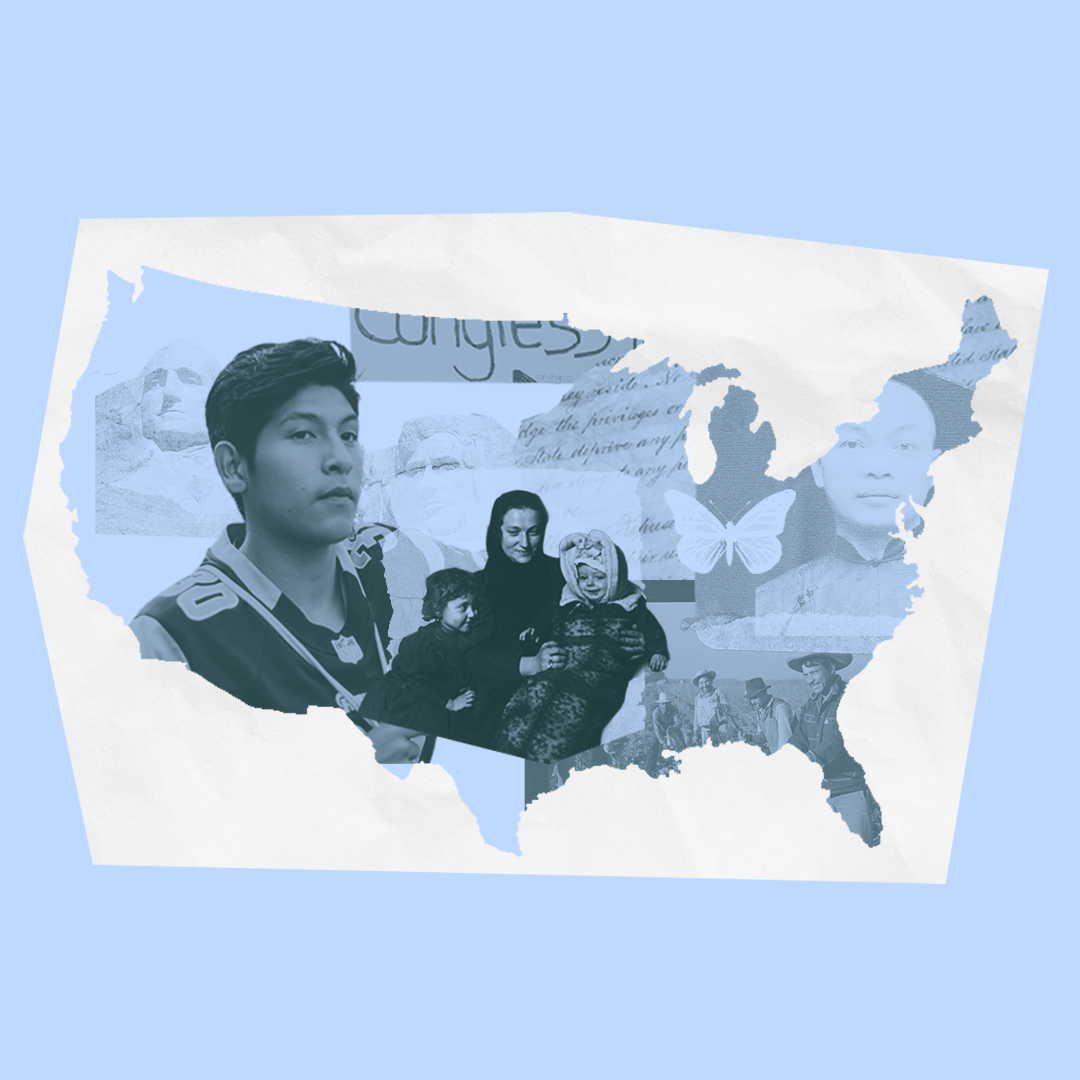
Birthright Citizenship
Key Takeaways
-
- Birthright citizenship is guaranteed by the Fourteenth Amendment, which provides that everyone born in the United States is a U.S. citizen, regardless of their parents’ immigration status.
-
- The U.S. Supreme Court reaffirmed birthright citizenship on June 30, 2026, striking down President Trump’s executive order and confirming that children born in the United States are U.S. citizens.
-
- Birthright citizenship has been settled constitutional law for more than 125 years. The president cannot end it — doing so would require a constitutional amendment.
What Is Birthright Citizenship?
Birthright citizenship is the principle that people born in the United States are Americans—full members of our society from the moment they are born. It reflects a simple and powerful idea: if you’re born here, you belong here. In the United States, birthright citizenship is guaranteed by the Fourteenth Amendment to the Constitution, adopted in 1868 in the aftermath of the Civil War. The amendment states:“All persons born or naturalized in the United States, and subject to the jurisdiction thereof, are citizens of the United States and of the state wherein they reside.”This constitutional guarantee was intentionally written to ensure equality under the law, regardless of race, ancestry, or parentage. It was enacted to overturn the Supreme Court’s infamous 1857 Dred Scott decision, which had declared that Black people born in the United States could never be citizens.
How Birthright Citizenship Works in the United States
The United States recognizes two primary paths to citizenship at birth:Birthplace‑Based Citizenship (Jus Soli)
The U.S. follows a principle known as jus soli, or “right of the soil,” meaning that nearly everyone born on U.S. soil is a U.S. citizen, regardless of their parents’ immigration status. The Supreme Court confirmed this interpretation over a century ago, in United States v. Wong Kim Ark (1898), holding that children born in the U.S. to immigrant parents are citizens at birth. The only narrow exceptions are children born to foreign diplomats, who are not considered “subject to the jurisdiction” of the United States.Ancestry‑Based Citizenship (Jus Sanguinis)
U.S. law also allows children born abroad to U.S. citizens to acquire citizenship through their parents, provided certain legal requirements are met. Together, these rules create a clear, fair, and race‑neutral standard for who is an American—one that does not depend on lineage, wealth, or skin color.Why Birthright Citizenship Matters
It Guarantees Equality and Prevents a Two‑Tiered Society
Birthright citizenship ensures that all people born in the United States are treated equally under the law. Weakening or ending this principle would create a dangerous two‑tiered system in which some U.S.‑born children could be denied citizenship because of who their parents are. Millions of U.S. citizen children have at least one immigrant parent. Stripping birthright citizenship could leave many children stateless or vulnerable to deportation from the only country they have ever known.It Strengthens Belonging and Social Cohesion
Birthright citizenship promotes a shared sense of belonging. When people are recognized as full members of society, they are more likely to invest in their communities, pursue education and careers, and participate in civic life. This inclusion strengthens democracy and brings communities together. Creating a permanent subclass of people who grow up in the U.S. but are denied full membership undermines national unity and weakens the social fabric.It Reflects Core American Values
Birthright citizenship embodies deeply held American ideals of fairness, opportunity, and non‑discrimination. It affirms that citizenship is not inherited through bloodlines or ancestry, but grounded in shared commitment and equal rights. Most countries in the Western Hemisphere recognize some form of birthright citizenship. Ending it would make the United States an outlier and betray a long‑standing constitutional tradition.Birthright Citizenship and the Courts Today
On June 30, 2026, the U.S. Supreme Court issued a ruling in Trump v. Barbara affirming that children born within the territory of the United States are U.S. citizens. The opinion invalidated the Trump administration’s Executive Order 14156, which sought to exclude certain children born in the United States from obtaining U.S. citizenship. In January 2025, the Trump administration sought to end birthright citizenship for 1) children of an undocumented mother and a father who is not a citizen or lawful permanent resident; and 2) children of a mother who is a temporary visitor and a father who is not a citizen or lawful permanent resident. Several lawsuits were immediately filed to block implementation of the executive order. The Supreme Court affirmed that the Fourteenth Amendment guarantees birthright citizenship for those born in this country. Birthright citizenship has been settled law for more than 125 years. Ending or limiting it would require either:- A constitutional amendment (which requires approval by two‑thirds of Congress and ratification by three‑quarters of the states), or
- A radical departure by the Supreme Court from long‑standing precedent interpreting the Fourteenth Amendment.
Bottom Line
Birthright citizenship provides a simple, fair, and unifying rule: if you are born in the United States, you are an American. It ensures equal treatment under the law, prevents statelessness, strengthens communities, and reflects our nation’s highest ideals. Protecting birthright citizenship means protecting the idea that everyone belongs—and that our future is stronger when we uphold equality for all.
Supreme Court Expresses Skepticism at Trump’s Effort to Eliminate Birthright Citizenship
- Birthright Citizenship
- April 1, 2026
Over 150 years ago, with the embers of the Civil War still smoldering, members of Congress gathered to write the 14th Amendment.…
Read More
Breaking Down Trump’s Attempt to End Birthright Citizenship
- Birthright Citizenship
- February 7, 2025
On his first day in office, President Donald Trump issued an executive order aimed…
Read More
What Does the Supreme Court Ruling on Birthright Citizenship Mean?
- Birthright Citizenship
- June 27, 2025
The Supreme Court issued a decision in the CASA v. Trump case on Friday,…
Read More

Ending Birthright Citizenship Could Put All Americans’ Nationality in Jeopardy
On Monday night, President Trump told reporters that he intended to end birthright citizenship and claimed that he could do so with an executive order. Birthright citizenship comes from the Fourteenth Amendment to the Constitution, which states that “Any person born or… Read More

American Immigration Council on President Trump’s Plan to End Birthright Citizenship
President Donald Trump said yesterday in an interview that he plans to sign an executive order to eliminate birthright citizenship, a principle enshrined in the U.S. Constitution that grants citizenship to any person born within the territory of the United States. Read More

Texas Ends Attempt to Deny Birth Certificates to Children of Immigrants
More than a year ago, Texas county officials began to require that foreign passports presented by parents seeking to obtain their child’s birth certificate include a valid U.S. visa. The state also ended its practice of accepting Mexican “matriculas” as a form of identification. As a result, many… Read More

Giving the Immigration Facts a Fighting Chance
As we move through the 2016 presidential election cycle, the issue of immigration will continue to be a central topic of the debate. The United States is at a tipping point after more than two decades without meaningful upgrades to its immigration system. Current U.S. law does not provide sufficient… Read More

The Battle Over Birth Certificates in Texas
In May, a group of undocumented parents, represented by South Texas Civil Rights Project and Texas Rio Grande Legal Aid, filed a lawsuit against the State of Texas for denying their children, born in the state, birth certificates. The legal team also asked the judge to issue a preliminary injunction—a… Read More

Birthright Citizenship: What It Is and Why We Need to Preserve It
There has been a media frenzy over one of the more draconian components of Republican presidential contender Donald Trump’s immigration policy platform. In his plan, released earlier this week, he writes that the U.S. should “End Birthright Citizenship.” However, despite the attention Trump is getting for this, he is… Read More
Ending Birthright Citizenship: (Still) Unconstitutional, Unwise, Unworkable, and Un-American
The House Judiciary Committee will hold a hearing entitled “Birthright Citizenship: Is It The Right Policy For America?” The hearing will question whether those born in America will automatically be citizens, as they have been for over 150 years. Undoubtedly, the hearing will feature the same counterproductive anti-immigrant… Read More

Latino Voters Poised to Again Play Key Role in Elections
One year after the 2012 elections, in which the Latino vote played a pivotal role in the re-election of President Obama, the Republican Party is still attempting to figure out how to attract Latinos and new immigrant voters to the fold. Tomorrow, voters head to the polls to decide several state elections and the gubernatorial races in New Jersey and Virginia, and it looks like how a politician talks about immigration will continue to be a litmus test for Latino and Asian voters—many of whom see immigration as a personal issue. Consequently, the contrast between the Virginia and New Jersey races couldn’t be more telling. Read More
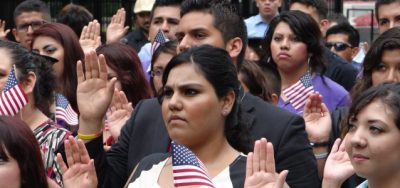
Taking the Important Leap to Citizenship
Each year on September 17, the United States observes Constitution Day and Citizenship Day, a combined event that commemorates the anniversary of the nation’s constitution and recognizes all those who are or have become U.S. citizens. It is considered a time for Americans to reflect on the importance of the rights and responsibilities of citizenship, as well as what it means to be a U.S. citizen. However, it’s also an important time to applaud those who have worked hard to become citizens, while exploring ways to remove barriers for those who are eligible, but still haven’t taken the leap. Read More

Federal Judges Remind Government to Consider Prosecutorial Discretion
Prosecutorial discretion is the authority of a law enforcement agency or officer to decide whether and to what degree to enforce the law in particular cases. The Deferred Action for Childhood Arrivals (DACA) initiative continues to be a successful example of prosecutorial discretion in the immigration context. However the Department of Homeland Security (DHS) often ignores other non-DACA-related cases where prosecutorial discretion would be equally appropriate. Read More
Your support moves the American story toward justice, dignity, and belonging.
America's story is an immigrant story.