Border Enforcement
Migration at the border is a multifaceted issue, challenging the U.S. to secure our borders while upholding the human rights of individuals seeking safety and better opportunities. Balancing national security with compassion and our legal obligations to asylum seekers presents intricate dilemmas, and we collaborate with policymakers to advance bipartisan, action-oriented solutions.
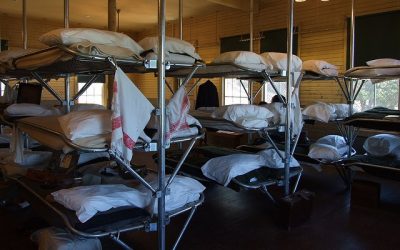
Detention Bed Mandate is Just One Example of How Immigration is Being Criminalized
For more than a century, study after study has confirmed two simple yet powerful truths about the relationship between immigration and crime: immigrants are less likely to commit serious crimes or be behind bars than the native-born, and high rates of immigration are not associated with higher rates of either violent or property crime. Unfortunately, immigration policy is frequently shaped more by fear and stereotype than by empirical evidence, which is why immigrants are so often treated like dangerous criminals by the U.S. immigration system. Whole new classes of “felonies” are created which apply only to immigrants, deportation is viewed as a just punishment for even minor crimes, and policies to end unauthorized immigration become more and more punitive rather than more rational and practical. In short, immigration itself is being criminalized. Read More

Understanding DACA’s Education Requirement
When the Deferred Action for Childhood Arrivals (DACA) program was first announced, it was clear that individuals would have to meet some sort of education requirement in order to obtain the program’s many benefits, including a two-year renewable reprieve from deportation, work authorization, a social security number, and—in nearly every state—the chance to apply for a driver’s license. What was unknown was how the immigration agency would address the question of individuals who were unable to finish high school. Would they be categorically excluded from DACA? Or would the agency provide an incentive for those folks to re-enroll in school? Fortunately, the government chose the latter. In doing so, it gave an estimated 400,000 people who met the DACA guidelines but didn’t finish high school a shot at getting DACA. Many of these individuals are thought to be among the 1.2 million who haven’t yet taken advantage of the program. Read More

Report Exposes Treatment of Asylum Seekers in U.S. Detention
Asylum seekers—often scarred by physical and mental trauma—seek safety and refuge from genocide, religious persecution, organized violence, or other life-threatening conditions. They embark on dangerous and lengthy journeys in hope of being welcomed at our borders. Instead, upon arrival, asylum seekers routinely are arrested, shackled, and sent to detention facilities where they may be subjected to dehumanizing and degrading treatment. A recent report by the Center for Victims of Torture (CVT) and the Torture Abolition and Survivor Support Coalition International (TASSC), Tortured and Detained: Survivor Stories of US Immigration Detention, chronicles the stories of asylum seekers and details the physical and psychological agonies of detention. Read More

How Immigrants on a Pathway to Citizenship can Revitalize Rust Belt Cities
Like Rust Belt cities such as Baltimore and Detroit, rural towns across America have experienced population declines in recent decades. Some places, however, are an exception to that trend thanks in part to the arrival of immigrants. For example, while other Iowa towns experienced population decline over the past several decades, West Liberty’s population grew because of immigration. As Steve Hanson, superintendent of West Liberty Community School District, notes, “in the last 20-30 years we would have had a population decline if we hadn’t had immigrants come in [for] jobs in the food manufacturing business. They provide a source of labor that wouldn’t have been there.” And West Liberty’s Mayor, Chad Thomas, said immigration has “kept a lot of storefronts and businesses open that probably otherwise would have closed.” Read More

Alabama’s HB 56 Anti-Immigrant Law Takes Final Gasps
Immigration advocates who have been fighting against Alabama’s HB 56, the punitive immigration measure often called the “show me your papers” law, declared victory after the state agreed not to pursue key provisions of the 2011 legislation. The agreement is part of a settlement of long-running lawsuits filed by the U.S. Department of Justice (DOJ) and a coalition of civil rights groups against HB 56. Alabama. The Supreme Court earlier this year refused to hear the state’s appeal of a previous federal court’s ruling that gutted the law. Read More

ICE Will Not Use Health Care Application Information for Immigration Enforcement Purposes
Last Friday U.S. Immigration and Customs Enforcement (ICE) issued a clarification stressing that information provided by those applying for insurance under the Affordable Care Act will not trigger immigration enforcement. Undocumented immigrants are not eligible for health care under the Affordable Care Act (ACA); however, this clarification should bring peace of mind to mixed-status families. Eligible members of those families will now be able to seek coverage under the ACA without fear of placing some family member at risk of deportation. Read More

Three Ways Congressional Inaction on Immigration is Hurting Children
Last week, First Focus released a new report, “The Cost of Inaction: Why Children Can’t Wait for Immigration Reform.” The report highlights the particularly vulnerable position children are placed in within our broken immigration system. Read More

Nativist Group Pretends That All Unauthorized Immigrants Are Criminals
Unauthorized immigrants come to this country primarily for two reasons: to work, and to be reunited with family members who are already here. They would obviously prefer to come to this country legally, but our legal limits on immigration have for decades not matched either the realities of U.S. labor demand or the natural human desire for family unity. And so they opt to make the expensive, difficult, and dangerous decision to come without authorization because that is what they judge to be the best chance they and their families have for a better future. In other words, the overwhelming majority of unauthorized immigrants are as far from being hardened criminals as you could possibly get. They are gardeners and housekeepers; husbands and wives; parents with children. They are members of U.S. society and integral to the U.S. economy. Read More

California Governor Signs Sweeping Immigration Reforms into Law
On the same day thousands of immigrant activists rallied across the country for immigration reform, California Gov. Jerry Brown signed several bills into law that put the state at the forefront of the efforts to fix immigration policies at the state and local level. Among the measures Brown approved was the TRUST Act, which limits who state and local police can hold for possible deportation. "While Washington waffles on immigration, California's forging ahead," Brown said in a statement. "I'm not waiting." Read More

ICE Detainers Continue to Target Immigrants with No Criminal Convictions
This week, the Transactional Records Access Clearinghouse (TRAC) released a troubling new report showing that only about 10% of ICE detainers target “individuals who pose a serious threat to public safety or national security.” Although the agency’s highest enforcement priorities are threats to public safety and national security, government data shows that, in recent months, the majority of detainers were issued for individuals who had no criminal convictions. Read More
All gifts are matched dollar for dollar
No one should face the immigration system alone