Integration

Immigrants are Key Driver of U.S. Talent and Economic Competitiveness
U.S. workers in science, technology, engineering, and mathematics (STEM) fields have been important contributors to American innovation, job creation, rising incomes, and global economic competitiveness throughout the years. And not surprisingly, immigrants have played a critical role in American innovation through STEM fields and all parts of the U.S. economy. A new report by Gordon Hanson (University of California, San Diego) and Matthew Slaughter (Dartmouth) describes these important relationships between talent, economic competitiveness, and immigration in the United States. In their paper, the authors present data in support of three critical points: Read More

Busting the Myth of the “Job Stealing” Immigrant
Some critics of the immigration bill now winding its way through the Senate claim that it would increase unemployment among native-born workers—especially minorities—by adding more immigrants to an already tight job market. In fact, both the legalization and “future flow” provisions of the bill would empower immigrant workers to spend more, invest more, and pay more in taxes—all of which would create new jobs. Contrary to the simplistic arithmetic of immigration restrictionists, employment is not a “zero sum” game in which workers compete for some fixed number of jobs. All workers are also consumers, taxpayers, and—in many cases—entrepreneurs who engage in job-creating economic activity every day. Read More

Three Ways Immigration Reform Would Make the Economy More Productive
By David Dyssegaard Kallick, Director of the Fiscal Policy Institute’s Immigration Research Initiative. A report just released by the Fiscal Policy Institute, Three Ways Immigration Reform Would Make the Economy More Productive shows that legalization of undocumented immigrants, done right, would do three things to increase economic productivity in the United States. Read More

Medicare’s Health and Well-Being Depends on Immigrants
Immigrants’ access to affordable health care is one of the most contested issues in the current immigration reform debate. Most advocates of comprehensive immigration reform point to the need to ensure that aspiring citizens have opportunities to access appropriate health care since such access will impact their ability to learn, to work, and to contribute to their communities. On the other end of the spectrum, anti-immigration groups tend to inaccurately emphasize that newly legalized immigrants would represent an excessive fiscal burden. This prediction is based on a misleading characterization of immigrants as “takers”—in other words, as disproportionate consumers of public resources. Several studies have shown that this is just not the case. In fact, non-citizens use public benefit programs at a lower rate than similar low-income native-born citizens. With regard to medical expenditures in particular, immigrants tend to use less health care than their U.S.-born counterparts. Read More

Social Security Administration Says Immigration Reform Will Increase Tax Revenue, Boost Economy
Will the immigration reform bill create millions of jobs, boost GDP, and help balance the budget? A new report by the Social Security Administration says that it will, by putting undocumented immigrants on the tax rolls and allowing them to participate fully and legally in the U.S. economy. Read More

Immigration Activists Take to the Streets in May Day Rallies Around the Nation
Tens of thousands of people across the country—from New York to Vermont to California and Arizona—gathered at rallies and marches yesterday to demand immigration reform. Immigrants and advocates joined with labor groups, lawmakers, and other organizations for the May Day, also known as International Worker’s Day, demonstrations in dozens of cities. And their message was clear: Congress must pass immigration reform. Read More
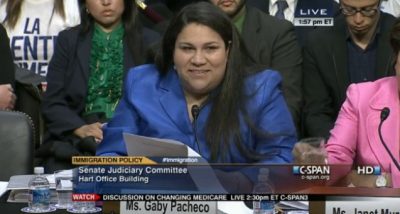
Senate Hearing Reinforces Why Congress Needs To Pass Comprehensive Immigration Reform
For more than seven hours on Monday, the Senate Judiciary Committee listened to testimony from almost two dozen people about the immigration reform bill a bipartisan group of senators introduced last week. From visas for farm workers and other foreign workers to the mandatory E-Verify system included in the bill, senators debated and questioned the witnesses about all aspects of immigration reform. Read More

Why Are Some Still UnDACAmented?
The latest USCIS DACA numbers from March show that the agency has received roughly 470,000 applications, which means that just under half of those estimated to be eligible have applied. While the success reflected by the 470,000 figure is not to be downplayed, the new numbers beg the question: What about the other half million? Why are they still unDACAmented? Read More

Guaranteeing Access to Health Care to Immigrant Women: A Necessary and Wise Investment
In the current public debate regarding comprehensive immigration reform, the focus on immigrant access to health benefits has been almost exclusively limited to cost (which is undeniably an important aspect) and has rarely addressed the social gains that result from investing in a healthy population. For the most part, the health of immigrant women has been left out of the discussion, which is, in many aspects, problematic. Read More

The Pathway to Citizenship and Immigrant Integration: What Can We Learn from France and the United States?
As the 113th Congress engages in a historic debate on immigration reform, past attempts to overhaul immigration laws provide cautious reminders of the struggles and opportunities ahead in closing a deal on immigration policy. While the United States' own history is critical for understanding both the shortcomings and solutions of various policy arrangements, the experience of other receiving countries in dealing with immigration and immigrant integration also constitute an invaluable source of guiding lessons. By learning what effective policy solutions have been formulated in other countries to address issues such as the regularization of their undocumented population, the integration of newcomers, and the reception of asylees, to mention just a few – the United States can better and more strategically craft immigration policy and anticipate the impact of those policy changes. Read More
All gifts are matched dollar for dollar up to $75,000
No one should face the immigration system alone