Integration
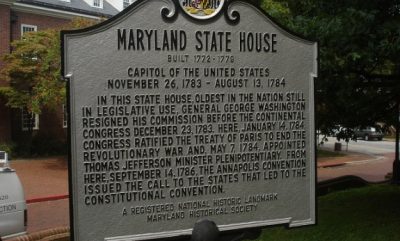
Report by Maryland State Panel Details Positive Approach to Immigration
A new report from the Commission to Study the Impact of Immigrants in Maryland concludes that immigrants bring a plethora of economic, social, and cultural contributions to the state of Maryland. The commission, which was created by the Maryland General Assembly, also warns against attempts to deal with unauthorized immigration through enforcement-only policies that needlessly sow fear and distrust in immigrant communities. Rather, the commission admonishes, “Maryland must remain welcoming to immigrants, and the state and its local jurisdictions should further strengthen its efforts to integrate immigrants into the economy and the community.” Read More

New Report Highlights Contributions of Immigrant Entrepreneurs to U.S. Economy
BY MARCIA HOHN, IMMIGRANT LEARNING CENTER At last night’s State of the Union Address, two immigrant entrepreneurs were among the President's guests—Japan-born Dr. Hiroyuki Fujita, founder, president and chief executive officer of Quality Electrodynamics (QED) in Cleveland, Ohio and Brazil-born Mike Krieger, co-founder of Instagram, a fast growing social mobile startup. Dr. Fijuita and Mike Krieger were rightfully recognized for their entrepreneurial drive and hard-earned success (both businesses are now worth millions of dollars), but they are just two examples of immigrants who came to this country and started businesses. There are many more unsung immigrant entrepreneurs whose U.S. businesses continue to create jobs for Americans and strengthen the U.S. economy. Read More
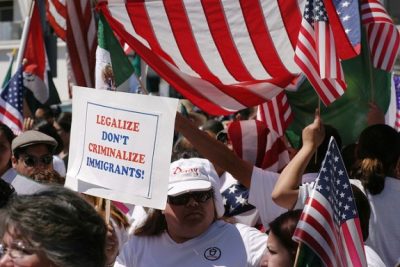
New Report Challenges Notion that Harsh Enforcement Measures Drive Unauthorized Immigrants Out
Last week, a new report released by the Pew Hispanic Center found that nearly two-thirds of all unauthorized adult immigrants currently living in the U.S. (10.2 million) have been here for at least 10 years and nearly half of them (4.7 million) are parents of minor children. The longevity of their U.S. residency and pattern of parenthood suggest that these unauthorized immigrants are integrated into American society, challenging the notion that ramped-up enforcement measures like Arizona’s SB 1070 and Alabama’s HB 56 are effectively driving unauthorized immigrants back to their countries of origin. Read More

Children of Immigrant Entrepreneurs Excel Educationally, Report Finds
The contributions of immigrant entrepreneurs—innovation, job creation and economic growth—are often cited by economists as strong reasons to reform our outdated immigration system. However, the kids of immigrant entrepreneurs receive relatively little attention. Delving into the experiences of these adult children of immigrants provides a new lens through which to witness the struggles and triumphs of parents and their children as they pursue the American Dream. Read More

New Report Predicts Continuing Integration of Immigrants into U.S. Society
Anti-immigrant activists like to pretend that immigrants are destined to be poor and to never successfully integrate into U.S. society. However, a new report from the Center for American Progress (CAP) concludes that, in reality, “immigrants are integrating into American life, learning English, and becoming homeowners.” When socioeconomic advancement is tracked over time, it becomes clear that “far from a life in poverty, immigrants are exemplifying the American Dream.” The report, entitled Assimilation Tomorrow, was co-authored by renowned demographer Dowell Myers (a professor in the School of Policy, Planning, and Development at the University of Southern California) and by John Pitkin (president of Analysis and Forecasting, Inc., in Cambridge, Massachusetts). This report is the companion piece to another study which was released by CAP last year, entitled Assimilation Today. Read More
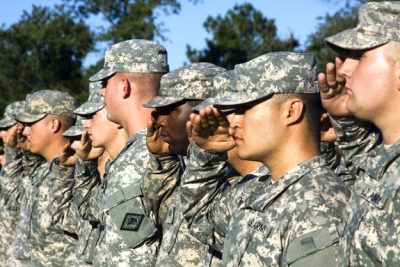
Non-Citizens Eager to Serve in U.S. Military Blocked by Government Bureaucracy
BY MARGARET D. STOCK, COUNSEL TO THE FIRM, LANE POWELL PC This Veterans Day, we celebrate those who have proudly served in the U.S. military, including immigrants. Immigrants have long served in all branches of the U.S. military as infantry soldiers, medics, foreign-language translators, and in every other job open to them. At last count, foreign-born service members made up about 8% of the 1.4 million military personnel on active duty. However, some highly qualified non-citizens have been blocked from serving due to the Obama Administration’s suspension of a recruiting program called the Military Accessions Vital to the National Interest (MAVNI). Frustrated by the government bureaucracy responsible for halting MAVNI, those non-citizen volunteers are petitioning the government in hopes of reopening the program. Read More

Dayton, Ohio Passes Plan to Revitalize Economy through Immigrant Integration
Shortly after Alabama began implementing their anti-immigration law (HB 56), Dayton, Ohio passed legislation that welcomes and integrates immigrants with the hope that they will revitalize their slowing economy. Faced with a declining population, Dayton’s City Commission voted unanimously last week to adopt the Welcome Dayton Plan—a plan that is tapping into the very economic stimulus that Alabama is driving out. Read More
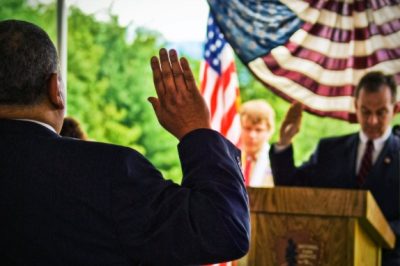
Better Immigrant Integration Leads to Economic Growth
Over the weekend, more than 27,000 people became American citizens during 285 naturalization ceremonies held across the country in honor of Citizenship Day (September 17). Becoming a citizen, however, is hard work. A new country, new rules, high costs, and little targeted support for new immigrants make what should be a journey of exploration and opportunity one that may be frustrating and lonely. Not surprisingly, problems such as these are a major obstacle to naturalization. Scholars note that despite the steady rise in naturalization rates over the decades, a shocking number of people do not naturalize are actually eligible to do so. In 2008, for example, while more than one million LPRs naturalized, more than eight million were eligible to do so. Developing better integration programs, however, may improve naturalization efforts and lead to economic growth. Read More

California Passes Other Half of DREAM Act Package
While many applauded Governor Jerry Brown’s recent efforts to make college more affordable for all of California’s students, others insisted the state didn’t go far enough. Back in July, Gov. Brown signed AB 130—a bill that allows undocumented students enrolled in California’s public colleges and universities to receive privately-funded university scholarships from non-state funds. At the time, however, its companion bill, AB 131—which would allow undocumented students to apply for state-sponsored financial aid—was stuck in California’s Senate Appropriations Committee. Last week, despite opposition from immigration restrictionists, both California’s State Assembly and Senate approved AB 131 which is now on its way to Gov. Brown’s desk. Many predict Gov. Brown will sign the measure based on promises he made during his campaign. Read More
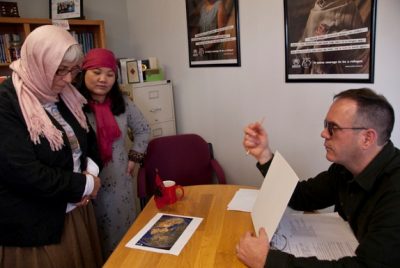
What the New Budget Law Could Mean for Immigrant and Refugee Programs
BY ERIC SIGMON, LUTHERAN IMMIGRATION AND REFUGEE SERVICE* On August 2, after a number of press conferences and late-night negotiation sessions, President Obama signed into law the Budget Control of Act of 2011, legislation that prevented the U.S. government from defaulting on its debt and requires deep cuts into future federal spending. While deficit cutting laws may not sound very interesting to the average reader, this new law will decrease the size and role of the federal government over the next decade. Over the next four months, Congress will have to make decisions that will shape the government’s capacity to provide protection and life-saving assistance to refugees, adjudicate immigration benefits, and enforce U.S. immigration laws along the border and in the interior (apprehensions, detentions, deportations). Read More
All gifts are matched dollar for dollar up to $75,000
No one should face the immigration system alone