History of Immigration
Immigration policies, laws, and attitudes toward immigrants have evolved in the U.S. Our system has continued to adapt over time, responding to changing global dynamics, economic needs, and political pressure. By learning from our immigrant past, we can apply the lessons learned to help shape how we treat immigration and immigrants in the future.

Top Five Immigration Stories from 2013
From the beginning, it was clear that 2013 was going to be a big year for immigration. The results of the 2012 Presidential Election were widely interpreted as a rebuke to Mitt Romney’s enforcement-only “self-deportation” policy, and President Obama’s huge victory among minority communities was seen as a… Read More

Former Attorney General Gets it Wrong on DOMA and Same Sex Immigration Benefits
Former Attorney General Alberto R. Gonzales is advocating in the New York Times that the Supreme Court decision in U.S. v. Windsor, which invalidated Section 3 of the Defense of Marriage Act (DOMA), should not allow the Obama administration to afford immigration benefits to married, same-sex bi-national couples. Rather, he argues, the administration is bound by a disturbing, 30-year-old Ninth Circuit case, Adams v. Howerton, which rested on discriminatory and outdated law and facts. Essentially, Mr. Gonzales is urging that the administration ignore 30 years of social progress and legal developments and return to a 20th century mentality and jurisprudence. He is mistaken. Read More
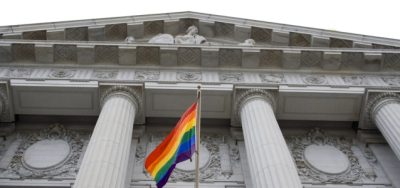
Supreme Court’s DOMA Decision Good for Economic Competitiveness
In the global economy of the twenty-first century, a globally mobile workforce is critical to remaining competitive. Yet for LGBT employees, their families, and their employers, significant barriers remain in place. The Supreme Court’s June 26 decision in United States v. Windsor finding part of the Defense of Marriage Act (DOMA) unconstitutional has clear and direct benefits for married same-sex couples, including bi-national couples. But beyond the benefits to married couples themselves, the Court’s decision is also a win for economic competitiveness. Specifically, the DOMA ruling makes U.S. businesses more globally competitive because they now can attract and retain foreign-born employees who want to stay in the United States with their same-sex spouses. Read More

USCIS Approves First Green Cards for Same Sex Couples
On June 26, the Supreme Court issued its decision in the case of United States v. Windsor, in which it struck down section 3 of the Defense of Marriage Act (DOMA), which defined marriage as between a man and a woman for all federal laws. This law meant that the immigration agencies would not recognize lawful, same-sex marriages for any immigration purpose. Since the Court’s decision, the Obama administration has moved rapidly to allow U.S. citizens to petition for immigration benefits for their spouses, providing hope to an estimated 28,500 bi-national same-sex couples in the United States who might otherwise be separated by our immigration laws. Read More
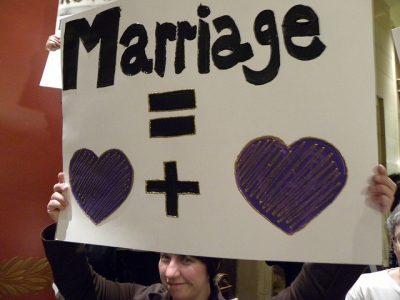
Supreme Court Strikes Down DOMA, Affirms Immigration Rights of Gay and Lesbian Couples
Today, the Supreme Court issued its decision in the case United States v. Windsor, striking down section 3 of the Defense of Marriage Act, or DOMA, on the basis that it violated equal protection under the due process clause of the 5th Amendment. DOMA established an exclusively heterosexual definition of “marriage,” and denied same-sex couples any federal benefits, including immigration benefits. This is a historic day for gay and lesbian marriage rights, as DOMA disqualified same-sex couples from over a thousand federal benefits, and made same-sex couples in committed relationships second-class citizens in the eyes of the federal government. Read More
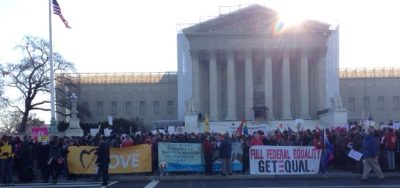
Immigration Reform is an LGBT Issue
By Victoria Neilson, Legal Director, Immigration Equality. This week the U.S. Supreme Court is hearing oral arguments in two cases, Hollingsworth v. Perry and United States v. Windsor, that will forever change the course of the struggle for lesbian, gay, bisexual, and transgender (LGBT) equality. While we are hopeful that the Court will strike down the Defense of Marriage Act (DOMA) thereby clearing the way for the federal government, including U.S. Citizenship and Immigration Services and the Department of State, to honor our marriages, no one can predict with any certainty what the Court will do. Read More

How the Supreme Court Decision on DOMA Will Impact Immigration Law
Family unity is one of the driving forces in our immigration system. United States citizens and lawful permanent residents can obtain immigrant visas for their spouses. Many foreign nationals who come to the United States on employment-based visas bring their spouses and children with them. And some waivers and forms of relief from removal are available only to those with close relatives living in the United States. Read More
Including LGBT Immigrants in Immigration Reform Helps Protect Vulnerable Individuals
Roughly 11 million unauthorized immigrants live in the United States, and their backgrounds and stories are incredibly diverse. DREAM activists helped to change the picture of the 11 million by shining light on young people affected by our broken immigration system, while grassroots movements are highlighting the stories of families. But a new report from the Williams Institute adds another facet to this picture: an estimated 267,000 undocumented adults identify as LGBT. Even more compelling, the report highlights the other struggles LGBT individuals face when dealing with the legal immigration system. Read More
Appellate Court Hears Arguments in Case Challenging DOMA, Bi-National Married Couples File New Suit
Same sex couples face often insurmountable hurdles when it comes to immigration status. Under the Defense of Marriage Act (“DOMA”), lesbian and gay U.S. citizens and lawful permanent residents are barred from obtaining immigrant visas for their spouses. When Congress enacted DOMA in 1996, no state celebrated marriages between gay and lesbian couples. But, the landscape has changed. Today, lesbian and gay couples in six states plus the District of Columbia have the freedom to marry under state law. This welcome progress, however, does not help the estimated 36,000 lesbian and gay bi-national couples living in the United States. Because DOMA prohibits immigration authorities from recognizing same sex marriages that are legal under state law, bi-national married couples continue to face potential separation. However, last week brought us closer to immigration equality for lesbian and gay couples. Read More
How Will DHS’s Prosecutorial Discretion Guidelines Impact Gay and Lesbian Bi-National Couples?
Yesterday, the Department of Homeland Security (DHS) announced that they would take concrete steps to implement existing guidance on prosecutorial discretion in an attempt to provide relief for low priority immigration cases. DHS also announced that a new committee will review 300,000 immigration cases currently in removal proceedings to determine which cases are low priority and can be administratively closed. Some of the factors used in determining low priority cases are family relationships and community ties—factors the Administration said yesterday may apply to gay and lesbian families. Read More
All gifts are matched dollar for dollar
No one should face the immigration system alone