Immigration 101
Immigration in the United States is complex and ever-evolving. Start here to understand the fundamental aspects of immigration policy, its history, and its impact on both individuals and the country at large. Learn commonly used terms about immigration law and how the U.S. immigration system is designed. Explore layered topics like how and whether immigrants can become citizens, as well as what individual protections look like under the law.

Immigrants Are Now Five Times More Likely to Die Crossing the Border
The recent deaths of ten migrants who suffocated in the back of a tractor trailer as they were allegedly being smuggled into the United States has brought renewed attention to the grave risks involved in crossing the border. A new report from the National Foundation of American Policy (NFAP)… Read More

‘Moved by Unfairness of System,’ Executive Skips Retirement to Create Legal-Aid Program
After a 30-year career as a telecommunications executive, Ray Garrido had planned a quiet retirement. But while volunteering as an English tutor in Bremerton, Washington, for immigrants from Mexico and Central America, he heard stories of struggle and hardship that kept tugging at his heart. “I realized there was no… Read More

Massachusetts’ Highest Court Declares Immigration Detainers Are Unenforceable
The Massachusetts Supreme Judicial Court issued a unanimous decision on Monday holding that Massachusetts court officers may not arrest and detain immigrants based solely on a detainer. Although other courts have struck down detainers on the grounds that they violate the Constitution, the Supreme Judicial Court concluded that… Read More
Statement on Senator Lindsay Graham’s and Senator Dick Durbin’s DREAM Act
Following the introduction of the DREAM Act, which aims to product undocumented young immigrants who were brought to this country as children, New American Economy President John Feinblatt issued the following statement: “Boosting the education and earning potential of young immigrants isn’t just the right thing to do, it’s the… Read More
Politics Professor: U.S. Universities — and Their Towns — Need Foreign Students
As a child, Leslie Caughell watched her father, who was born in Canada, navigate the “anxiety-inducing” U.S. immigration system. It’s something the family can laugh about now. But far more anxiety inducing today, says Caughell, a political science professor at Virginia Wesleyan University, is the prospect of U.S. universities losing… Read More
Republican Senator: My State’s Economy Needs Immigration Reform
Before becoming a United States senator in 2015, Thom Tillis led North Carolina’s Republican-controlled House of Representatives during a time when the state unemployment rate dropped after the Great Recession, from 10.4 percent, in 2010, to 4.5 percent, in 2017. Now, however, the state is facing a… Read More
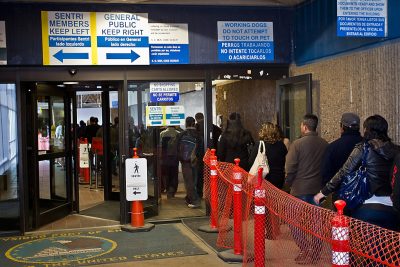
Groups Sue U.S. Government for Turning Away Asylum Seekers
Men, women, and children fleeing persecution, grave violence, and even death arrive daily at Ports of Entry (POE) all along the U.S.-Mexico border and present themselves to U.S. Customs and Border Protection (CBP) officers to seek asylum in the United States. The right to seek asylum is guaranteed under… Read More

Pentagon May Deport Immigrants Who Have Served in the Military
The Pentagon is considering halting a program that allows immigrants with urgently needed skills to serve in the military, putting the thousands of soldiers promised expedited citizenship in exchange for their service at risk for deportation. According to an undated Defense Department memo, the Pentagon may terminate the Military… Read More
Church Honors its Christian Commitment to Be Welcoming
In January 2017, when the Presbyterian-New England Congregational Church in Saratoga Springs, New York, introduced a proposal to provide safe haven to immigrants, some congregants were skeptical. “There was a reluctance among some members to get involved in a political issue,” says Terry Diggory, coordinator of the church’s Welcoming Immigrants… Read More

Ending Deportation Priorities Breaks Away from Decades of History and Sound Policy
A recent story from ProPublica has revealed an internal February 2017 memorandum authored by Immigration and Customs Enforcement (ICE) to its employees about the implementation of recent Executive Orders on immigration enforcement. The memo is stunning in its declaration: “effective immediately, Enforcement and Removal Operations (ERO) officers will… Read More
Your support moves the American story toward justice, dignity, and belonging.
America's story is an immigrant story.