Immigration 101
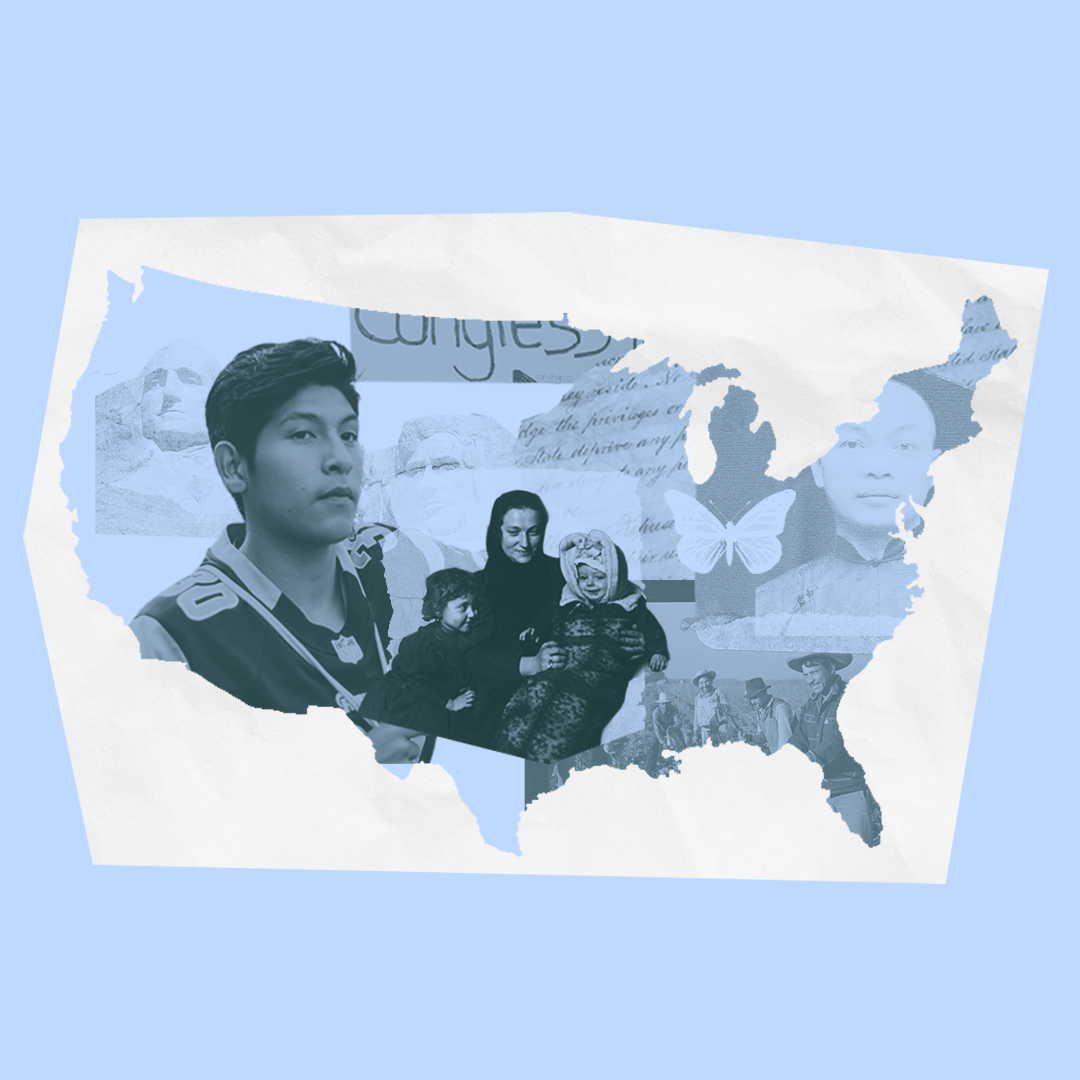
Immigration in the United States is complex and ever-evolving. Start here to understand the fundamental aspects of immigration policy, its history, and its impact on both individuals and the country at large. Learn commonly used terms about immigration law and how the U.S. immigration system is designed. Explore layered topics like how and whether immigrants can become citizens, as well as what individual protections look like under the law.

Once an Undocumented Child, Now He Educates Virginia’s Youth
Sal Romero Jr. came to the United States as an undocumented immigrant from Mexico when he was 13 years old. Today, he is a citizen and serves on the Virginia Board of Education and as the first-ever Coordinator of Family and Community Engagement for Harrisonburg City Public Schools. It is… Read More
A Stowaway’s Son Uses Business Acumen to Help New Jersey Elders
Dominican immigrant Jose Brito Bueno grew up in poverty but now runs WeCare, a domestic-care company with 213 employees. When he was just 10 years old, his father — leaving their home in Santo Domingo — stowed away in a cargo ship bound for the United States. He hid… Read More
Immigration Policy Doesn’t Succeed When Politically Driven, Says Tennessee Lawyer
Casey Bryant grew up in Springdale, Arkansas, home to the largest population of Marshallese people in the continental United States. Most Americans probably aren’t familiar with these Pacific Islanders, but 4,300 of them live in Bryant’s landlocked hometown. “The Marshall Islands were subject to thermonuclear experiments in the ‘40s and… Read More

How Many People Overstay Their Visas? Not Even the Government Knows
Department of Homeland Security (DHS) officials unveiled their newest “overstay” estimates—the number of people from other countries who remain in the United States after their visas expire—at a recent congressional hearing. However, agency officials themselves acknowledge serious flaws in their estimates, stemming from a lack of reliable exit data,… Read More
Statement on Representative Jeff Denham’s ENLIST Act
As the Encourage New Legalized Immigrants to Start Training (ENLIST) Act, authored by Representative Jeff Denham, reached 200 co-sponsors, New American Economy President John Feinblatt issued the following statement: “We know that foreign-born military personnel contribute important language and vocational skills… Read More
Statement on Senator Lindsay Graham’s and Senator Dick Durbin’s Bar Removal of Individuals who Dream and Grow our Economy (BRIDGE) and Representative Carlos Curbelo’s Recognizing America’s Children (RAC) Acts
Following the reintroduction of the BRIDGE and RAC Acts, which protect undocumented young people who came to this country as children, New American Economy President John Feinblatt issued the following statement: “The undocumented youth in America who know no other home than our great country… Read More
Immigrants Welcomed to Community and Give Back to Community, Says Kentucky Faith Leader
The immigrant community in Henderson is small, but it is growing faster than any other group. The county’s Hispanic and Latino community, for example, increased by 0.5 percentage points between 2010 and 2016, according to the United States Census Bureau. That might not sound like a lot… Read More
Undocumented Peruvian Works, Fuels Economy, and Lives in Fear
When Peruvian native Lisette — she asked not to use her last name — first arrived in North Carolina as an undocumented immigrant in 2001, she and her family had no trouble building a productive life in this country. The state was in the middle of a construction boom, and… Read More
Family’s 136-Year-Old Landscaping Business Depends on Immigrants
Hispanic immigrants make up roughly half of the workforce at Peter Scarff’s family nursery and landscaping business in New Carlisle, Ohio. Without immigrant labor, the agriculture and service industries in the United States would collapse, Scarff says. “It doesn’t matter whether it’s manual work or operating equipment, it is difficult… Read More
Immigration Policy Needs to Keep Families Together, Says Ohio Lawyer
Eugenio Mollo says that growing up as the child of Italian immigrants profoundly affected him and his career path. “My parents lacked a formal education, but they are the smartest and most hardworking people that I know,” he says. “And so I grew up seeing immigrants who wanted to work… Read More
Your support moves the American story toward justice, dignity, and belonging.
America's story is an immigrant story.