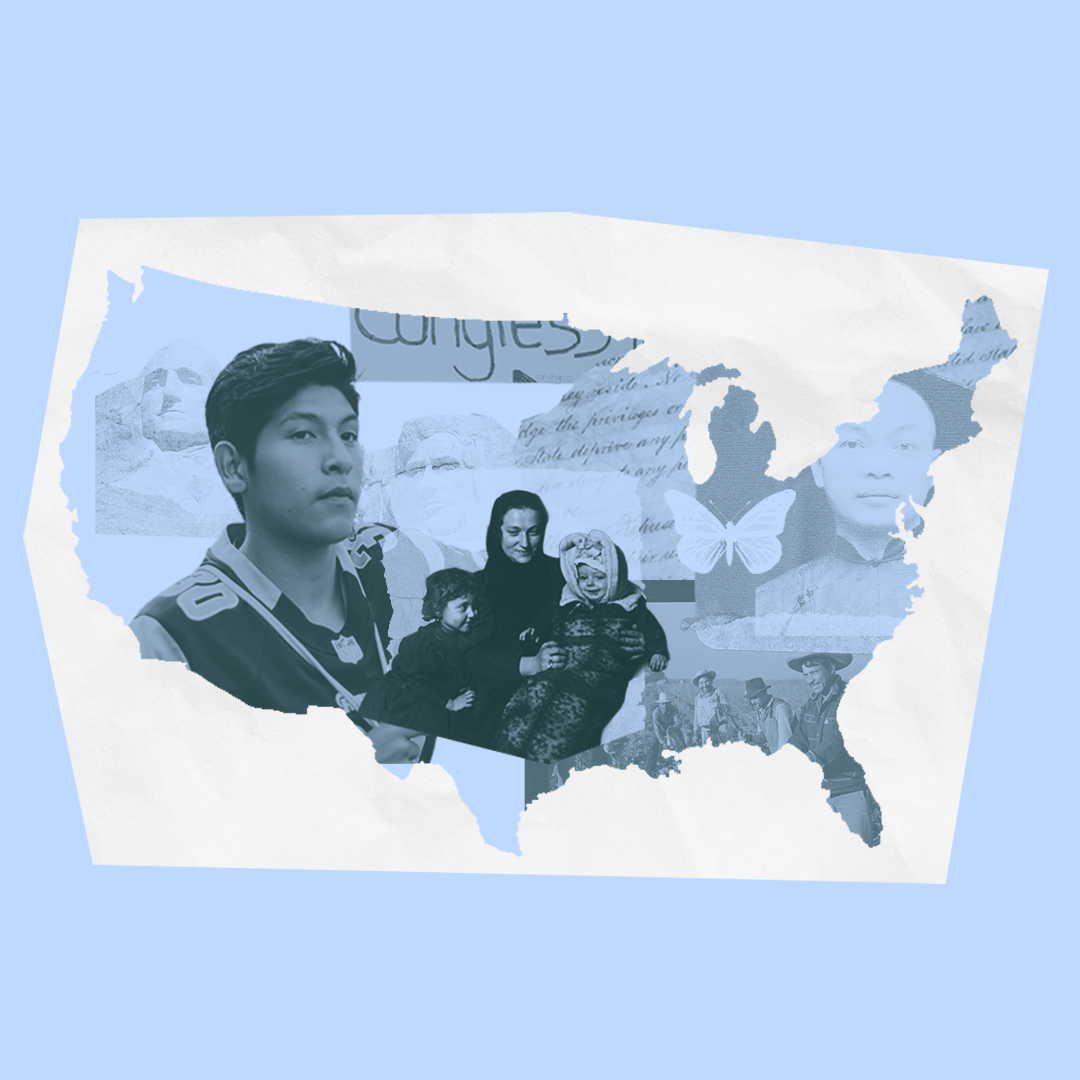
Immigration 101
Immigration in the United States is complex and ever-evolving. Start here to understand the fundamental aspects of immigration policy, its history, and its impact on both individuals and the country at large. Learn commonly used terms about immigration law and how the U.S. immigration system is designed. Explore layered topics like how and whether immigrants can become citizens, as well as what individual protections look like under the law.

Migrant Worker Shortage Increases Strain on Oregon’s Dairy Farmers
Under the current agricultural guest worker program, farmers can hire foreign laborers for a maximum 10-month season only. But try explaining that to the cows, which must be milked year-round, two to three times a day. “The guest worker program doesn’t meet the needs of dairy farmers,” says Tami Kerr,… Read More

Say It With Me: Undocumented Immigrants Pay Taxes
Each year, undocumented immigrants file their tax returns, just like all Americans. They pay federal, state, and local taxes, in addition to income, property, and sales taxes. However, there are some anecdotal reports that fewer undocumented immigrants may file their taxes this year. Some tax preparers have reported declines… Read More
Immigrants Add Billions to GDP Yet ‘Constantly Under Threat,’ Says Organizer
Argentinian immigrant Beatriz Maya has devoted her career to helping fellow Latinos — both immigrants and natives — build productive, successful lives in the United States. As the founder of La Conexion de Wood County, she helps provide capacity building and cultural activities, language education, and advocacy for an estimated… Read More
Undocumented are ‘Paying Money Into U.S. System,’ Says DACA Student
Victoria Matey came to the United States from Mexico at age 3. By age 15 she had been barred from applying for a part-time job, so she already had a vague idea what it meant to be undocumented. But Matey did not understand the full consequences until she was a… Read More
DACA Pre-Med Student ‘One of the People Who Makes America Great’
Maria’s mother never finished high school in Mexico. Instead, after having Maria at age 16, she and Maria’s father crossed the border into the United States. “They decided the best thing would be to come here and look for a better life,” says Maria, who has lived in Fort Wayne,… Read More
From Boxcar to Law School, Refugee Pays His Second Chance Forward
After Luis Canales, a Honduran refugee, won his political asylum case in 2010, the court asked him what he intended to do with his life. He said he wanted to become a lawyer. Today, as a third-year law student at Villanova University -Charles Widger School of Law, he’s well… Read More
Activist Supports ‘Dreamers‘ — ‘Dreamers’ Support Economy
Sonny Garcia’s single mother was born in South Texas, but she spent years working as a migrant laborer to support her family. “There are a lot of undocumented people in that space,” Garcia says, whose own father was undocumented. “I grew up learning about what that meant, hearing stories about… Read More
Ohio Town Welcomes Immigrants — for its Economic Wellbeing
Bruce Jeffers, a Bowling Green City Council member, knows that the factories and farms in his community — and in several surrounding counties — are facing a labor shortage. But one demographic is helping to revive places struggling with a declining and aging population: “Immigrants bring value to our communities,”… Read More
New Jersey Union Boss: America Doesn’t Function Without Immigrants
Walk through any Atlantic City casino and you’ll see immigrant dealers, bartenders, waiters, and more, says Bob McDevitt, president of UNITE HERE Local 54. The city’s largest union for casino workers. Local 54 has 10,000 members, two-thirds of whom are either Hispanic or Asian Americans. “If you take away immigrant… Read More
Immigrants Offset Population Decline, Keep Midwest Economy Afloat
In 2017, the Chicago Council on Global Affairs published “Immigration a Demographic Lifeline in Midwestern Metros,” a report demonstrating how immigrants have helped offset U.S.-born population loss across the Midwest and revitalized an aging workforce. “Native-born Americans are getting older, so working-age natives —… Read More
Your support moves the American story toward justice, dignity, and belonging.
America's story is an immigrant story.