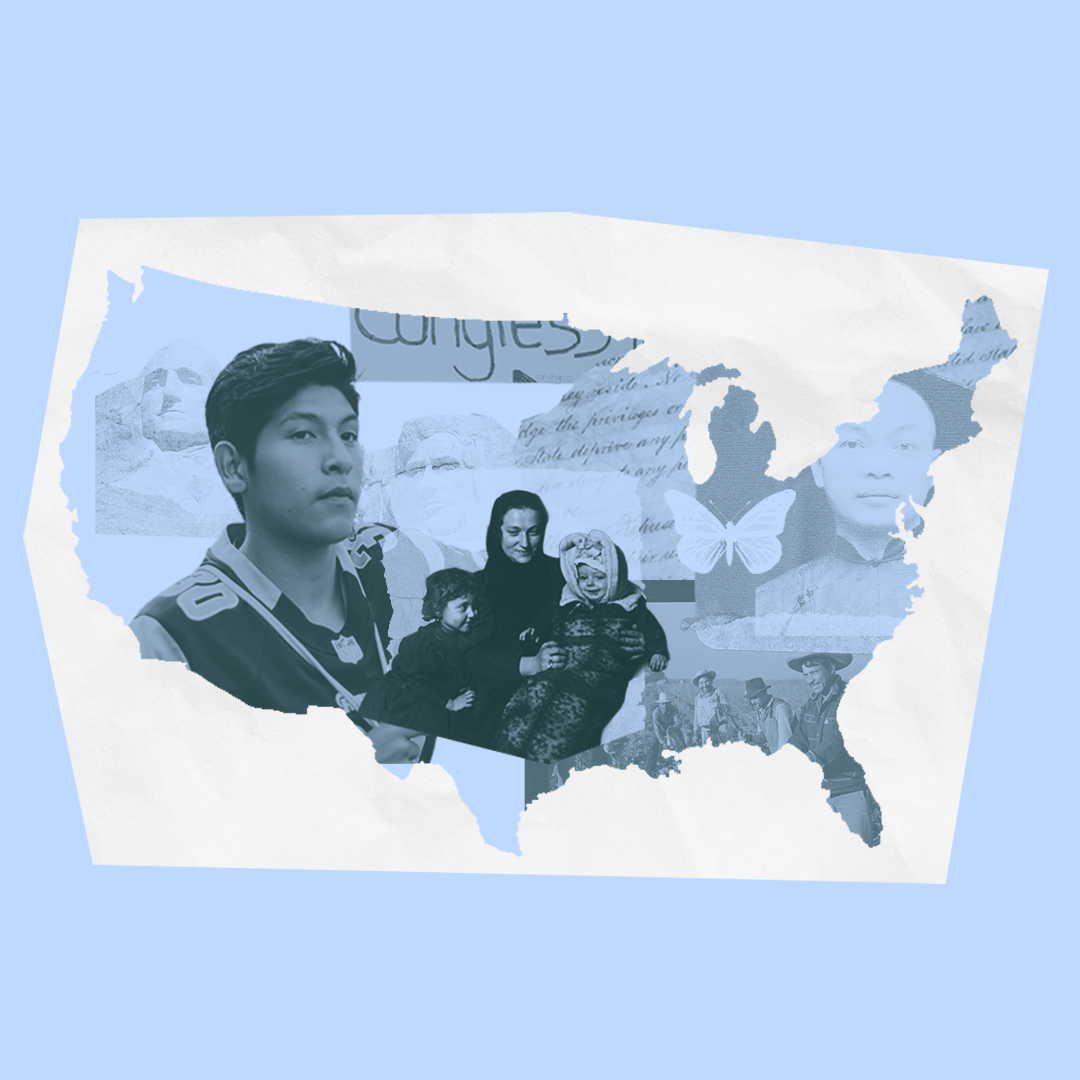
Immigration 101
Immigration in the United States is complex and ever-evolving. Start here to understand the fundamental aspects of immigration policy, its history, and its impact on both individuals and the country at large. Learn commonly used terms about immigration law and how the U.S. immigration system is designed. Explore layered topics like how and whether immigrants can become citizens, as well as what individual protections look like under the law.

Legislators Intend to Burden States with Costly Immigration Litigation
State Legislators for Legal Immigration member, State Rep. Daryl Metcalfe (R-PA) Yesterday, a group of state legislators gathered in a small room in Washington, D.C. to present their plan for reinterpreting the 14th Amendment—the amendment which states that all persons born in the U.S., and subject to jurisdiction thereof, are citizens of U.S. and the states in which they reside. Although the legislators proclaimed a desire to “protect the states” and to “love" the 14th Amendment, which was adopted after the Civil War to guarantee citizenship to the American-born children of freed slaves, you wouldn’t know it listening by to their blatant disregard for the American taxpayer—upon whom they plan on sticking costly litigation fees. Chairman of the House Immigration Subcommittee, Congressman Steve King (R-IA), also introduced a bill in the new Congress to end constitution citizenship. Read More
State Legislators Attempt to Turn Back Clock to Antebellum South
At a press conference this morning at the National Press Club, a coalition of state legislators and immigration restrictionists known as the State Legislators for Legal Immigration (SLLI) presented their proposal to turn back the clocks to the pre-Civil War era to create a new definition of “state citizenship,” create a new second-class citizenship, and fundamentally alter the principles of the U.S. Constitution. With connections to restrictionist group FAIR and the notorious John Tanton Network, SLLI members Rep. John Kavanaugh of Arizona, Rep. Daryl Metcalfe of Pennsylvania, Kansas Secretary of State-elect Kris Kobach and others were on hand to monger more fear on “the illegal alien invasion” and, in the words of South Carolina’s state Senator Danny Verdin, cure the “malady” and “poison” of undocumented immigration. Read More
Will Conservatives Back Off Their Harsh Immigration Rhetoric and Party Politics?
Despite the very public failure on the part of the 111th Congress to pass any type of comprehensive immigration reform (including the collapse of the DREAM Act), Sen. Robert Menendez (D-NJ) plans to reach out to Sen. Lindsey Graham (R-SC) to work on the issue again in the 112th Congress. While Sen. Graham initially signaled that he would be open to working with Democrats to find immigration solutions, he later changed his tune to more traditional restrictionist rhetoric—even going so far as to call the DREAM Act a “nightmare.” The question becomes then, are politicians too polarized to come to a compromise or will public pressure to find a solution push past the politics of the issue and find a solution? Read More
Census Shows Population Gains Due to Growing Latino Population
The first 2010 Decennial Census data was made available this week, and the U.S. population rose 9.7% since 2000. As a result of population changes, reapportionment will likely shift the political balance in Congress. Some states (Texas, Florida, Georgia and South Carolina) will gain seats, in part due to the growth in their Latino populations over the past decade. While many media outlets have focused on the fact that the states gaining Congressional seats tend to be red states, and those losing seats are blue, immigrant advocates have pointed out that Members of Congress from those states with growing Latino populations, regardless of party affiliation, will have to be responsive to their Latino constituencies if they want to keep their seats. Read More
Arizona State Senator Russell Pearce Continues Immigration Crusade Despite Budget Crisis
A cog in the wheel of local enforcement legislation, Arizona state Senator and now Senate President-elect, Russell Pearce, predictably said he will continue his immigration crusade to repeal part of the 14th Amendment despite the looming state budget crisis. A recent article points out that Pearce, in the throes of last minute campaigning, pledged that he would make boosting Arizona’s flailing economy his number one priority instead of pushing yet another immigration bill. Not surprisingly, however, Pearce told reporters today that “he never promised the 14th Amendment bills wouldn’t be heard, only that he wouldn’t sponsor it.” Sound fishy? That’s because it is. Sponsor of Arizona’s controversial enforcement law SB1070, Pearce has a history of not only prioritizing immigration enforcement legislation, but accepting campaign contributions from the prison lobby who helped write it. Read More
How Will Republican Leadership Play their Cards on Immigration?
The predictions are already rolling in that the 112th Congress will get little done, each party miring themselves in partisan differences with the goal of a White House win in 2012. The thought of gridlock on so many pressing issues facing the country—fiscal policy, stimulating the economy, ensuring job growth—is sobering. And two more years of inaction on immigration reform—reform that would help our economy grow and respects the rights of people—well, that’s simply depressing. But it doesn’t have to be that way. If Speaker-elect John Boehner is really interested in governing, he will think long and hard about the direction he allows the House to go on immigration. Read More
Pollsters Still Underestimating the Latino Vote
An interesting post-election thread is the issue of why so many polls underestimated voter turnout, specifically in races where the Democratic candidate won. The starkest example comes from the state of Nevada where the Democratic candidate for Senate, Harry Reid, beat his Republican challenger, Sharron Angle, by 5 points. Polls published by the Las Vegas Review-Journal had Angle leading by 4 points just days before—a 9 point gap. The New York Times’ Nate Silver had Angle ahead by 2.3 points, with Reid eventually winning by 5.6 points—nearly an 8 point gap. Why the disparity? Read More
Is the Latino Vote Up for Grabs? Midterm Polling and the Future of the Latino Vote
Last night, GOP candidates won a number of key Senate, House and gubernatorial races as well as a majority in the House of Representatives. The night, however, wasn’t a total wash for the Democratic Party who managed to hold onto a majority in the Senate. Headlining the Senate races, Nevada Senator Harry Reid held onto his seat against Tea Party flag bearer Sharron Angle, whose seemingly endless stream of anti-immigrant campaign attack ads went from bad to worse. In a state where roughly 1 in 4 residents is Latino, many are chalking up Sen. Reid’s victory to the power of the Latino vote. Early polling seems to indicate that the Latino vote helped secure several key races for Democrats out west (in CA, CO, NV), but not across the board necessarily. Although trending Democratic, the Latino vote was not enough to win gubernatorial races in New Mexico or Nevada. So what gives? What does it take to successfully court the Latino vote? Read More
Setting the Stage for Immigration Reform
As people head to the polls tomorrow, they will consider a wide range of important issues—the economy, health care, unemployment, deficit spending, tax cuts and immigration to name a few. Not all voters are single issue voters, nor will people vote strictly down party or demographic lines. But whomever people vote for, it is critically important that they consider their issues not only as a reflection of where we are now, but where we want to be down the road, using present day indicators as road signs. Immigration, as of late, has been wielded like a political weapon—used in campaign attack ads and across the media to slander opponents and set the political stage for what’s to come (read: more angry rhetoric and no action). As the Immigration Policy Center noted in its recent report on the New American voter, one in ten registered voters is likely to have a personal connection to immigration that may very well affect their views on candidates. Read More
How a Drop in New Immigrant Households Affects an Ailing Housing Market
While some fault the foreclosure crisis for the swell in vacant homes and continuing drop in home prices, recent Census data reveals that immigrants—or lack thereof—may be a bigger factor contributing to the housing glut than people may realize. According to Fortune, steady unemployment, the drop in immigration and the growing number of young people moving back in with their parents have all contributed to the “slowest growth in the number of new households since the second World War”—households which would otherwise be filling up vacant homes. Research indicates that new immigrant households have long sustained the “housing and retail markets at the heart of many of our large cities,” but as the number of new immigrants to the U.S. continues to decline due to economic downturn, the already ailing housing market gets a little worse. Read More
All gifts are matched dollar for dollar up to $75,000
No one should face the immigration system alone