Immigration at the Border

New Study Highlights Causes of Return Migration to Mexico
Mexicans and Americans Thinking Together (MATT) has presented the results of a new study that highlights some recent, significant shifts in return migration from the United States to Mexico. One of the merits of this study is that it reminds us of the dynamic and bi-directional nature of migratory flows between the two countries. Between 2005 and 2010, 1.39 million people moved from the U.S. to Mexico, of whom 985,000 were returning migrants. Interestingly, deportations (which, as we know, have escalated tremendously during the Obama administration) represent only 11% of all return migrants to Mexico in that period. This means that a significant number of return migrants “chose” to go back to Mexico voluntarily. Read More

Immigrant Entrepreneurs are Investors in their Communities
Cedric Francois, a medical researcher from Belgium, came to Louisville, Kentucky, after hearing that researchers there were beginning work on the first hand transplant. Later, he co-founded two pharmaceutical companies. Suhas Kulkarni, an immigrant entrepreneur himself who founded Louisville-based IT firm Omnisys, understands the need for integrating and helping immigrant entrepreneurs get their start and is leading the area’s new Refugees and Immigrants Succeeding in Entrepreneurship (RISE) initiative. This is a collaborative effort among public and private organizations to support immigrants and refugees in the entrepreneurial endeavors in the Louisville area. RISE recognizes that Louisville “has an untapped pool of talent for city-wide economic development in the form of immigrants and refugees” and that “this population has the potential of becoming drivers of economic growth” for the region. Immigrant entrepreneurs are often vital assets in communities. They start businesses, create jobs, and encourage community revitalization efforts. Immigrant businesses can help revive dilapidated or aging retail corridors. And they provide an opportunity for immigrants to reinvest in the area. Take for example Vilmar Zenzen, originally from Brazil, who is opening a new upscale Brazilian steakhouse in downtown Louisville. Zenzen already operates another Brazilian steakhouse in Knoxville, Tennessee. Read More

State Lawmakers Push for Reforms to Make College Affordable for Young Immigrants
The movement for in-state tuition for undocumented immigrants got off to a quick start in 2014 when Virginia state Del. Alfonso H. Lopez (D) introduced the Virginia Tuition Equality Act. This is the third time Lopez has attempted to pass the bill, which would permit undocumented residents to pay in- state tuition rates. During the 2013, legislative session, one Virginia House committee approved the measure before it died in another committee. “In 2013, it got further than it has ever gotten,” Lopez told the Richmond Times-Dispatch. “That’s why I am optimistic; I think we got great momentum”: Read More

Top Five Immigration Stories from 2013
From the beginning, it was clear that 2013 was going to be a big year for immigration. The results of the 2012 Presidential Election were widely interpreted as a rebuke to Mitt Romney’s enforcement-only “self-deportation” policy, and President Obama’s huge victory among minority communities was seen as a… Read More
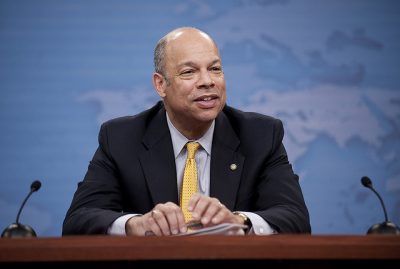
New Year, New Leadership and New Opportunities at DHS
The Department of Homeland Security enters 2014 with new leadership, following the confirmation this month of Jeh Johnson and Alejandro Mayorkas for Secretary and Deputy Secretary, respectively. Johnson and Mayorkas bring years of government service to their new jobs. Mayorkas’ tenure as Director of USCIS led to a far more open agency that treated the public as a partner, with innovations such as public comment on policy memos, expanded public engagement opportunities, the entrepreneur-in-residence program, and the delivery of a working program to process DACA applications within two months of the president’s announcement of the program. These successes, coupled with Johnson’s experience as the top Pentagon lawyer, promise a new direction for DHS. Read More

Federal Judge Enjoins Key Provisions of South Carolina’s Immigration Law
Washington, D.C.—The American Immigration Council welcomes today’s ruling from U.S. District Judge Richard M. Gergel, which temporarily enjoined three provisions of South Carolina Act 69 and found a fourth provision likely to be overturned in future proceedings. The ruling makes South Carolina the sixth state—after Arizona, Indiana, Georgia, Utah, and… Read More

New ICE Deportation Statistics Are No Cause for Celebration
There is little to cheer in the new deportation statistics released by U.S. Immigration and Customs Enforcement (ICE). While the numbers document a 10 percent decline in the total number of deportations compared to last year, they also reveal the extent to which immigration enforcement resources are still devoted to apprehending, detaining, and deporting individuals who represent no conceivable threat to public safety or national security. In fact, the overwhelming majority of people deported by ICE either have no prior criminal record or were convicted of misdemeanors. While ICE does indeed capture and remove potentially dangerous individuals, most of its resources remain devoted to the enforcement of a broken and unworkable immigration system. The latest decline in removals notwithstanding, the U.S. deportation machine remains severely out of balance and lacking in either flexibility or meaningful opportunities for due process. Read More
ICE Releases 2013 Deportation Data
U.S. Immigration and Customs Enforcement (ICE) deported 368,644 immigrants during the 2013 fiscal year, according to the agency’s year-end removal numbers. ICE officials report that 235,093 of those removed were apprehend at the border, and 133,551 people were apprehended in the interior of the U.S. Of… Read More

New Legal Analysis Shows State Compliance with ICE Detainers May Violate the Constitution
Chicago, New York, and San Francisco now prevent local jails from honoring immigration detainers—requests from federal immigration officials for state and local jails to hold a person so that Immigration and Customs Enforcement (ICE) agents can investigate the person’s immigration status—unless an arrestee has been charged with or convicted of certain criminal offenses. And California’s Trust Act, which does virtually the same thing, will go into effect early next year. Yet, while these states have limited who can be subject to an immigration detainer, there are legal questions surrounding this selective enforcement that call into question whether detainers are legal at all. Read More
The Faulty Legal Arguments Behind Immigration Detainers
In late June 2012, the Supreme Court struck down three provisions of Arizona’s SB 1070 and left a fourth vulnerable to future legal challenge. As has been well documented, the Court’s rejection of SB 1070 tipped the balance in favor of federal enforcement and away from state and local enforcement of the immigration laws. But this essay explores a less obvious consequence of the Court’s decision: its implications for the viability of a critical federal enforcement mechanism: the immigration “detainer.” An immigration detainer is a piece of paper that federal immigration officials send to state and local jails requesting that they continue holding an individual for up to 48 business hours after he or she would otherwise be released, so that agents of U.S. Immigration and Customs Enforcement (ICE) can investigate the person’s status and assume custody if necessary. Also known as immigration “holds,” detainers are the key enforcement mechanism behind federal enforcement initiatives like the Criminal Alien Program and Secure Communities. There has been considerable confusion as to whether a detainer is a mere request that ICE be notified of a suspected immigration violator’s impending release, or a command by ICE that state or local officials hold a prisoner for ICE beyond the time the prisoner would otherwise be released. Independent of that question, however, the Court’s decision in Arizona v. United States identifies a more fundamental problem: that detainers may violate the Constitution and federal statutes even when honored on a voluntary basis. Read More
All gifts are matched dollar for dollar up to $50,000
No one should face the immigration system alone