Immigration at the Border

Washington Post Lists Treating “Immigrants as People” as “In” for 2012
You wouldn’t know it from listening to the ridiculous anti-immigrant rhetoric over the past year, but treating immigrants like actual human beings is a concept some hope catches fire in 2012. The Washington Post recently added “immigrants as people” on “The List: 2012”—their annual zeitgeist-inspired list of ins and outs for the new year. Granted, “peacock feathers” and “Margaret Thatcher” also made the “in” column, but dialing down the immigrant bashing—a message Republican presidential candidates clearly missed during previous debates—is an idea that GOP political strategists are now embracing. Read More
Immigration Impact’s Top 11 Blogs of 2011
A review of immigration issues for 2011 reads like a rollercoaster of American politics. Some state legislatures, for example—backed by restrictionists groups—attempted to pass harsh enforcement-only immigration laws. Some states succeeded; others struck down these bills; and a few even passed progressive immigration laws like tuition equity for undocumented students. At the federal level, Congress failed yet again to take major action on immigration, but allowed a few humanitarian and refugee issues to pass. The Obama administration deported a record high number of immigrants, but at the same time issued prosecutorial discretion guidelines in an attempt to prioritize enforcement efforts. While our top 11 blog posts—those most read, shared and commented on in the past year—couldn’t possibly tell the whole immigration story of 2011, the list does provides an interesting snapshot of what moved people and prompted reactions throughout the year. Read More
Immigration Impact’s Top 11 Blogs of 2011
A review of immigration issues for 2011 reads like a rollercoaster of American politics. Some state legislatures, for example—backed by restrictionists groups—attempted to pass harsh enforcement-only immigration laws. Some states succeeded; others struck down these bills; and a few even passed progressive immigration laws like tuition equity for undocumented students. At the federal level, Congress failed yet again to take major action on immigration, but allowed a few humanitarian and refugee issues to pass. The Obama administration deported a record high number of immigrants, but at the same time issued prosecutorial discretion guidelines in an attempt to prioritize enforcement efforts. While our top 11 blog posts—those most read, shared and commented on in the past year—couldn’t possibly tell the whole immigration story of 2011, the list does provides an interesting snapshot of what moved people and prompted reactions throughout the year. Read More

New Reports Track Devastating Impact of Alabama’s Extreme Immigration Law on Residents
Despite recent court decisions and interpretations from the state’s Attorney General that limit implementation of Alabama’s draconian immigration law, HB 56, much of damage has already been done. Two recent reports by Human Rights Watch (HRW) and the AFL-CIO further illustrate the ways in which HB 56 is complicating many aspects of daily life. Both organizations sent delegations to Alabama to interview a wide variety of Alabama residents and found that the fallout goes well beyond the official implementation of the law’s provisions and extends to personal relationships. Both found that the law is just one part of an agenda to deny people fundamental rights. Read More

As Iowa Caucuses Approach, Signatories of Iowa Compact Hope to Reframe Immigration Debate
Exhausted by the base immigration rhetoric prevalent in the GOP presidential debate, a group of concerned Iowans is seeking to reframe the issue in anticipation of the Iowa Caucuses next month. Last week, business, faith and city leaders in Iowa signed the Iowa Compact—a list of five principles meant to guide how people discuss immigration. Signatories of the compact, which is modeled after Utah and Indiana’s Compact, urged politicians “to stop playing politics on the issue” and said that state level fixes, like enforcement-only legislation, do “not address the root problem of immigration” but instead hurts economies and communities. Read More

Federal Verification System Won’t Help Alabama Determine Legal Status Under New Law
While the devastating impacts of Alabama’s over-the-top immigration law, HB 56, continues to be felt by Alabamans, there have been a recent string of victories. In addition to a federal judge’s ruling this week temporarily blocking state agencies from denying mobile home registrations to immigrants who cannot prove legal status, the state’s Attorney General also recently issued a memo limiting the scope of the law. It is becoming more and more evident that enforcing HB 56 is not as clear cut as its proponents thought it would be. Read More
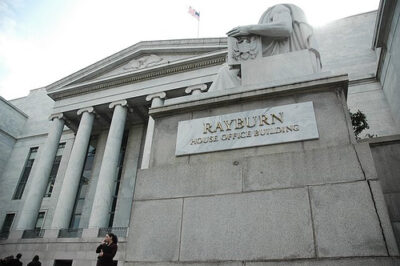
DHS Shuts Down 287(g) Agreement with Maricopa County Following DOJ Investigation, Restricts Secure Communities
Today, the Secretary of the Department of Homeland Security (DHS), Janet Napolitano, announced that DHS will terminate its 287(g) agreement with the Maricopa County Sheriff’s Office and restrict access to the Secure Communities program, following damaging findings released by the Department of Justice (DOJ). After a three year long civil rights investigation into the Maricopa County Sheriff’s Office (MCSO)—an office led by America’s “toughest sheriff” Joe Arpaio—the DOJ announced today that it had “reasonable cause” to believe the Sheriff’s Office has “engaged in a pattern or practice of misconduct that violates the Constitution and federal law.” Read More

DOJ Report Slams Sherriff Joe Arpaio and DHS Restricts 287(g) and Secure Communities Programs
Washington D.C. – After a three-year investigation into the abusive practices of Sherriff Joe Arpaio’s Maricopa County Sherriff’s Office (MCSO), the Department of Justice (DOJ) announced today that it had found a pattern and practice of civil rights abuses, including extreme cases of racial profiling. The enormity of the… Read More

Federal Judge Blocks Yet Another Provision of Alabama’s Extreme Anti-Immigrant Law
As if people needed more proof that Alabama’s extreme anti-immigrant law, HB 56, is bad for the state, a federal judge temporarily blocked enforcement of yet another provision of the law this week. U.S. District Court Judge Myron Thompson temporarily enjoined enforcement of Section 30 that, as applied, requires mobile home owners to provide proof of lawful status before renewing their registration. Judge Thompson’s ruling, in which he calls Alabama’s law “discriminatorily based,” is the latest in a series of blows to the harsh law—a law that even Alabama’s own attorney general and governor find problematic. Read More
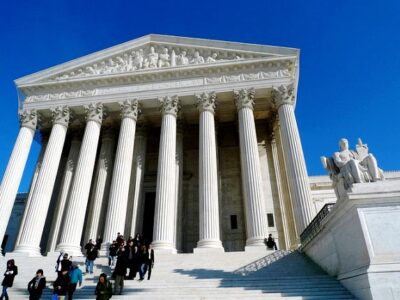
Supreme Court to Weigh in on Injunctions Against Arizona SB 1070
Earlier today, the Supreme Court announced what many supporters and opponents of Arizona SB 1070 long expected: that the Justices will themselves have the final word on the validity of the injunctions entered shortly after the law was enacted last year. Technically, the question before the Justices is simply whether four of the law’s provisions should be temporarily blocked pending resolution of a larger legal challenge. In addition, the Court will not consider claims raised in a separate lawsuit by numerous immigrants’ and civil rights groups. But in the decision it ultimately issues, the Supreme Court may well provide broad guidance about what role, if any, local police may play in enforcing federal immigration law—which could in turn affect legal challenges to copycat laws in other states, such as Alabama. Read More
All gifts are matched dollar for dollar up to $75,000
No one should face the immigration system alone