Immigration at the Border

Colorado Emergency Relief Efforts Impeded by Immigrants’ Mistrust of Law Enforcement
The recent flooding in Colorado, in which eight people died and property losses are likely to reach $2 billion, offers another reminder that local law enforcement efforts are often hindered by our broken immigration system. The Denver Post reported that some unauthorized immigrants risk injury or miss out on assistance because they are afraid to interact with police. For example, Augustina Tema’s husband, who is an unauthorized immigrant, was afraid to come outside when police officers went door-to-door to warn residents of the pending flood. Augustina, a legal resident, expressed fear of applying for assistance because of her husband’s status, a fear other undocumented families echoed. For the undocumented families, the tragedy of losing their homes to flooding is compounded by the loss of their “paper trail”—materials that would be needed to prove residency for any future legalization programs. Disaster-related documentation problems extend to those legally residing in the United States if the papers that prove an immigrant may legally live and work in the United States are lost as well, further hindering emergency assistance. Read More

Customs and Border Protection’s New “Use of Force” Initiatives Are Welcome First Steps
The endemic use of force within U.S. Customs and Border Protection (CBP) made national headlines in 2010 when Anastacio Hernandez Rojas, a 42-year old Mexican national living in San Diego, was killed by a Border Patrol Officer while in CBP custody. Since then, at least 18 other people have have died as the result of alleged excessive use of force by CBP officials, including six U.S. citizens and seven minors under 21. These incidents prompted the Department of Homeland Security (DHS) to review the use of force at CBP. A report issued earlier this month by DHS’s Office of Inspector General (OIG) exposes the inadequacies of the “use of force training” for Border Patrol agents and a series of operational flaws in the agency’s monitoring of employee misconduct. Read More

Dollars and Lives Lost in the Wait for Immigration Reform
Two-and-a-half months after the Senate passed immigration reform legislation (S. 744), the House of Representatives continues to dawdle. Other than giving speeches and mulling over a few backward-looking, enforcement-only bills, the House has done nothing to revamp the broken U.S. immigration system or to realistically resolve the status of the 11 million unauthorized immigrants now living in the United States. The standard excuse for this inaction is that there are too many other high-priority items on the legislative agenda right now—so immigration reform will have to wait. But while Congress waits, dollars and lives are being lost. Read More
The Cost of Immigration Enforcement and Border Security
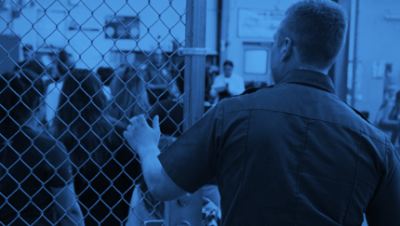
Since the creation of the Department of Homeland Security in 2003, the federal government has spent an estimated $324 billion on the agencies that carry out immigration enforcement. Read More

Months After Passage, Anti-Immigrant Group Still Mischaracterizes Senate Bill
The immigration reform bill (S.744) that the Senate passed in June would fix our broken work visa programs for lower skilled, higher skilled, and agricultural workers; eliminate decades-long backlogs in our immigrant visa programs; increase job and wage protections for U.S. workers; and greatly increase our investment in border security. In addition, the bill would have fiscal and economic effects that would be overwhelmingly positive, according to the Congressional Budget Office (CBO). If enacted, the bill would help reduce the federal budget deficit by approximately $1 trillion over 20 years, would boost the U.S. economy as whole without negatively affecting U.S. workers, and would greatly reduce future undocumented immigration, according to the CBO. However, the Federation for American Immigration Reform (FAIR) released a report this week criticizing the bill. They claim S.744 offers an immediate “amnesty” for the undocumented, lacks specific metrics for measuring border enforcement, weakens the visa entry-exit system, and creates a “nebulous new system” that fails to protect Americans from illegal foreign workers. Read More

Immigration is a Positive Force for Economic Growth in Cities
Posters on metro buses and trains in St. Louis will now welcome you to the city in 17 different languages, one of the many initiatives begun by the St. Louis Mosaic Project to create an atmosphere that welcomes and encourages immigrants to the area. Signs in the public transit system aren’t just designed to look pretty, however, but acknowledge that for many immigrants, particularly those new to the St. Louis region, this is their primary means of going to work or school, shopping, and taking part in all the community has to offer. “The Mosaic Project says a lot about where our region is going,” St. Louis County Executive Charlie Dooley said. “We want to be more diverse and see things from different points of view.” Read More

Local Immigration Enforcement Harms Community Policing and Public Safety
Many local municipalities and law enforcement agencies are concerned that local immigration enforcement programs such as the 287(g) program, which deputize local police to perform duties of federal immigration agents, destroy the relationship between the police and the immigrant communities on whom they rely for cooperation and crime reporting. A report released this month by the Center for Immigration Studies (CIS) states that these fears are unfounded and that local immigration enforcement has no effect on cooperation with police. However, the data cited by CIS, which include crime reporting statistics and a study of the effects of the Prince William County 287(g) program, do not support these claims, and in fact suggest the opposite, that immigration enforcement by local police severely damages relationships with immigration communities and harms public safety. Read More

Women Arrested Demand Action on Immigration Reform
More than 100 women blocked an intersection outside of the House of Representatives Thursday to push for House leaders to finally act on immigration reform. Capitol Police officers arrested the 104 women, including more than 20 who are undocumented, for the act of civil disobedience. More than 200 supporters witnessed the arrests and called on the House to match the women’s courage and pass legislation that will fix the U.S. immigration system. “Each one of us here today understands what incredibly high stakes we are talking about—immigration reform is not just a piece of legislation but the ability for us to take care of our families,” said Pramila Jayapal, co-chair of We Belong Together: Women for Common-Sense Immigration Campaign, at a rally before the arrests. Read More

States Drive Positive Change on Immigration While House Is Stuck in Low Gear
Despite the slow pace of immigration reform in the House of Representatives, it has been a banner year for legislation at the state level to help undocumented immigrants living in the U.S. As the National Immigration Law Center (NILC) explains in a new report, “Inclusive Policies Advance Dramatically in the States,” state legislatures approved laws allowing undocumented immigrants to obtain driver’s licenses, qualify for in-state tuition, and expand worker’s rights. And states and local governments considered measures to limit involvement with immigration enforcement. This was a sharp change from previous years when officials debated measures with provisions that mimicked Arizona’s SB-1070. In the wake of record numbers of Latino and Asian voters participating in the 2012 elections, several state legislatures by and large moved in a more positive direction as lawmakers from both parties supported pro-immigration measures. Read More

ICE Provides Critical Guidance on Limiting and Regulating the Solitary Confinement of Immigrants
Immigration and Customs Enforcement (ICE) issued much-needed guidance Tuesday on the use of solitary confinement in immigration detention facilities. As Immigration Impact reported earlier this year, ICE has been severely criticized for its excessive use of isolation of immigrant detainees. Every day, out of more than 30,000 detainees, roughly 300 immigrants are held in solitary confinement at the nation’s 50 largest detention centers overseen by ICE, according to federal data. Solitary confinement is one of most expensive forms of detention, The New York Times reported in March, and nearly half of immigrant detainees held in solitary confinement are isolated for 15 days or more – “the point at which psychiatric experts say they are at risk for severe mental harm.” About 10 percent are held for more than 75 days. And officials regularly place immigrants in isolation for breaking rules, getting into fights or for their own protection if they have vulnerabilities such as being gay or mentally ill. Read More
