Immigration at the Border

Washington Farmers Fear Economic Impact of National E-Verify Bill
Much like farmers in Georgia who are experiencing labor shortages due to HB 87—the state’s new immigration law which mandates use of E-Verify—growers in Washington state fear that a similar, national E-Verify bill will have a devastating economic impact on the state’s agricultural workforce. This week, the Washington Growers League said that a national E-Verify law would prohibit many of the state’s current farm workers from harvesting crops, which would in turn devastate the industry, slashing production and forcing consumers to buy produce out of state. Rep. Lamar Smith (R-TX) introduced the mandatory E-Verify bill (the Legal Workforce Act or H.R. 2164) back in June. Read More

Department of Justice Seeks Injunction Against Alabama’s Anti-Immigrant Law
Yesterday, the Department of Justice (DOJ) filed yet another lawsuit against extreme state-level immigration laws—this time against Alabama’s HB 56. Already the subject of a class action lawsuit filed by the ACLU and other immigrants’ rights groups, Alabama’s HB 56 would require local law enforcement to verify the immigration status of those stopped for traffic violations, public schools to determine the immigration status of students, employers to use E-Verify and makes it a crime to knowingly rent to, transport or harbor undocumented immigrants. In its motion for a preliminary injunction, however, the DOJ argues that Alabama’s law, much like Arizona’s, interferes with the federal enforcement of immigration laws and places undue burdens on local schools and federal agencies. Alabama’s law was signed into law by Governor Robert Bentley in June and slated to take effect September 1. Read More

American Immigration Council Applauds DOJ for Responding to Alabama’s Punitive Anti-Immigrant Law
Washington, D.C. – On Monday, the Department of Justice filed suit against the state of Alabama to block the implementation of HB 56, which is set to take effect September 1. HB 56 is similar to but far more punitive than Arizona’s SB 1070. The law includes provisions that… Read More

Immigration Case Backlog Reaches All-Time High, Report Shows
As the U.S. continues to pour money into immigration enforcement and detention, the resources necessary for the immigration court system to keep up with enforcement have not been appropriated. In fact, a record number of immigration cases—275,316 as of May 2011—are in the Immigration Court backlog according to a recent report by the Transactional Records Access Clearinghouse (TRAC). In four months, the case backlog grew 2.8%, and it has grown 48% since FY2008. Read More
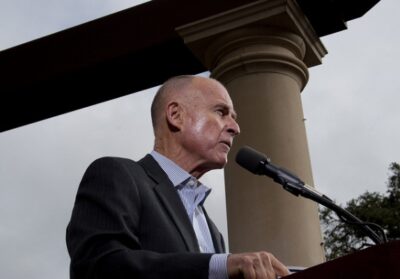
Governor Brown Signs Only Half of California DREAM Act
BY CAITLIN PATLER, DOCTORAL STUDENT AT UCLA'S DEPARTMENT OF SOCIOLOGY This week, California Governor Jerry Brown signed into law Assembly Bill (AB) 130. This new law allows undocumented students enrolled in California’s public colleges and universities to receive privately-funded university scholarships from non-state funds.. While AB 130 is a significant step for the Golden State, it is only one of two bills known collectively as the California DREAM Act. Without its companion bill, AB 131, the legislation does little to address the systemic inequality facing undocumented students in California. Read More

Arizona’s Latest Border Fence Initiative Yet Another Obstacle to Fighting Crime
BY TERRY GODDARD, FORMER ATTORNEY GENERAL OF ARIZONA Over the years, Arizona has seen an exceptional number of frauds, consumer scams and rip offs. Maybe the heat stimulates the flimflam artists, but the sad fact is they come here and discover new and creative ways to take other peoples' money. As Arizona’s Attorney General for the past eight years, I was dedicated to exposing and prosecuting scams, large and small. Unfortunately, the latest ploy is perpetrated by one of Arizona’s own politicians, state senator Steve Smith, who has developed a new scheme for taking money from well-meaning Americans—building the border fence. Read More
Report Reveals Basic Misunderstanding of Deportation Process
As readers of this blog know, the Center for Immigration Studies (CIS) often issues studies that make us cringe. Earlier this week, however, the DC-based restrictionist organization issued a report that made us laugh. Pseudonymously written by a retired government employee, the report purports to explain the “basics” of the deportation process. At more than 10,000 words, the report contains too many false analogies, misleading statistics, and non sequiturs to individually refute. But a few of the more outlandish arguments are too good not to pass up. Read More

Prosecutorial Discretion and the Legacy of John Lennon
BY LEON WILDES AND SHOBA SIVAPRASA WADHIA Most remember John Lennon as a former Beatle, a brilliant musician, husband to artist Yoko Ono and target for deportation by the Nixon Administration. Less known is the story of how Lennon’s immigration saga enabled the first public discussion on prosecutorial discretion in immigration law. Read More
The Morton Memo and Prosecutorial Discretion: An Overview
On June 17, 2011, Immigration and Customs Enforcement (ICE) Director John Morton issued two significant memoranda on the use of prosecutorial discretion in immigration matters. Prosecutorial discretion refers to the agency’s authority to not enforce immigration laws against certain individuals and groups. The primary memo (the Morton Memo on Prosecutorial Discretion) calls on ICE attorneys and employees to refrain from pursuing noncitizens with close family, educational, military, or other ties in the U.S. and instead spend the agency’s limited resources on persons who pose a serious threat to public safety or national security. Morton’s second memo focuses on exercising discretion in cases involving victims, witnesses to crimes, and plaintiffs in good faith civil rights lawsuits. The memo instructs “[a]bsent special circumstances or aggravating factors, it is against ICE policy to initiate removal proceedings against an individual known to be the immediate victim or witness to a crime.” A closer look at the Morton Memo on Prosecutorial Discretion reveals that it reaffirms many of the principles and policies of previous guidance on this subject. The memo, however, takes a further step in articulating the expectations for and responsibilities of ICE personnel when exercising their discretion. Read More

U.S-Mexico Border Residents Not Surprised by Falling Crime Stats
Listening to politicians, one would think that the border is rife with murder, arson, theft, kidnapping, and every other type of violent crime imaginable. Unfortunately, those who spread these images often conflate the violence associated with drugs and arms trafficking with immigration, unfairly painting immigrants as the perpetrators. This image of a violence-ridden, out-of-control border has been used to justify increasingly higher spending on enforcement along the border, increases in Border Patrol agents and the deployment of the National Guard. Immigration restrictionists have also used images of border violence and immigrants committing crimes to shut down attempts at serious comprehensive immigration reform. Read More
