Immigration Benefits and Relief
The immigration laws and regulations provide some avenues to apply for lawful status from within the U.S. or to seek relief from deportation. The eligibility requirements for these benefits and relief can be stringent, and the immigration agencies often adopt overly restrictive interpretations of the requirements. Learn about advocacy and litigation that has been and can be undertaken to ensure that noncitizens have a fair chance to apply for the benefits and relief for which they are eligible. Providing avenues for legal status, protection, and family reunification is vital to ensuring humanitarian protection for immigrants. We are leading policy changes that open more opportunities like asylum, visas for victims of crime or human trafficking, and relief for long-term residents. Explore the resources below to learn more.

Author of Torture Memos Challenges Legality of DACA
As a high-ranking Justice Department attorney after 9/11, John Yoo authored an infamous legal memo arguing that the President, as commander-in-chief of the armed forces, possessed irrevocable authority to order the torture of alleged “enemy combatants.” Although the memos were subsequently revoked, Yoo has remained an ardent defender of presidential power—except, it appears, when it comes to the exercise of prosecutorial discretion for undocumented immigrants. Read More

What Early DACA Application Numbers Tell Us About the Future of the Program
It hasn’t even been a month since the United States Citizenship and Immigration Services (USCIS) first started accepting requests for deferred action under its Deferred Action for Childhood Arrivals (DACA) initiative, yet the New York Times reported this week that the first approvals are already on their way. The Times also reported that the agency has received 72,000 applications as of September 11—almost double the 40,000 reported in the Wall Street Journal just the day before. That’s not bad at all for a program that was only announced three months ago and put into place by the government in 60 days. Read More
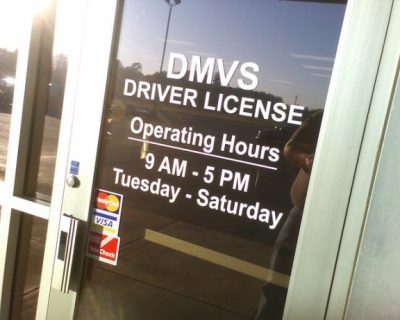
Why States Should Grant DACA Beneficiaries Driver’s Licenses
In the early 2000s, one of the ways states attempted to control unauthorized immigration was by limiting immigrant eligibility for driver’s licenses and state-issued identification documents. The arguments for and against extending eligibility for driver’s licenses to undocumented immigrants takes a new twist with the Deferred Action for Childhood Arrivals (DACA) program. Because those who receive deferred action will also receive work authorization, it seems only logical that they should have access to driver’s licenses, like many other people who have permission to remain in the country. But some are opposing extending licenses to this group, ignoring the fact that both safety and security argue in favor of generous licensing policies. Read More

Why Kobach’s Lawsuit Against Deferred Action is Unlikely to Stand Up in Court
Kris Kobach’s official job title is Kansas Secretary of State. But he is better known for drafting—and being hired to defend in court—state and local immigration laws designed to make undocumented residents “self-deport.” His two most notorious undertakings are Arizona SB 1070 and Alabama HB 56, which have largely been eviscerated by federal courts. Yesterday, Kobach embarked on a new legal escapade, filing a lawsuit to block the Obama administration from granting deferred action to so-called “DREAMERers,” undocumented immigrants who arrived in the country as children. Fortunately, although sure to generate headlines, the lawsuit has little chance of standing up in court. Read More

5 Ways DACA Renews the Conversation on Immigration Reform
There’s no doubt that recent implementation of the Deferred Action for Childhood Arrivals (DACA) initiative is the biggest thing to happen in immigration law in many years. While most of the attention is currently focused on how to make it work, how to apply and how to work out the kinks, it’s important to take a macro view at the ways this program can actually renew the entire conversation on immigration reform. Read More

How Deportations Devastate Families and Communities
It goes without saying that unauthorized immigrants live in constant fear of deportation. After all, any chance encounter with U.S. immigration officials can leave an unauthorized immigrant behind bars and in removal proceedings. Less obvious, perhaps, is the impact that deportations have on families and communities. A mother can be left to provide for the family alone when the father is deported. U.S.-born children can wind up in foster care when their parents are deported. And the more frequently such deportations occur, the greater is the pall of fear which hangs over entire immigrant communities. Read More

Sore Loser, Jan Brewer, Continues Anti-Immigrant Crusade
Despite losing both the legal and public relations battles in the fight over SB 1070, Arizona’s Governor Jan Brewer was anxious to put Arizona back in the spotlight this week. Although she can’t prevent people from requesting or receiving deferred action, she issued an executive order that attempts to prevent Arizona recipients of Deferred Action for Childhood Arrivals (DACA) from obtaining driver’s licenses in her state. The order, which also banned access to public benefits (something DACA recipients are ineligible for, anyway) has been characterized as mean-spirited and belligerent, but it is also just wrong on the facts Read More

Busting Myths About Deferred Action
Beginning today, undocumented immigrants brought to the country as children may officially submit requests for deferred action, a form of prosecutorial discretion that protects recipients from deportation and allows them to work legally in the United States for up to two years. As might be expected, numerous inaccuracies have surfaced in media coverage and other commentary about the initiative, known formally as Deferred Action for Childhood Arrivals (DACA). Below, we address common falsehoods about deferred action in general and the Obama administration’s initiative in particular. Read More

BREAKING: Deferred Action Request Forms Now Available Online
Earlier this afternoon, the Obama administration officially released the forms to request deferred action that may be filed by undocumented immigrants who arrived in the country as children and meet various other requirements. Beginning tomorrow, August 15, applicants may mail their requests to specified facilities maintained by U.S. Citizenship and Immigration Services (USCIS), an agency within the Department of Homeland Security (DHS). While many questions about the initiative remain to be answered, the basic filing requirements are now clear. Read More
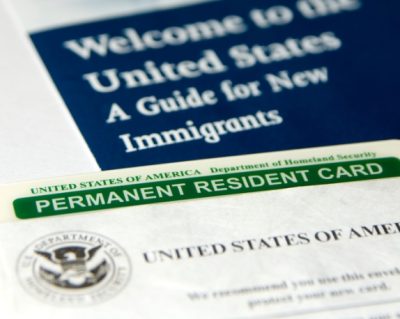
Why Deferred Action is Not Amnesty
Long before President Obama announced his plan on deferred action for childhood arrivals, immigration restrictionists were arguing that any exercise of prosecutorial discretion benefitting undocumented immigrants was equivalent to “amnesty.” Consequently, it’s no surprise that one of the biggest myths supporters of the program have had to address is that deferred action is a type of amnesty. Read More
Your support moves the American story toward justice, dignity, and belonging.
America's story is an immigrant story.