Immigration Enforcement

How Expanding E-Verify Hurts the Economy and American Workers
By Tyler Moran, National Immigration law Center. The Government Accountability Office (GAO) recently released a report, Employment Verification: Federal Agencies Have Taken Steps to Improve E-Verify, but Significant Challenges Remain. GAO’s verdict on E-Verify (a program to verify the employment eligibility of new hires) is in: this program is not yet ready for prime time. According to GAO, risks posed by mandatory E-Verify range from encouraging employers to skirt the rules to job losses for native born and immigrant work-authorized people alike. Policymakers who want to roll out this flawed program as quickly as possible should heed the report’s warning that “significant challenges remain” with E-Verify. Read More

State Lawmakers Conflicted Over Immigration Enforcement Measures
South Carolina State House. Photo by Joe Shlabotnik. As many states begin their legislative sessions this week, some lawmakers are conflicted over whether to proceed with strict immigration enforcement measures, forcing them to balance immigration measures with other pressing state priorities. Understandably, state legislators want to see something done about our national immigration problems, but many are expressing concerns over the potential harm Arizona copycat laws could have on their state—including expensive court battles, racial profiling and backlash from religious, state law enforcement and business groups. Read More
The Emperor (and the Anti-Fourteenth Amendment Crowd) Have No Clothes
What a difference a few weeks can make. Just last month, the papers were filled with stories about the amazing feats of DREAM Act students, whose commitment and love for this country is boundless, even as they risk deportation in order to tell their stories. This week, the papers are filled with stories of vicious state legislators who want to turn back the clock on civil rights by stopping “an invasion of illegal aliens” through an end to birthright citizenship. Where the DREAM Act movement is about hope and opportunity, this ugly new attempt to change the Fourteenth Amendment is about hate and deprivation. Read More
Legislators Intend to Burden States with Costly Immigration Litigation
State Legislators for Legal Immigration member, State Rep. Daryl Metcalfe (R-PA) Yesterday, a group of state legislators gathered in a small room in Washington, D.C. to present their plan for reinterpreting the 14th Amendment—the amendment which states that all persons born in the U.S., and subject to jurisdiction thereof, are citizens of U.S. and the states in which they reside. Although the legislators proclaimed a desire to “protect the states” and to “love" the 14th Amendment, which was adopted after the Civil War to guarantee citizenship to the American-born children of freed slaves, you wouldn’t know it listening by to their blatant disregard for the American taxpayer—upon whom they plan on sticking costly litigation fees. Chairman of the House Immigration Subcommittee, Congressman Steve King (R-IA), also introduced a bill in the new Congress to end constitution citizenship. Read More
State Legislators Attempt to Turn Back Clock to Antebellum South
At a press conference this morning at the National Press Club, a coalition of state legislators and immigration restrictionists known as the State Legislators for Legal Immigration (SLLI) presented their proposal to turn back the clocks to the pre-Civil War era to create a new definition of “state citizenship,” create a new second-class citizenship, and fundamentally alter the principles of the U.S. Constitution. With connections to restrictionist group FAIR and the notorious John Tanton Network, SLLI members Rep. John Kavanaugh of Arizona, Rep. Daryl Metcalfe of Pennsylvania, Kansas Secretary of State-elect Kris Kobach and others were on hand to monger more fear on “the illegal alien invasion” and, in the words of South Carolina’s state Senator Danny Verdin, cure the “malady” and “poison” of undocumented immigration. Read More
Inch by Inch, Hearing by Hearing: A Look Ahead at the GOP’s Immigration Agenda
Shortly after Republicans gained a majority in the House after midterm elections, many attempted to predict the Republican game plan on immigration—which, as you can imagine, was no herculean task considering the GOP’s three-ring enforcement spectacular these last few years. Recall also the recent Republican opposition to the DREAM Act, opposition they rationalized using the “border first” mantra. But as the 112th Congress convenes this week, we get an actual look at upcoming congressional committee hearings and what they might reveal about Republican leaderships’ plans for immigration—namely, a statewide approach to ramped-up enforcement measures, more border security and an attack on the 14th amendment. Read More
Who’s Monitoring the Corrections Corporation of America (CCA)?
Last month, the Associated Press reported that a video obtained by their reporters showed Corrections Corporation of America (CCA) prison guards watching prisoners fight in an Idaho prison, ignoring the pleas of the prisoner being beaten, Hanni Elabed. While this was not an immigration detention facility, CCA operates many detention facilities under contract from Immigration and Customs Enforcement (ICE). ICE needs to look closely at this incident and others reported this year and reassess whether they will continue to risk housing immigration detainees in CCA facilities. Read More
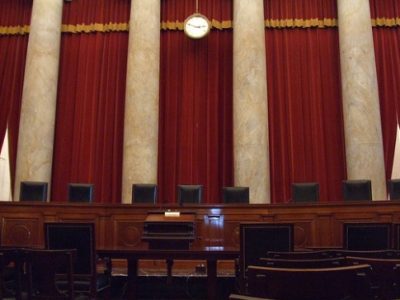
Win, Lose or….Draw? The Supreme Court Tackles Arizona’s Employer Sanctions Law
Those following the Obama Administration’s legal challenge to Arizona’s SB 1070 have likely heard about “preemption”—the legal concept governing when state laws conflict with, and are therefore superseded by, acts of Congress. The heart of the dispute over SB 1070 is whether states have a right to provide assistance that the federal government does not want. No one knows if or how the Supreme Court will ultimately answer that question. But a number of hints may emerge when the Justices issue a ruling in Chamber of Commerce v. Whiting, a case testing the legality of a different law known as the Legal Arizona Workers Act. Passed in 2007, the act imposed new requirements to prevent employers from hiring unauthorized workers, as well as harsh consequences for doing so. While the Justices’ questions during Wednesday’s oral argument offered reason for hope among immigrants’ rights advocates on one part of the law, they left the fate of the other unresolved. Read More
Where’s the Valor? DHS Uses Discretion to Deport, Rather than Assist, Foreign-Born
Ever since DHS announced that it had removed more people from the United States than ever before—a record-breaking 392,862—in October, it has relied on that number as a defense from attacks that the Administration isn’t tough on immigration enforcement. Today, however, the Washington Post suggests that ICE may have gone to extraordinary means to reach that goal by relying on increased offers of “voluntary return”—that is, voluntary departure from the U.S. without an immigration order. The Center for Investigative Reporting’s Andrew Becker reported that ICE loosened the restrictions for who could be offered voluntary return rather than appearing before an immigration judge: Read More
Will Local Lawmakers Take the Immigration Enforcement Bait?
As local lawmakers begin to lay the groundwork for next year’s legislative agenda, some are attempting to prioritize immigration enforcement ahead of efforts to jump-start flagging economies. In Oklahoma, for example, an internal storm is brewing between a House Republican and the Speaker-elect about where the party’s “social agenda” (read: immigration enforcement) fits on the legislative priority list. Similar battles over whether to pursue Arizona-esque immigration enforcement legislation are abound in Virginia, Nevada, Florida, Colorado and California. While the actual enforcement legislation may differ from state to state, legislators are weighing the same questions—cost of implementation, lengthy court battles, divisiveness, public safety concerns and economic priorities. The question remains, however, given the federal challenge to Arizona’s SB1070 and economic loss due to boycotts, whether other state legislators will take the immigration enforcement bait? Read More
All gifts are matched dollar for dollar
No one should face the immigration system alone