Immigration Reform
The last time Congress updated our legal immigration system was November 1990, one month before the World Wide Web went online. We are long overdue for comprehensive immigration reform.
Through immigration reform, we can provide noncitizens with a system of justice that provides due process of law and a meaningful opportunity to be heard. Because it can be a contentious and wide-ranging issue, we aim to provide advocates with facts and work to move bipartisan solutions forward. Read more about topics like legalization for undocumented immigrants and border security below.
Rep. Gutierrez to Introduce Immigration Reform Bill December 15
Today, Rep. Luis V. Gutierrez (D-IL.), announced that he will be introducing a comprehensive immigration reform bill in the House of Representatives on Tuesday, December 15, 2009. Congressman Gutierrez said “We have waited patiently for a workable solution to our immigration crisis to be taken up by this Congress and… Read More

Public Opinion Polls and the Future of Immigration Reform
For those of us who live and breathe immigration reform, it’s hard to remember that immigration isn’t everyone’s top priority. Not surprisingly, public opinion polls and headlines constantly remind us that health care and the economy consistently top the concerns of the general public. Even among Latino voters, a new study shows that health care is the most pressing issue. But this is neither a big surprise nor should it lead to the conclusion that immigration isn’t important. Polls are snapshots, taking the picture of the public psyche on a given day, at a given time, in the context of a range of political concerns. Read More

Nativist Group Discovers Unemployment is High
The Center for Immigration Studies (CIS) has made the rather un-astounding discovery that unemployment in the recession-plagued U.S. economy is high, especially among less-educated workers. In a new report, entitled A Huge Pool of Potential Workers, CIS dissects the latest Bureau of Labor Statistics numbers on unemployment and underemployment among the native-born, and notes that there are between seven and eight million unauthorized immigrants currently working in the United States. The report then makes the casual claim that “if the United States were to enforce immigration laws and encourage illegal immigrants to return to their home countries, we would seem to have an adequate supply of less-educated natives to replace these workers.” What the CIS report fails to mention is that the costly and destructive measures which have been proposed to “encourage” unauthorized workers to leave the country have yet to work and adversely affect native-born workers; that many unemployed natives would have to travel half way across the country to reach the low-wage jobs formerly held by unauthorized immigrants; that removing unauthorized workers from the country also means removing unauthorized consumers and the jobs they support through their purchasing power; and that none of this would aid the nation’s long-term economic recovery. Read More

Napolitano Looks for Comprehensive Way Forward
Department of Homeland Security (DHS) Secretary Janet Napolitano testified in an oversight hearing today before the Senate Judiciary Committee. While reinforcing her commitment to securing our borders and enforcing our immigration laws in smart and effective ways, Napolitano also reaffirmed her commitment to immigration reform as a way to strengthen our immigration enforcement policies—a commitment that includes, as Secretary Napolitano notes, responsibility and accountability from everyone involved: Read More
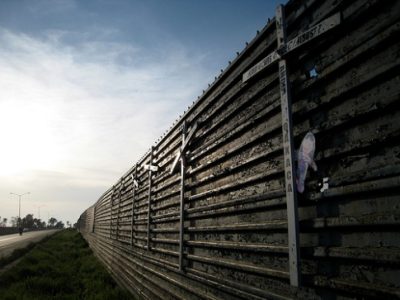
Transforming the Role of Immigration Enforcement through Immigration Reform
For years, the U.S. government has tried and failed to curb undocumented immigration through enforcement-only tactics at the border and interior raids. The number of Border Patrol Agents has increased substantially over the past years—as have budgets and technological investment at the border—yet none of these increases have resulted in a significant decline in the undocumented population. In fact, we have the largest undocumented population in our nation’s history. Simply enforcing the woefully outdated and ineffectual immigration laws currently on the books is not working. Many immigration enforcement experts—including DHS Secretary Janet Napolitano—agree that the only way to solve our immigration enforcement problems is through comprehensive immigration reform. Read More

Studies Show Latinos Climb Socio-Economic Ladder of Success
As a front-page story in today’s Washington Post reminds us: “Not since the last great wave of immigration to the United States around 1900 has the country’s economic future been so closely entwined with the generational progress of an immigrant group.” The story highlights the degree to which the children of immigrants from Latin America have become crucial to sustaining the working-age population and tax base of the nation—particularly as more and more of the 75 million Baby Boomers retire. Moreover, the parents of these children most likely would not have even come to this country if not for the U.S. economy’s past demand for workers to fill less-skilled jobs—demand which was not being adequately met by the rapidly aging and better-educated native-born labor force. The Post story also casts a spotlight on the insecurities and anxieties of commentators who feel that Latino immigrants and their descendants aren’t integrating into U.S. society and moving up the socio-economic ladder “fast enough.” Although these concerns are certainly understandable, they are as unjustified now as they were a century ago when they were directed at immigrants from southern and eastern Europe. Read More

How Some Houston Charities Stole Christmas…Almost
This week, the Houston Chronicle reported on several Houston area charities that distribute Christmas gifts to needy children—among them, the Salvation Army, Outreach Program Inc., and West Houston Assistance Ministries. Giving to the needy, especially during an economic recession, is truly an admirable mission—except this year the card attached reads “Immigration status, please.” After all, nothing says “holiday cheer” like demanding documentation from the needy. Read More

Rep. Lamar Smith’s Fairytale Economics
Writing in Politico on December 3, long-time anti-immigrant activist Rep. Lamar Smith (R-21st/Texas) claims that President Obama, who attended a forum on jobs and economic growth today, could magically create 8 million job openings for unemployed native-born workers if he would just deport the 8 million unauthorized immigrants now working in the United States. But that’s not how the U.S. economy actually works. Immigrant and native-born workers can not simply be exchanged for one another. Read More

New Report Shines Light on the Economics of Illegal Immigration
Today the Migration Policy Institute (MPI) held an event aimed at dispelling some of the most common myths about illegal immigrants and the U.S. economy and making the case that enforcement-only policies are not cost effective. MPI also released The Economics and Policy of Illegal Immigration in the United States, written by Gordon Hanson, a professor of economics at UC-San Diego. Read More

Immigrants Pull Their Own Weight
This week, the New York-based, non-partisan Fiscal Policy Institute released its long-awaited report, Immigrants and the Economy: Contribution of Immigrant Workers to the Country's 25 Largest Metropolitan Areas. The report studies the 25 largest metro areas (by population) which produce nearly one half of the total gross domestic product of the country. It shows that in the country’s main metropolises, the share of the immigrant population stacks up neatly against their share of economic output. For example, immigrants are responsible for 20% of economic output and make up 20% of the population in these 25 metropolitan areas. In other words, immigrants pull their own weight. Read More
All gifts are matched dollar for dollar up to $75,000
No one should face the immigration system alone