Immigration Reform
The last time Congress updated our legal immigration system was November 1990, one month before the World Wide Web went online. We are long overdue for comprehensive immigration reform.
Through immigration reform, we can provide noncitizens with a system of justice that provides due process of law and a meaningful opportunity to be heard. Because it can be a contentious and wide-ranging issue, we aim to provide advocates with facts and work to move bipartisan solutions forward. Read more about topics like legalization for undocumented immigrants and border security below.
Restrictionists Build Anti-Immigrant Agenda on Backs of American Workers
While perpetuators of the myth that “immigrants take jobs away from hard working Americans” are busy exploiting both immigrants and native-born workers, a new report by America’s Voice Education Fund shines a much needed light on the restrictionist lobby’s real agenda—deportation at any cost. Released last week, the report takes a closer look at the “anti-worker” voting records of supposedly “pro-worker” Congressional Members who, “aided by a shadow coalition of groups with an anti-immigrant agenda,” have consistently built a “deport them all” agenda on the backs of American workers. Read More

Rep. Gutierrez to Introduce Immigration Reform Bill December 15
Today, Rep. Luis V. Gutierrez (D-IL.), announced that he will be introducing a comprehensive immigration reform bill in the House of Representatives on Tuesday, December 15, 2009. Congressman Gutierrez said “We have waited patiently for a workable solution to our immigration crisis to be taken up by this Congress and… Read More

Public Opinion Polls and the Future of Immigration Reform
For those of us who live and breathe immigration reform, it’s hard to remember that immigration isn’t everyone’s top priority. Not surprisingly, public opinion polls and headlines constantly remind us that health care and the economy consistently top the concerns of the general public. Even among Latino voters, a new study shows that health care is the most pressing issue. But this is neither a big surprise nor should it lead to the conclusion that immigration isn’t important. Polls are snapshots, taking the picture of the public psyche on a given day, at a given time, in the context of a range of political concerns. Read More

Napolitano Looks for Comprehensive Way Forward
Department of Homeland Security (DHS) Secretary Janet Napolitano testified in an oversight hearing today before the Senate Judiciary Committee. While reinforcing her commitment to securing our borders and enforcing our immigration laws in smart and effective ways, Napolitano also reaffirmed her commitment to immigration reform as a way to strengthen our immigration enforcement policies—a commitment that includes, as Secretary Napolitano notes, responsibility and accountability from everyone involved: Read More
Transforming the Role of Immigration Enforcement through Immigration Reform
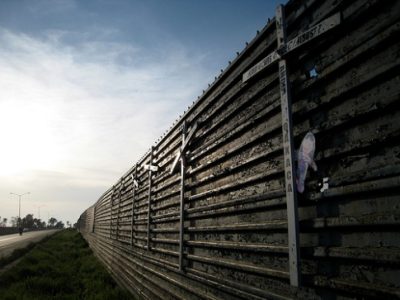
For years, the U.S. government has tried and failed to curb undocumented immigration through enforcement-only tactics at the border and interior raids. The number of Border Patrol Agents has increased substantially over the past years—as have budgets and technological investment at the border—yet none of these increases have resulted in a significant decline in the undocumented population. In fact, we have the largest undocumented population in our nation’s history. Simply enforcing the woefully outdated and ineffectual immigration laws currently on the books is not working. Many immigration enforcement experts—including DHS Secretary Janet Napolitano—agree that the only way to solve our immigration enforcement problems is through comprehensive immigration reform. Read More

Rep. Lamar Smith’s Fairytale Economics
Writing in Politico on December 3, long-time anti-immigrant activist Rep. Lamar Smith (R-21st/Texas) claims that President Obama, who attended a forum on jobs and economic growth today, could magically create 8 million job openings for unemployed native-born workers if he would just deport the 8 million unauthorized immigrants now working in the United States. But that’s not how the U.S. economy actually works. Immigrant and native-born workers can not simply be exchanged for one another. Read More

New Report Shines Light on the Economics of Illegal Immigration
Today the Migration Policy Institute (MPI) held an event aimed at dispelling some of the most common myths about illegal immigrants and the U.S. economy and making the case that enforcement-only policies are not cost effective. MPI also released The Economics and Policy of Illegal Immigration in the United States, written by Gordon Hanson, a professor of economics at UC-San Diego. Read More

Republican Playbook on Immigration Debate Long on Emotions, Short on Facts
Senate Republicans have “thoughtfully’ provided immigration advocates with their strategy for opposing immigration reform in 2010, courtesy of a letter sent to Secretary Napolitano protesting her recent statements that immigration reform is both necessary for DHS to do its job and good for the economy. The letter, signed by twelve Republicans— including Sens. Orrin Hatch of Utah, Charles Grassley of Iowa, and Jeff Sessions of Alabama—was described by Sen. Hatch’s press statement as “taking Napolitano to task” for her remarks. It’s a playbook for the coming year, showing how to make points that are long on emotion and short on facts. Read More

“They” Are “Us”: The Devastating Effects of Broken Immigration Policy on Children in Immigrant Families
The legacy of our broken immigration system extends far beyond our borders or the job market. The price paid by families caught within the system can be devastating, especially when we fail to pay attention to the importance of integrating newcomers into American life. A New York Times editorial this week follows a study that highlights the importance of integrating new Americans and their children. Read More

New Report Shines Light on Detainee Rights Violations in Minnesota
Over the summer, three graduate students at the University of Minnesota’s Humphrey Institute interviewed immigration attorneys and public defenders to document their experiences working with detained immigrants. The result—a heartbreaking account of detainees locked away, without access to counsel or family, in a system where rights and the most minimal detention standards are routinely violated. Read More
Your support moves the American story toward justice, dignity, and belonging.
America's story is an immigrant story.