State and Local
Voter ID Laws Tackle Non-Existent Problem of Immigrant Vote Fraud
It is election season and voter-fraud hysteria is in the air. A raft of restrictive voter ID legislation from coast to coast is aimed primarily at one imaginary problem: fraudulent voting by immigrants who are not U.S. citizens. Supporters of these laws like to pretend that hordes of non-citizens are stampeding into voting booths and illegally changing the outcome of critical elections. But the reality is that voter ID laws have little to do with the exceedingly rare occurrence of illegal voting by immigrants, or any other kind of voter fraud. These are laws designed to disenfranchise racial and ethnic minorities, the poor, and other social groups that might be inclined to vote for the “wrong” candidates. In other words, voter ID laws are meant to limit democracy, not protect it. Read More
Some States Attempt to Move Forward on Immigration Laws Following Supreme Court Decision
Prior to the Supreme Court’s recent decision on Arizona SB 1070, other states that passed immigration laws were also embroiled in complicated legal battles. Alabama, Georgia, South Carolina, and Utah all passed restrictive immigration laws, parts of which were challenged in court and subsequently enjoined pending the Supreme Court’s ruling on Arizona. Now that the Supreme Court has ruled, however, each state is now attempting to interpret that ruling in an effort to implement its immigration law. Read More

Civil Rights Groups Resume Legal Challenges to Alabama’s Immigration Law
Less than three weeks after the Supreme Court’s landmark decision in Arizona v. United States—which struck down three provisions of SB 1070 and invited future challenges to a fourth—civil rights groups are back in court resuming their challenges to copycat laws in other states. Going forward, the lawsuits will focus more on how to interpret the Justices’ decision and less on theoretical legal questions about states’ rights. While the cases in Alabama and other states may take years to resolve, it is already clear that parts of the laws will be immediately struck down. Read More
In California, TRUST Act One Step Closer to Becoming Law
The California state Senate overwhelmingly approved the TRUST Act on Thursday, marking a significant step for a piece of legislation aimed at limiting the humanitarian impact of the Secure Communities program. The bill must still pass the state Assembly and be signed by Gov. Jerry Brown to become law, but its success thus far represents an important victory for the immigrants rights movement and has positioned California as the “anti-Arizona” among states frustrated with Washington’s failure to enact comprehensive immigration reform. Read More
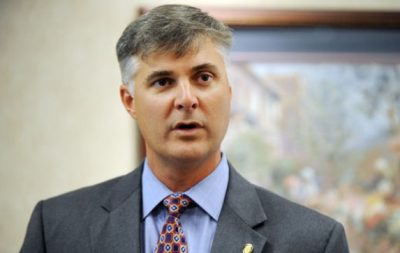
According to Scott Beason, Alabamans Will Return to “Menial Jobs” Over Time
Alabama State Senator Scott Beason continues to link the state’s recent dip in unemployment to its extreme immigration law (HB 56), even though there is no evidence to support that this theory. In fact, many Alabama business have reported difficulties in replacing immigrant workers, many of whom have left the state or gone further underground. But in a recent effort to address this reported labor shortage, Sen. Beason—a sponsor of HB 56—managed to insult both immigrants and native Alabamans alike. Read More
In Arizona Case, Supreme Court Affirms Legality of Prosecutorial Discretion
The Supreme Court dealt a blow to the restrictionist movement on Monday by striking down three provisions of Arizona SB 1070 and leaving a fourth vulnerable to future challenge. But in a lesser noticed development, the Court also undercut the arguments of critics who contend the President violated the Constitution by recently directing his administration not to deport otherwise removable immigrants who were brought to the country as children. As the majority opinion confirmed—and not even Justice Scalia denied—the President’s authority to set enforcement priorities is a valid and important aspect of the immigration system. Read More

DHS Rescinds Part of Controversial 287(g) Program in Arizona
The Obama administration suspended part of its controversial 287(g) program in Arizona this week following the Supreme Court’s ruling in Arizona v. United States. DHS announced that it was ending its “287(g) task force agreements” in Arizona —agreements which deputize certain local police to enforce immigration laws. Other state immigration programs, however, like Secure Communities and the 287(g) jail agreements (which allow deputized arresting officers to enforce immigration laws in jails), will remain in effect. Read More

Does the Supreme Court Think Most Immigrants are Criminals?
Even as the Supreme Court struck down three provisions of Arizona’s anti-immigrant law (SB 1070), the Justices appeared to embrace a major falsehood of nativist ideology: that immigrants are more likely to be criminals than the native-born. On page six of the majority opinion, the Court maintains that unauthorized immigrants are “reported to be responsible for a disproportionate share of serious crime” in Arizona’s Maricopa County. The source cited for this bold statement is a 2009 report from the Center for Immigration Studies (CIS)—a deeply flawed report which attempts to overturn a century’s worth of research demonstrating that immigrants are less likely than the native-born to commit violent crimes or end up behind bars. Read More
Supreme Court Issues Mixed Decision on Arizona SB 1070
The Supreme Court issued a mixed ruling on Monday in the Obama administration’s challenge to Arizona SB 1070. By a 5-3 margin, the Justices upheld the injunction against provisions of the law that authorize police to arrest immigrants suspected of committing removable offenses (Section 6), and that impose penalties under state law for immigrants who fail to carry “registration” papers (Section 3) or attempt to work without federal authorization (Section 5). Although the Court allowed the implementation of the provision of SB 1070 requiring police to determine the immigration status of people in custody “reasonable suspicion” exists that they are in the country unlawfully (Section 2(B)), it left open the door to future legal challenges. Read More

After 30 Years, Plyler v. Doe Decision Survives but Remains Under Attack
Thirty years ago today, the Supreme Court issued its landmark decision in Plyler v. Doe, holding that states cannot deny a free public education to students for lack of valid immigration status. The decision has since opened the schoolhouse doors to untold numbers of children who might otherwise be deprived of a basic education. Yet today, the decision remains under continued attack from critics who—as part of an ongoing effort to put the issue back before the Justices—appear willing to sacrifice the welfare of U.S. citizens. Read More
Your support moves the American story toward justice, dignity, and belonging.
America's story is an immigrant story.