State and Local

Religious Community Latest to Join Battle Against Alabama’s Extreme Anti-Immigrant Law
Bishop William H. Willimon, United Methodist Church of North Alabama. With only weeks until Alabama’s extreme anti-immigrant law, HB 56, is slated to take effect (September 1), the coalition of groups challenging the law continues to grow. Shortly after Alabama Governor Robert Bentley signed HB 56 in June, several civil rights groups—including the ACLU—filed a class action lawsuit against Alabama’s law. Earlier this month, the Department of Justice (DOJ) filed suit as well—much like it did against Arizona’s SB1070—in hopes of a receiving a preliminary injunction against key provisions of the law. This week, faith leaders in the state—who also filed suit against the law—added their voice to the chorus of civil rights, law enforcement, businesses, education, and international communities who vocally oppose the law. Read More

50 States Work on Immigration Legislation While Congress Refuses to Act
The National Conference of State Legislatures (NCSL) recently released an analysis of the number of immigration-related proposals introduced at the state level between January and June of 2011. NCSL found that more immigration-related bills (1,592) were introduced in the first half of 2011 than in the same time period in 2010 (1,374). While the bills weren’t all bad—representing both a mixed bag of punitive and progressive proposals—they tell a bigger story of 50 states grappling with a broken immigration system while Congress sits back and watches. Read More
Immigration Restrictionists Take SB 1070 to Supreme Court
More than a year after SB 1070 was initially enjoined in federal court, the immigration restrictionists behind Arizona’s misguided immigration law have brought their case to the Supreme Court. Proponents of SB 1070 are likely to hail the state’s petition, filed yesterday, as not only the first step toward reversing the injunction against the law’s most punitive provisions, but toward cementing states’ role as the primary enforcers of federal immigration law. While we won’t know whether the Justices will even hear the case until at least October, the petition already foretells an uphill climb for Paul Clement, the attorney representing Arizona and former Solicitor General under President Bush, to persuade the Court to overturn long established principles. Read More
Department of Justice Seeks Injunction Against Alabama’s Anti-Immigrant Law
Yesterday, the Department of Justice (DOJ) filed yet another lawsuit against extreme state-level immigration laws—this time against Alabama’s HB 56. Already the subject of a class action lawsuit filed by the ACLU and other immigrants’ rights groups, Alabama’s HB 56 would require local law enforcement to verify the immigration status of those stopped for traffic violations, public schools to determine the immigration status of students, employers to use E-Verify and makes it a crime to knowingly rent to, transport or harbor undocumented immigrants. In its motion for a preliminary injunction, however, the DOJ argues that Alabama’s law, much like Arizona’s, interferes with the federal enforcement of immigration laws and places undue burdens on local schools and federal agencies. Alabama’s law was signed into law by Governor Robert Bentley in June and slated to take effect September 1. Read More

American Immigration Council Applauds DOJ for Responding to Alabama’s Punitive Anti-Immigrant Law
Washington, D.C. – On Monday, the Department of Justice filed suit against the state of Alabama to block the implementation of HB 56, which is set to take effect September 1. HB 56 is similar to but far more punitive than Arizona’s SB 1070. The law includes provisions that… Read More
Governor Brown Signs Only Half of California DREAM Act
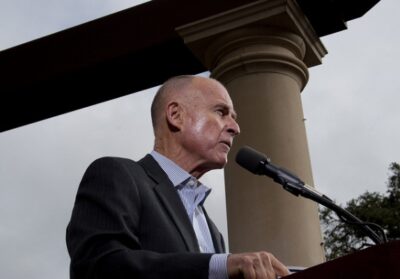
BY CAITLIN PATLER, DOCTORAL STUDENT AT UCLA'S DEPARTMENT OF SOCIOLOGY This week, California Governor Jerry Brown signed into law Assembly Bill (AB) 130. This new law allows undocumented students enrolled in California’s public colleges and universities to receive privately-funded university scholarships from non-state funds.. While AB 130 is a significant step for the Golden State, it is only one of two bills known collectively as the California DREAM Act. Without its companion bill, AB 131, the legislation does little to address the systemic inequality facing undocumented students in California. Read More

The Cost of Doing Anti-Immigrant Business: Russell Pearce to Face Recall Election
While the authors and proponents of state level anti-immigrant legislation received some measure of notoriety initially, one could also predict that there would be a corresponding price to pay for pursuing such costly and divisive immigration measures. Aside from the immediate lawsuits filed in nearly every state that passed Arizona copycats, there are now additional political and fiscal costs that states and supporters of these restrictive laws must pay. Read More
ACLU, Civil Rights Groups File Suit Against Alabama’s Immigration Law
More than just stars fell on Alabama last week when civil rights groups filed a class action lawsuit against the state’s restrictive immigration law, HB 56, charging that the law unconstitutionally interferes with federal law and will lead to racial profiling. Filed on Friday, the lawsuit makes Alabama the fifth state (joining Arizona, Utah, Indiana and Georgia) to defend itself against a costly legal challenge to Arizona-style immigration laws. Federal courts have blocked key provisions of restrictive immigration enforcement laws in every state that passed them, save South Carolina, which only recently passed a copycat law. Read More

Restrictive Immigration Law Continues to Threaten Georgia’s Farming Industry
Just days after part of Georgia’s immigration law, HB 87, went into effect, farmers in the Peach State are panicking over how they will find enough workers to harvest their crops—some of which are already starting to spoil. Although a federal judge granted a preliminary injunction enjoining two key provisions of HB 87 last month, the provision requiring employers to verify the immigration status of new hires (E-Verify) went into effect July 1. In an industry where 80% of workers are said to be undocumented—and few American citizens, legal workers or even convicted criminals are willing to step in to do the work—Georgia farmers are now speaking up about how future labor shortages will impact the state’s $1.1 billion industry. Read More
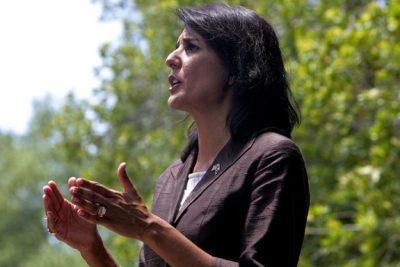
South Carolina Governor Signs $1.3 Million Immigration Enforcement Law
This week, on the same day that a federal judge enjoined key provisions of Georgia’s immigration law, South Carolina Governor Nikki Haley signed an Arizona-style immigration bill into law. To date, federal judges in four states (Arizona, Utah, Indiana and Georgia) have blocked key provisions of their Arizona-inspired immigration laws, arguing that these laws unlawfully interfere with federal authority over immigration matters. So what makes South Carolina any different? Nothing, except for the $1.3 million price tag in addition to the cost of implementation and legal fees incurred from defending the law. Read More
All gifts are matched dollar for dollar up to $75,000
No one should face the immigration system alone