 The American Immigration Council is a non-profit, non-partisan organization.
 In 2012, the lives of hundreds of thousands of immigrants who came to the U.S. as young children changed dramatically with the creation of the Deferred Action for Childhood Arrivals (DACA) program – an executive action that provided recipients protection from deportation and renewable work authorization. DACA has allowed immigrant youth who have already been living in the U.S. for an extended period of time the freedom to live with more security and stability.
Suddenly, Esmeralda was able to obtain her state driver’s license just like her U.S.-born friends. Faten, who completed most of her education in the U.S. was able to attend college after graduating from high school along with her classmates. Daniel could breathe a little easier knowing he was protected from the threat of deportation.
But today, on DACA’s 14th anniversary, Esmeralda, Faten, and Daniel face detention and deportation at the hands of the Trump administration, which has worked to undermine DACA’s protections and directly target people who have benefitted from it. Under the administration’s mass deportation agenda, immigration enforcement agencies are stripping DACA recipients of their safety and their ability to work lawfully.
While the administration initially claimed to be targeting hardened criminals for deportation, the enforcement happening on the ground proves that the opposite is true. Mothers like Maria – a DACA recipient with no criminal record who has lived in the U.S. for 27 years – are being ripped away from their daughters during routine adjustment of status interviews at U.S. Citizenship and Immigration Services (USCIS) offices. Fathers like José, who arrived in the U.S. at the age of 8, are being carelessly separated from their newborn children and deported to a country they barely know.
The administration is pursuing several strategies to dismantle the DACA program, placing DACA recipients at heightened risk of enforcement as it increasingly targets these long-term residents for detention and deportation. DACA renewals face unprecedented delays with USCIS, shutting larger numbers of individuals out of the ability to work lawfully and pushing them into accruing unlawful presence – days spent in the U.S. without being legally admitted, paroled, or authorized – as they wait months for their renewals to be processed.
On top of these delays, the Board of Immigration Appeals (BIA) issued a precedential decision in April 2026 finding that a person having DACA alone is an insufficient reason to terminate removal proceedings against them, further weakening the longstanding protections DACA recipients have held against deportation from the country they call home.
These developments are taking place against the backdrop of longstanding litigation brought by Texas and other states challenging DACA’s legality. In January 2025, the U.S. Court of Appeals for the Fifth Circuit issued a decision finding DACA’s grant of work authorization unlawful but upholding the part of DACA protecting its recipients from deportation. That court also limited the impact of its decision to the state of Texas. In other words, while DACA recipients in other states remain able to renew their work authorizations, DACA recipients in Texas are getting shut out of the ability to work lawfully as their employment authorization documents expire. The case was remanded to the district court, where it remains pending without a final decision.
The Department of Homeland Security (DHS) has also admitted that it has jailed over 260 DACA recipients and deported more than 80. Immigrants’ rights advocates have accurately described this multi-pronged dismantling of the program and targeting of undocumented immigrants who arrived as children as a death by a thousand cuts.
There is a better way forward.
Polling shows that an overwhelming majority of Americans support the creation of a pathway to citizenship for DACA recipients. A 2025 Gallup poll revealed that that 80% of Americans support granting permanent legal status to individuals brought to the U.S. as children. At the congressional level, DACA has also received wide bipartisan support since its inception.
Over the years, individuals with DACA have contributed significantly to the United States. DACA recipients contribute almost $17 billion to the U.S. economy annually. DACA recipients are homeowners, business leaders, students, and taxpayers. Most importantly, DACA recipients are our friends, family, and neighbors.
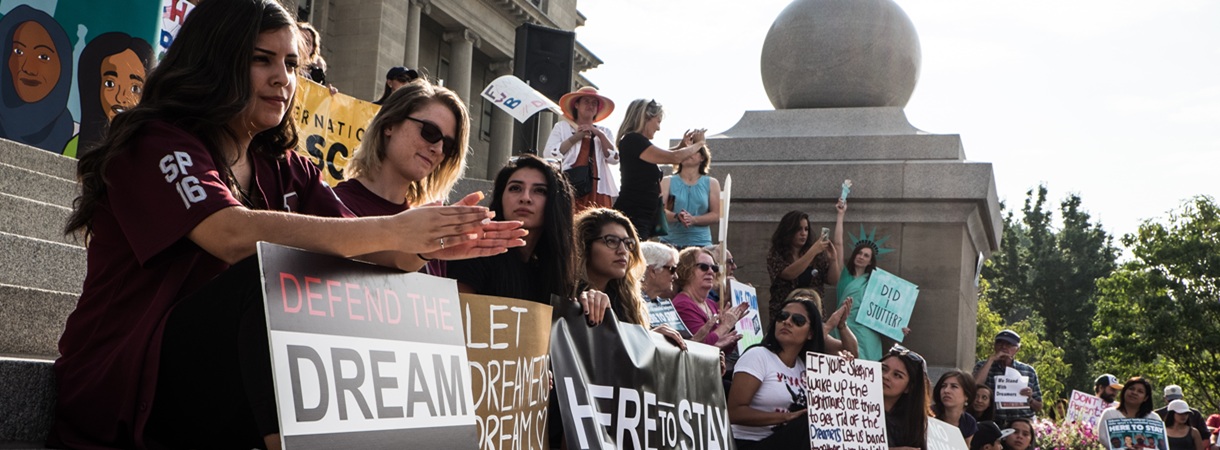
From its inception, DACA was not designed to be a permanent solution. Instead, DACA was meant to be a stopgap measure to protect immigrant youth thanks to years of tireless advocacy from undocumented young people and allies. DACA was a response to years of congressional inaction on paths to permanent status and was meant to protect hundreds of thousands of young people while Congress passed comprehensive immigration reform. But for the last 14 years, Congress has failed year after year to meaningfully protect the Dreamers that call America home.
DACA recipients in this country deserve the freedom to pursue their dreams, but right now they are living through a daily nightmare as they face the threat of detention and deportation. DACA recipients are Americans in every way, except on paper. Congress can and should find a way to provide them with a path to citizenship.