 The American Immigration Council is a non-profit, non-partisan organization.
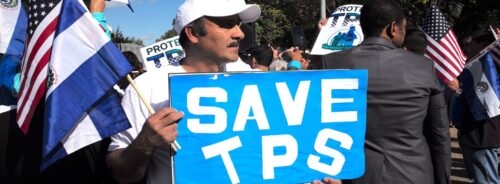
 Today the U.S. Supreme Court issued two seismic immigration law decisions, ruling 6-3 in the Trump administration’s favor in each case. The first case, Mullin v. Doe, overturns lower court decisions blocking the Trump administration’s move to end Temporary Protected Status (TPS) for roughly 350,000 Haitians and 4,000 Syrians. The second, Mullin v. Al Otro Lado, endorses a policy dating back to the last months of the Obama administration which permitted border officials to turn away asylum seekers arriving by land to ports of entry along the U.S.-Mexico border.
Here’s what you need to know about each decision.
Temporary Protected Status and Mullin v. Doe
When President Trump took office, roughly 1.3 million people were present lawfully in the United States on TPS, including 350,000 Haitians, the majority of whom entered legally during the Biden administration and were granted TPS following the assassination of Haitian President Jovenel Moïse in July 2021 and as a result of the ongoing crisis which enveloped the country in the aftermath.
When the Trump administration terminated TPS for Haiti, Syria, and other countries, courts determined that the administration failed to abide by required procedures established by Congress. Under those procedures, TPS should only be terminated if an interagency review determines that conditions in the country have improved. Documents uncovered during the Haitian TPS case revealed that the Trump administration failed to follow required legal procedures and ignored ongoing dangers in Haiti.
Despite this, the Supreme Court ruled 6-3 that a provision of the TPS statute limiting lawsuits challenging TPS “determinations” prevented courts from hearing any lawsuits challenging the Department of Homeland Security (DHS) secretary’s failure to follow the required legal procedures. In addition, the majority opinion declared that President Trump’s repeated public denigration of Haiti and Haitians did not rise to the level of unconstitutional racial animus that would permit a court to set aside the TPS decision.
Crucially, the Court did not rule on whether former DHS Secretary Kristi Noem had gone through the required procedures set out by law. Rather, the Court said that questions of whether the DHS secretary followed the law cannot be heard by courts in the first place, meaning that in the future even an openly unlawful decision to grant or terminate TPS could be entirely insulated from judicial review.
Once this decision goes into effect in the days or weeks to come, hundreds of thousands of people lawfully present in the country will lose their status. Many will become undocumented for the first time ever. The decision will also permit the Trump administration to return to federal court in other cases and overturn decisions ruling against the termination of TPS for countries such as Venezuela, Somalia, Ethiopia, and others.
The impact of this decision is likely to be very significant in communities with large numbers of TPS recipients. Healthcare groups have flagged that thousands of Haitian nurses, home health aides, and other healthcare workers are expected to lose their jobs. Beyond Haitian TPS, over 600,000 Venezuelans granted TPS were also hoping that a favorable decision would permit them to resume their lawful status in the country. Those hopes seem likely to be dashed now.
As of today, nearly 300,000 people still retain TPS that has yet to expire or be terminated by the Trump administration, including almost 200,000 Salvadorans who have had TPS for over 25 years and 50,000 Ukrainians who have had TPS since the outbreak of the war. They are all now at further risk of losing their protections, as the Supreme Court hands a green light to the Trump administration to make pretextual decisions, safe in the knowledge that no court can stop them.
Unless Congress takes steps to provide permanent legal status to TPS holders, hundreds of thousands are now vulnerable to losing work authorization and facing deportation.
Turn-backs of asylum seekers at the border
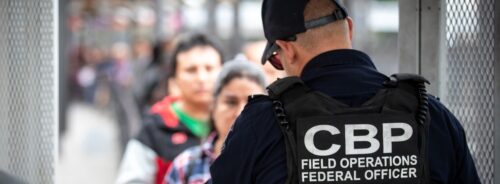
U.S. law provides that any person who is physically present in the United States or who “arrives in” the United States may apply for asylum. Congress further directed that immigration officers must “inspect” any noncitizen who “arrives in” the United States to determine if they should be admitted to the country — a function U.S. Customs and Border Protection (CBP) officers carry out thousands of times per day at ports of entry.
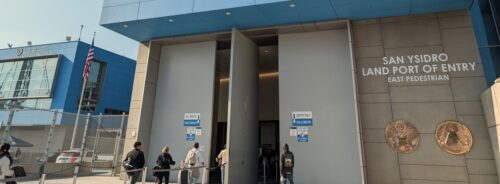
Despite these commands, since 2016, the federal government has at times turned away asylum seekers attempting to enter lawfully at ports of entry along the U.S.-Mexico border without inspecting or permitting them to access the asylum system. To carry out this “metering” policy, CBP officers have been stationed at the physical border line, preventing people perceived to be asylum seekers from physically stepping onto U.S. soil.
Although CBP has at times claimed that this policy was required because of capacity restrictions, DHS’s Office of Inspector General found in 2020 that CBP officers routinely turned away asylum seekers despite empty processing cells and ample capacity. OIG also raised concerns echoed by courts that this metering practice incentivized many migrants to cross the border illegally, because it was too dangerous to wait in Mexico for months for an opportunity to seek asylum at a port of entry.
Today, the Supreme Court blessed the practice of metering, overturning a 9th Circuit decision which had found that CBP had an affirmative obligation to process people who arrive at ports of entry but who have not yet stepped on U.S. soil after CBP officers have blocked their passage. The Court found that there was a difference between “arrives in” and “arrives at” the border, and declared that only those individuals who have physically set foot in the United States have a right to be inspected and apply for asylum.
The upshot of today’s decision is that future administrations may now adopt or expand the previous practice of preventing asylum seekers from accessing ports of entry, although the opinion is careful to explain that in the Court’s view, the prior metering policy only delayed, rather than denied, access to the asylum process. During previous periods of metering at the border, thousands of asylum seekers were forced to wait weeks or months in squalid refugee camps along Mexico’s northern border and were often preyed on by cartels. Should there be a surge of migration in the future following another crisis in Central or South America, these camps could return if metering resumes.