The American Immigration Council is a non-profit, non-partisan organization.
 Millions of people across the globe tuned into the draw for the 2026 FIFA World Cup. The ceremony decided which countries will play each other at next summer’s tournament, co-hosted for the first time by the United States, Canada, and Mexico.
Hosting the World Cup, the largest sporting event in history, typically means welcoming all who love the beautiful game. It is an opportunity for hosts to advertise the best that their nation has to offer.
But the Trump administration’s restrictive immigration agenda, including a travel ban on 39 countries and aggressive interior enforcement, signals the opposite: that the U.S. is working to severely narrow who can come and who can stay, and stepping back from the international stage while the world watches on.
For many soccer fans, excitement about the World Cup will be mixed with anxiety about whether they will be allowed to travel to the U.S. for the games and if they will feel safe doing so. With record-high ticket costs already pricing out many would-be travelers, the U.S. should not be turning away fans who could fill stadiums and generate the economic activity host cities are counting on.
What policies will have the biggest impact on the 2026 World Cup?
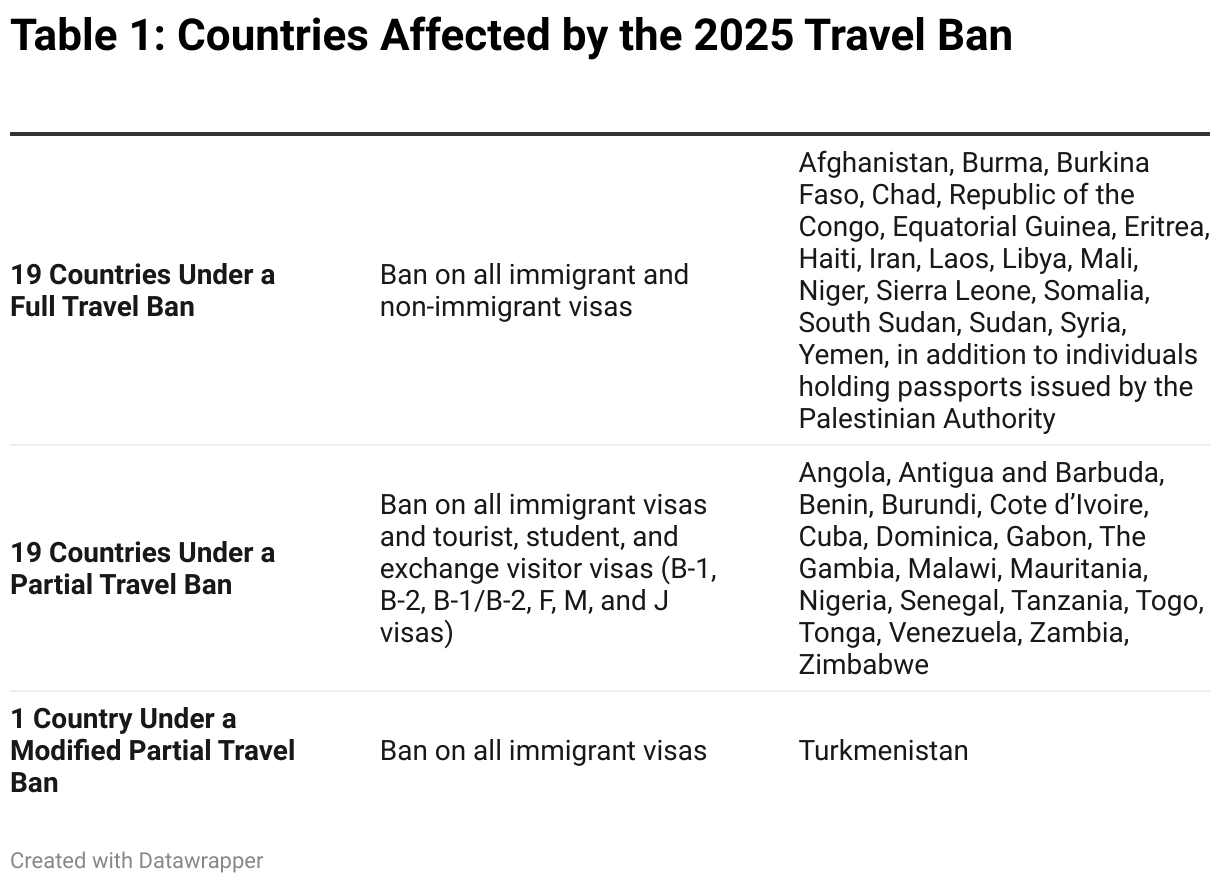
On June 4, 2025, President Donald Trump issued a proclamation restricting or limiting the entry of nationals from 19 countries, mostly from the Middle East and Africa. On December 16, 2025, the administration expanded the list to 39 nations. Fans from each of these countries will largely be unable to attend any games in the U.S during next year’s tournament, unless they have a valid visa issued before June 9, 2025 for the original 19 countries, or January 1, 2026 for the additional 20 countries.
Notably, “any athlete or member of an athletic team, including coaches, persons performing a necessary support role, and immediate relatives, traveling to the World Cup” is exempt from the policy, according to the proclamation. Individuals who are diplomats, permanent residents of the U.S., or whose travel “would serve a United States national interest” are also exempt from the ban.
While the ban only impacts travel to the U.S., the vast majority of 2026 World Cup games will be played there. Of the tournament’s 104 games, 78 will take place in U.S. cities, including the two semifinals and final, compared to 13 each in Canada and Mexico.
Which qualified teams are impacted by the travel ban?
Haiti, Iran, Senegal, and Cote d’Ivoire are the four teams that were included in the June and December travel bans and have also qualified for the 2026 World Cup. In each case, B-2 tourist visas, which is how most fans would attend the World Cup, are prohibited.
Haiti qualified for the tournament for the first time in over 50 years. Yet due to the travel ban, most fans from the island will not be able to watch their team play in the U.S. To make matters worse, the Trump administration recently ordered an end to Temporary Protected Status (TPS) for Haitians, despite rampant gang violence on the island. This means 340,000 Haitians currently living in the country will lose legal protection and work authorization by February 3, 2026. And with the White House not ruling out immigration enforcement actions at World Cup games, some newly-undocumented Haitian fans may face a risk by watching their team play in-person.
Iran, on the other hand, decided to boycott the draw altogether, claiming that the U.S. denied visas to members of its delegation.
Fans from other soccer-crazed nations like Sierra Leone and Republic of the Congo also face a travel ban and will likely miss out on the World Cup experience, regardless of whether their teams qualified.
What comes next?
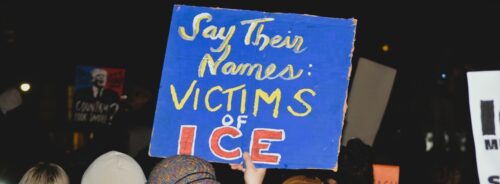
Beyond these travel restrictions, the tournament will take place in the context of the Trump administration’s aggressive immigration enforcement in major cities. So far this year, federal officials have conducted large scale operations in Los Angeles (a World Cup host city) along with Chicago, Charlotte, New Orleans, and the Twin Cities, arresting immigrants and U.S. citizens, alike, while sowing fear and chaos.
During this past summer’s FIFA Club World Cup, also hosted in the U.S., Customs and Border Protection published (and then deleted) a social media post signaling that it would have a presence at the tournament.
This all begs the question: can Trump’s restrictive immigration agenda coexist with the largest global sporting event in history? We will find out next summer.