 The American Immigration Council is a non-profit, non-partisan organization.
 “We want to unite the world, and we will unite the world next year…So again, everyone will be welcome, be positive and you will see it will be a great, great celebration of the greatest FIFA World Cup ever.” – FIFA President Gianni Infantino in 2025
The 2026 FIFA World Cup kicks off today in Mexico and will debut in the U.S. and Canada tomorrow. This should feel like a celebration, where each of the host countries welcomes the world for one big party. But in the U.S., the start of the tournament has been marred by chaos and confusion stemming from the Trump administration’s immigration policies.
How are these policies impacting World Cup fans and players? We’re tackling the key questions as the tournament gets underway:
Will ICE be at the World Cup?
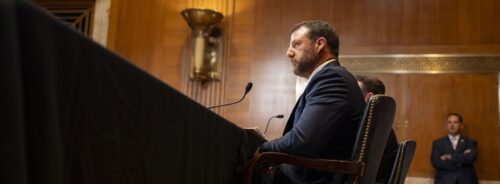
Yes. Department of Homeland Security Secretary Markwayne Mullin confirmed on May 12 that U.S. Immigration and Customs Enforcement (ICE) agents will be at World Cup stadiums. According to Mullin, ICE agents will mainly play a security role but said that “…ICE always says immigration enforcement. We’re always going to do that,” and did not rule out the possibility of ICE making arrests. This contradicts assurances that Secretary of State Marco Rubio gave to Miami’s 2026 World Cup host committee the week prior that ICE would not be at stadiums during the tournament.
Over 120 immigrants’ rights groups issued a travel warning that “fans, players, journalists and other visitors traveling for the 2026 FIFA Men’s World Cup could be at risk of serious rights violations as the Trump administration doubles down on its draconian immigration and anti-human rights agenda.”
International fans are not the only group weary of ICE’s presence at stadiums. Last week, UNITE HERE Local 11 — a union representing So-Fi stadium workers — voted to strike in response to the threat of ICE deployment at stadiums, citing fears of workers and their families being detained. While the stadium operators and union struck an agreement to prevent the strike, one of the clauses includes the ability for workers to walk off the job if they believe ICE poses a threat to their safety.
The Trump administration keeps raising the temperature, with a recent threat by Border Czar Tom Homan to send “more ICE agents than you’ve ever seen” to New York City, which will host eight games including the final. In his response, New York City Mayor Zohran Mamdani characterized the timing of Homan’s warning as an affront to the values of the World Cup. “The World Cup is supposed to be a celebration of the world as a whole. And some of the decisions that we’ve seen been taken by the federal administration… is anathema to what this tournament is supposed to be about.”
How are visa denials and travel restrictions shaping the tournament?
Over the past week, there have been several instances of players, fans, World Cup staff, and journalists facing barriers to entry and denials as the Trump administration aggressively scrutinizes people at ports of entry coming to the World Cup to play, work, or as fans.
Notably, Omar Abdulkadir Artan, who was set to become the first Somali referee to officiate at the World Cup, was denied entry into the U.S. by Customs and Border Patrol (CBP) due to “vetting concerns” despite having already been vetted by the Department of State and issued a valid visa. Artan was named referee of the year in 2025 by the Confederation of African Football representing Somalia, which is one of the countries on the administration’s travel ban list.
Immigration enforcement is affecting players, too. Aymen Hussein, Iraq’s star player, and the Iraq team photographer were both detained and questioned by CBP for seven hours at Chicago’s O’Hare airport when they attempted to enter the country. Hussein was allowed entry, but the team’s photographer was not.
Meanwhile, the International Sports Press Association wrote an open letter to FIFA claiming that Iranian and African journalists have been denied visas that would allow them to cover for their countries during the tournament. While many of the journalists have been granted single-entry visas, this will not allow them to follow their country’s team to all their matches, since many teams have matches in multiple countries. Journalists from the Ivory Coast and Senegal, countries also on the travel ban list, are among those impacted.
As for fans, many are experiencing last-second disappointments. Several fans from Scotland had their travel authorization suddenly revoked, while dozens of Moroccan fans have been denied visas, despite having purchased tickets to the tournament.
Will Iran play at the World Cup? Can Iranian fans attend?
Iran will play at the World Cup, including three group stages matches on U.S. soil. However, the team moved their training basecamp to Mexico after facing threats from the President on social media and will be required by the Trump administration to enter and exit the U.S. the same day of their games.
In another disruption to the Iranian team, on Tuesday, Iran’s football federation said tickets for their fans had been revoked by FIFA. The federation had received thousands of tickets to allocate to supporters of the Iranian team, which will now have to play matches without fans.
What has FIFA said?
FIFA has acknowledged many of these issues, though it has taken minimal action to resolve them.
When asked about Mr. Artan’s visa denial, the organization said, “FIFA is not involved in host country immigration processes, including visa adjudications… In line with previous FIFA events, a host government ultimately determines who receives a visa and who is admitted into their country.”
Previously, FIFA removed Indonesia as host of the 2023 U-20 World Cup after Indonesia government officials objected to Israel’s participation in that tournament.
What does this mean for the U.S. as a host country?
The examples above are proof that a global tournament like the World Cup struggles to coexist with restrictive immigration policies among one of the host countries. Visa denials are breaking the hearts of fans and World Cup staff, while ICE’s presence at stadiums threatens the safety of immigrant workers and visiting fans.
While the 2026 World Cup will undoubtably have memorable moments, the Trump administration’s exclusionary immigration policies will inevitably be part of the tournament’s legacy.