Economics

The W Visa: Why the Economy Benefits from A Robust New Worker Program
The Senate Judiciary Committee returns to its task of marking up S. 744 tomorrow, taking up, among other things, possible amendments to the W visa program for new nonimmigrant workers. This new program, blessed by both business and labor, is an effort to acknowledge the need for a more flexible system for meeting the demand for workers in certain occupations and industries that require less-skilled workers. At Tuesday’s hearing, several Senators challenged the idea that the American workforce needed to be supplemented with immigrant labor, but the evidence is overwhelming that there is both a need and an economic benefit to having a flexible and responsive program in place to bring in new workers where they are most needed. Read More

Facts About H-1B Workers and the Innovation Economy
While widespread research documents a critical need for skilled workers in the United States to maintain and strengthen our innovation industry, myths exist in opposition to programs designed to help alleviate that shortage. In particular, the H-1B visa program for high-skilled foreign-born workers, primarily used for science, technology, engineering, and mathematics (STEM) fields, is a routine recipient of critical ire. As the Senate Judiciary Committee discusses H-1B reforms in Title IV of S.744, here we dispel some of the common myths associated with the H-1B high-skilled visa program. Read More

What Do You Think About Immigration Reform?
As the Senate continues to shepherd a comprehensive immigration reform bill through the legislative process (day two of mark-up in the Senate Judiciary Committee begins tomorrow), it becomes clear how many issues are at stake in reform and how interconnected they are. It’s also overwhelming at times. That’s why the American Immigration Council is attempting to divide the issues into smaller discussions on our wiki, ThinkImmigration.org. Read More
The Important Role of Immigrants in America’s Innovation Economy
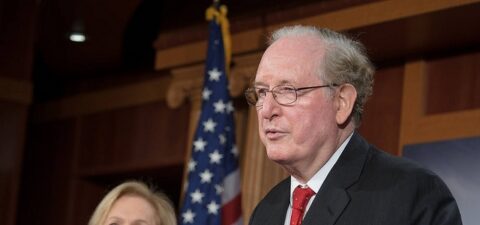
This week, the U.S. Senate Committee on Commerce, Science, and Transportation weighed in on immigration reform with a hearing on the role of immigrants in America’s innovation economy. Remarks from Sens. Rockefeller (D-WV) and Thune (R-SD) noted the contributions of immigrant innovators and entrepreneurs. Immigrants in the United States were named as inventors or co-inventors on 25.6 percent of international patent applications filed from the U.S. in 2006. Furthermore, temporary workers and permanent residents made contributions to over half of the international patents filed by several large, multi-national companies. Temporary and permanent foreign-born workers represent at least 24 percent of the nation’s scientists and 47 percent of engineers with doctoral degrees. Read More

Social Security Administration Says Immigration Reform Will Increase Tax Revenue, Boost Economy
Will the immigration reform bill create millions of jobs, boost GDP, and help balance the budget? A new report by the Social Security Administration says that it will, by putting undocumented immigrants on the tax rolls and allowing them to participate fully and legally in the U.S. economy. Read More

How to Accurately Estimate the Economic Impact of the Senate Immigration Reform Bill
One of the most important questions being asked about the Senate immigration reform bill (S. 744) is how it will impact the economy. There is already a broad consensus among economic experts that immigration reform would be a net economic benefit in terms of jobs, wage levels, tax revenue, and Gross Domestic Product (GDP). As reported in Politico on May 8, for instance, a new study by the Social Security Administration estimates that “by 2024, the immigration bill will have created 3.22 million jobs, and boost GDP by 1.63 percent.” However, the most widely awaited estimate is that of the Congressional Budget Office (CBO), which will soon be “scoring” the bill in terms of its fiscal consequences. Read More

New Heritage Report Ignores Broad Consensus on Economic Benefits of Reform
Today, the Heritage Foundation released a report that attempts to assess the fiscal costs associated with legalizing the 11 million unauthorized individuals living in the United States. The new report is similar to a 2007 study, which was widely criticized at the time of publication and continues to be refuted today by conservatives like Republican budget hawk Paul Ryan, former head of the Congressional Budget Office under President Bush, Douglas Holtz-Eaken, anti-tax activist Grover Norquist and the libertarian Cato Institute. In addition, the Bi-Partisan Policy Institute’s Immigration Task Force (which includes Condoleeza Rice and Haley Barbour) remarked on the report after its release noting, “we strongly believe that this study’s modeling and assumptions are fundamentally flawed because they do not account for the many contributions that an appropriately reformed immigration system can afford our economy and our country.” Read More
Keeping U.S. High-Skilled Temporary Worker Visa Programs Workable
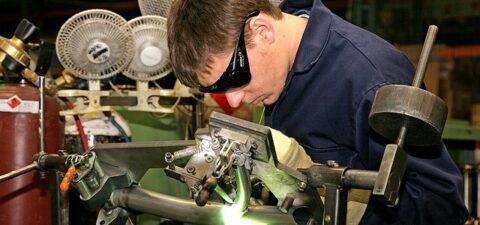
When analyzing higher-skilled guest worker visa programs, such as the H-1B and L-1 programs, critics often fail to acknowledge the very different and important purposes that these programs were designed to serve, and the complicated requirements already in place to protect against abuse or exploitation. There is no denying that we can and should improve these programs and the strategies used to enforce them. However, given the well-established economic benefits of these programs, and the challenges employers face finding highly skilled workers, particularly in technical fields, it is essential that any proposed reforms not impose restrictions that may make these programs completely unworkable. Read More

Why There Are Not Enough STEM Workers in the U.S. Labor Market
Occasional research, such as a report released last week by the Economic Policy Institute, suggests the U.S. has a sufficient supply of science, technology, engineering, and mathematics (STEM) graduates and workers. However, these conclusions are at odds with a growing number of expert analyses that find the U.S. does in fact face significant challenges in meeting the growing needs of our expanding knowledge-based economy. Here is a sampling of the evidence: Read More
Why There Are Not Enough STEM Workers in the U.S. Labor Market
Occasional research, such as a report released last week by the Economic Policy Institute, suggests the U.S. has a sufficient supply of science, technology, engineering, and mathematics (STEM) graduates and workers. However, these conclusions are at odds with a growing number of expert analyses that find the U.S. does in fact face significant challenges in meeting the growing needs of our expanding knowledge-based economy. Here is a sampling of the evidence: Read More
All gifts are matched dollar for dollar
No one should face the immigration system alone