Border Patrol
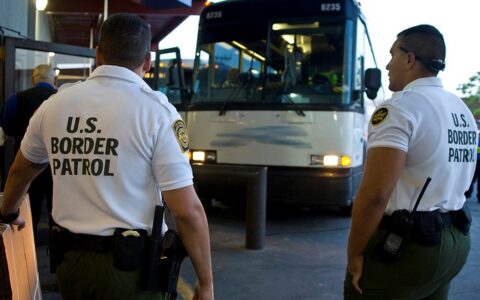
Keeping CBP In Line With Proposed Reforms
In May 2010, Congress submitted a request to the Department of Homeland Security (DHS) for a review of U.S. Customs and Border Protection’s (CBP) policy on the use of force by border patrol agents. Drawing on recommendations from a hard-hitting report by DHS’s Office of Inspector General, as well as an internal review and an independent evaluation by the Police Executive Research Forum (PERF), CBP announced compliance with a handful of proposed reforms to its use of force policy. Read More

USCIS to Offer Stay of Deportation to Certain Military Family Members
Today, USCIS issued guidance that is intended to prevent current and former members of the U.S. armed forces from being separated from their noncitizen family members. The memo indicates that the noncitizen family members may be afforded “parole in place.” “Parole in place” is a discretionary tool that… Read More
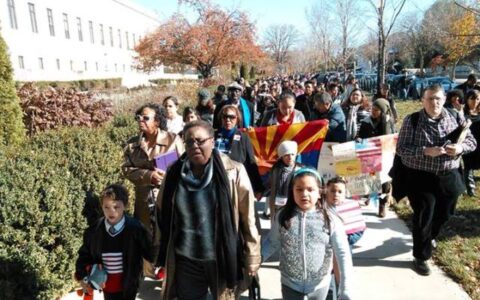
House Inaction Escalates Community’s Demands for Immigration Reform
House Speaker John Boehner (R-OH) reassured a few die-hard anti-immigration reform activists when he said he would never agree to a conference to reach agreement on a House immigration bill and the Senate’s bipartisan immigration that passed in June. But his comments fired up those who want to see Congress improve the nation’s broken immigration system. Despite some in the House dragging their feet on considering immigration reform legislation—House Majority Whip Kevin McCarthy told advocates last week there weren’t enough days for them to act on it this year—immigration advocates in Washington, D.C., and across the country continued to push for the House to act on immigration reform. Read More

Groups File Legal Claims Against Border Patrol In Abuse Cases
While the Department of Homeland Security's (DHS) immigration officers have broad authority to detain and ultimately deport noncitizens, they are generally not authorized to detain U.S. citizens and certainly cannot deport them. Yet, that is essentially what happened to a four-year-old U.S. citizen. In March 2011, U.S. Customs and Border Protection (CBP), a component of DHS, detained a young girl when she arrived at Dulles Airport in Virginia, deprived her of any contact with her parents, and then sent her back to Guatemala. Last Friday, her father fought back, filing a lawsuit on his daughter’s behalf to seek redress for the harm she suffered and to shed light on an agency that all too often acts outside the law. Read More

Reaching the Six-Month Mark on Deferred Action for Childhood Arrivals (DACA)
The Department of Homeland Security has issued its latest data on the Obama Administration’s initiative that offers deferment from deportation and temporary work permits to young undocumented immigrants under the Deferred Action for Childhood Arrivals (DACA) initiative. In the first six months of the program (August 15–February 14), 423,634 out of the roughly 936,933 immigrants between the ages of 15 and 30 who might immediately meet the requirements, have had their applications accepted for processing. In other words, approximately 45% of those potentially eligible for the program have applied in the first six months. In addition, since February, 199,460 individuals have been approved for DACA and will receive two-year temporary work permits. Read More

Putting the White House Immigration Reform Proposal into Perspective
Over the weekend, the press reported on a leaked draft of portions of the White House’s immigration proposal, and the coverage since then has been largely a frenzied discussion of whether the leak will kill Senate negotiations. There shouldn’t be much chance of that, given the immense pressure on the Senate to not only come up with a proposal, but actually draft legislation that can be debated and voted on this year. Now that at least some of the Administration’s ideas are out in the public eye, it’s useful to treat them as what they are: basic discussion points on what might be in an eventual bill. In the long run, the draft proposal may help to encourage the constructive conversation that the Administration has sought to have on reform. Read More
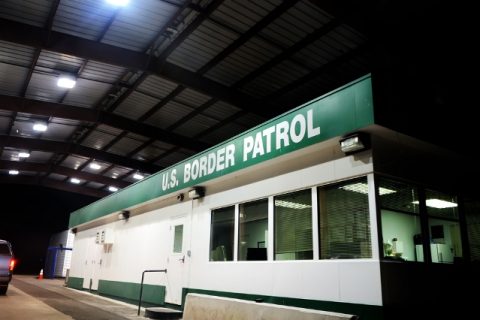
Incentivizing Arrests for Border Patrol Agents
Strengthening border security, including increasing the number of border patrol agents, continues to be a component of the latest immigration reform proposals, as they have in the past. What may be overlooked in these proposals is the administration’s call for enhanced training to protect civil rights. This is critical, given the results of a new report by Families for Freedom and New York University School of Law’s Immigrant Rights Clinic titled, Uncovering USBP: Bonus Programs for United States Border Patrol Agents and the Arrest of Lawfully Present Individuals. The report describes a series of operational flaws within USBP, including a previously undisclosed employee rewards program to encourage arrests. Read More

Press Release: Statement from Partnership for a New American Economy Co-Chair and New York City Mayor Michael R. Bloomberg on Introduction of the Immigration Innovation Act of 2013 by Bipartisan Members of the U.S. Senate
“If we want to out-innovate the rest of the world, we need to make sure that we are able to recruit and retain the world’s top innovators. The Immigration Innovation (I2) Act of 2013 will ensure that more of the world’s most talented individuals can bring their inventions and… Read More
Press Release: Statement from Partnership for a New American Economy Co-Chair and New York City Mayor Michael R. Bloomberg on Bipartisan Framework for Comprehensive Immigration Reform
Framework Calls For Immigration System that Reflects Economic Needs, Secures Our Borders, Provides a Path to Citizenship for Undocumented Immigrants, Reduces Visa Backlogs, and Ensures that Employers Hire Only Legal Workers Following today’s announcement of a “Bipartisan Framework for Comprehensive Immigration Reform” by Senators Charles Schumer (D-NY),… Read More
Removals Remain the Starkest Measure of Immigration Enforcement
For more than a decade, the general thrust of U.S. immigration policy has been aimed at expanding the grounds of removal and the tools for facilitating deportations from the country. Not surprisingly, this has come at an enormous cost. Although the figure has been disputed by restrictionists, a report from the Migration Policy Institute recently found that the federal government spent $18 billion last year on immigration enforcement. Dollars are not the only way to measure immigration enforcement, however, as the number of removals has itself skyrocketed in recent years. Read More
All gifts are matched dollar for dollar
No one should face the immigration system alone