DACA/DAPA
Deferred Action for Childhood Arrivals (DACA) and Deferred Action for Parents of Americans and Lawful Permanent Residents (DAPA) offer certain immigrants protection from immediate deportation and other benefits. Learn more about these policies, how they affect America, and our work to strengthen them below.

In Presidential Election, “Self-Deportation” Goes Down to Defeat
It did not become certain until late Tuesday night that President Obama would win re-election. But for Mitt Romney, the campaign may have been lost during the Republican primary, when he cited “self-deportation” as the solution to our nation’s immigration problems. With the post-election dust now settled, it has become increasingly clear that supporting the idea is not only bad as a matter of policy, but also a losing political strategy. Read More
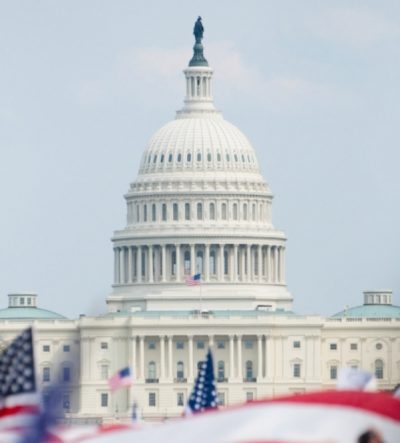
Elections Demand a New Way Forward on Immigration
Even before the election was called for President Obama last night, pundits and pollsters were remarking on the fact that immigration—or more specifically, anti-immigrant policies—were a death knell for Mitt Romney. Today, the analysis of whether and how the Republican party recovers from its devastatingly poor showing among Latinos—the key demographic group of the 21st century—is also focusing on immigration. CNN’s David Gergen noted that immigration reform would become a reality because Democrats want it and Republicans need it; even Fox news commentators grumpily acknowledged that immigration reform has got to be on the table now. Read More

Could DACA Have Happened Without Public Engagement at USCIS?
Approximately two months after the program opened, nearly 200,000 individuals have submitted requests for grants under the Deferred Action for Childhood Arrivals (DACA) imitative. It’s still too early to assess the overall success of the program or evaluate the grant rates, but it isn’t too early to take note of the important role that preparation played in making DACA a reality. Read More

Associated Press Issues Misleading Defense of Term “Illegal Immigrant”
Unlike lawyers and policymakers, journalists have an obligation to use language that ordinary people understand. Although the practice is generally helpful, it can sometimes result in oversimplification, or sacrificing accuracy for the sake of supposed clarity. A perfect example is the memo issued by the Associated Press last week endorsing use of the term “illegal immigrant.” Read More

Immigration (Finally) Takes the Stage at a Presidential Debate
George W. Bush made several appearances in last night’s presidential debate, but perhaps nowhere with greater effect than when President Obama contrasted Governor Mitt Romney’s position on immigration reform. Where President Bush supported comprehensive immigration reform, declared President Obama, Governor Romney supports “self-deportation” and Arizona style anti-immigrant laws. Moderator Candy Crowley then segued into a direct immigration question from an undecided voter about Romney’s plans for dealing with the 11 million undocumented immigrants living in our nation. The next few minutes revealed a great deal about both candidates’ positions on the immigration question, but perhaps more importantly, the points where the candidates challenged each other suggest that both parties recognize they must begin talking about immigration in new ways. Read More

Pace of DACA Approvals Quickens, but Will it be Fast Enough?
For the first time since immigration authorities officially launched Deferred Action for Childhood Arrivals in mid-August, the federal government released statistics last Friday indicating that thousands of requests have been officially granted. But while the figures themselves are an encouraging sign, other evidence suggests that most applicants will not have their requests considered until after the next presidential inauguration in January, if at all. Read More
Naturalized Citizens Have the Power to Swing Elections
There is no doubt that immigrants are a force to be reckoned with in this year’s presidential race. After all, the Obama administration unveiled its Deferred Action for Childhood Arrivals (DACA) program in June, just a couple of months before the official start of the campaign. And Republican presidential nominee Mitt Romney has said that, if elected, he will not deport DACA beneficiaries (although he says he will discontinue the program). In other words, both candidates are going out of their way to woo immigrant voters—that is, naturalized U.S. citizens who are eligible to vote—as well as those second and third generation Americans for whom immigration is still a highly personal issue. This is smart politics. Given that the presidential election could be decided by the most razor-thin of margins, the ballots cast by naturalized citizens could prove decisive, especially in the handful of swing states upon which the election will probably hinge. Read More
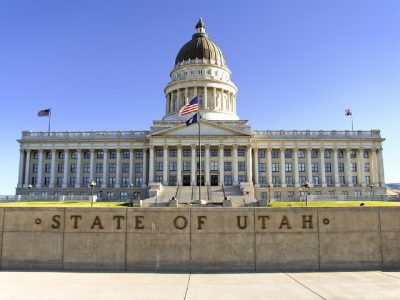
Utah Attorney General Pushes Sensible Immigration Policies
Republican Utah Attorney General Mark Shurtleff has become a poignant and effective advocate for smart immigration policies, including the DREAM Act. On Monday, Shurtleff spoke at the Immigration Law and Policy Conference, in Washington D.C., where he concluded that the “biggest casualty in the immigration debate is the truth.” Shurtleff understands prosecutorial discretion, and is firmly behind the Obama Administration’s recent decisions to exercise prosecutorial discretion for immigrant youth (Deferred Action for Childhood Arrivals, DACA) and in cases where the individuals are not enforcement priorities. Shurtleff went on to describe Utah’s recent immigration legislation, which includes an enforcement law, as well as a provision that creates a state guestworker program. He explained that he is still in conversations withthe federal government about how Utah can exercise prosecutorial discretion for unauthorized “guestworkers” and the employers who hire them. Read More
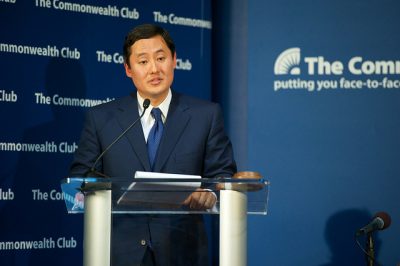
Author of Torture Memos Challenges Legality of DACA
As a high-ranking Justice Department attorney after 9/11, John Yoo authored an infamous legal memo arguing that the President, as commander-in-chief of the armed forces, possessed irrevocable authority to order the torture of alleged “enemy combatants.” Although the memos were subsequently revoked, Yoo has remained an ardent defender of presidential power—except, it appears, when it comes to the exercise of prosecutorial discretion for undocumented immigrants. Read More

What Early DACA Application Numbers Tell Us About the Future of the Program
It hasn’t even been a month since the United States Citizenship and Immigration Services (USCIS) first started accepting requests for deferred action under its Deferred Action for Childhood Arrivals (DACA) initiative, yet the New York Times reported this week that the first approvals are already on their way. The Times also reported that the agency has received 72,000 applications as of September 11—almost double the 40,000 reported in the Wall Street Journal just the day before. That’s not bad at all for a program that was only announced three months ago and put into place by the government in 60 days. Read More
Your support moves the American story toward justice, dignity, and belonging.
America's story is an immigrant story.