Due Process and the Courts
What does the constitution say about due process?
The Fifth Amendment to the Constitution says clearly that no person shall be deprived of life, liberty, or property without the due process of law. Note that this says person, not citizen, and over the years the Supreme Court has consistently ruled that the Due Process Clause applies to all people in the United States.Do non-citizens have the right to due process in the U.S.?
Yes. The Constitution guarantees due process rights to all "persons," not just citizens. This means non-citizens, including undocumented immigrants, are entitled to fair treatment under the law. This includes the right to defend themselves in court. But recent Trump administration policies that speed up deportations and limit access to legal representation make it harder for non-citizens to get their fair day in court.- Access to legal representation Access to legal counsel is an essential part of our justice system and our democracy. In the criminal justice system, anyone facing even one day in jail gets a lawyer if they can't afford one. But immigrants facing deportation usually don't get that chance.The research is clear – the most effective way to ensure some level of due process for people navigating our complicated immigration system is for them to have trained attorney at their side. But Trump administration is now working to strip attorneys from as many people as possible, all in the name of increasing its deportation numbers. This attempt to eliminate basic due process will hurt people who already have few options.
- Fair day in court Due process guarantees that individuals have the opportunity to defend themselves in court. This includes non-citizens facing deportation.
Why is due process important?
We are seeing right now the importance of due process when it comes to President Trump's actions to carry out the so-called Alien Enemies Act, a 1798 wartime law that permits people to be deported outside of the normal framework of immigration law. President Trump has alleged that this law allows him to simply point at any person, declare them to be an alien enemy, and kick them out of the country without ever having a chance to see a judge. Thankfully, the Supreme Court said that is not true, and in a unanimous decision, ruled that people can challenge the Trump administration's invocation of the Alien Enemies Act. That is why due process is so important, because it means that no person can be rounded up and sent to another country without a chance to go to court and make the government prove their case.How is the American Immigration Council working to protect due process?
- We serve thousands of individuals in immigration detention centers through the Immigration Justice Campaign, our initiative with the American Immigration Lawyers Association. The Justice Campaign provides free legal services for immigrants who would otherwise have to navigate our complicated immigration system without a lawyer.
- We use the courts to demand a fair process for immigrants. Our litigation team is fighting back against the Trump administration’s blatant disregard for due process including filing a lawsuit challenging their illegal detention of immigrants in El Salvador’s notorious Terrorism Confinement Center (CECOT).

Five Important Points Made by the Court That Rejected the Muslim Ban
The Ninth Circuit Court of Appeals sent some strong messages to the President: he cannot shield himself from court review by claiming “national security;” he may only set policies that are consistent with our Constitution; and key parts of the Executive Order banning refugees and noncitizens from seven Muslim-majority countries… Read More

Federal Appeals Court Says Muslim Ban Stays on Hold
The Ninth Circuit Court of Appeals denied the federal government’s emergency request to lift the temporary restraining order halting the implementation of President Trump’s travel ban. The Court rejected the government’s attempt to shield the Executive Order behind national security, explaining that doing so “runs contrary to the fundamental structure… Read More

Attorney General Sessions’ First Orders of Business on Immigration
Jeff Sessions was confirmed as Attorney General this week by a vote of 52-47, following a very contentious confirmation process. As Attorney General and head of the Department of Justice (DOJ), Sessions will oversee key immigration-related functions. The three recently issued executive orders on immigration give the Attorney… Read More
New Immigration Court Directive Could Weaken Due Process
The Trump administration released a memorandum this week–effective immediately–which orders the Department of Justice Executive Office for Immigration Review (which manages the immigration courts) to prioritize deportation hearings for certain groups, including any non-citizens who are detained and unaccompanied children who do not have a sponsor. The memo rescinded preexisting… Read More

Meet the Plaintiffs Challenging the Discriminatory Nature of President Trump’s Muslim Ban
The fallout continues from last week’s immigration executive order, which has been coined the “Muslim Ban.” Several lawsuits have been filed to challenge the executive order, including Ali v. Trump, on the grounds that it violates the Constitution’s guarantee of equal protection under the law and a statutory prohibition against… Read More

Supreme Court Weighs Challenge to Vague Grounds of Deportation
Determining when an immigrant who has been convicted of a crime can be deported is a feat that has been described by federal judges as “far from clear,” “dizzying,” and “labyrinthine.” There is no doubt that the intersection of criminal and immigration law is complex, but how… Read More
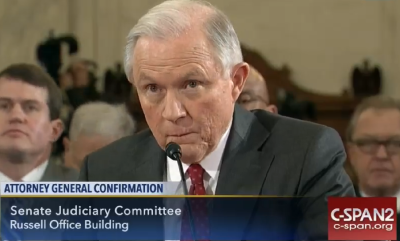
Jeff Sessions Affirms Anti-Immigrant Views at Confirmation Hearing
Senator Jeff Sessions, who has been nominated to be Attorney General by President-elect Donald Trump, endured a 10-and-a-half-hour confirmation hearing this week where he answered questions on a wide range of issues from voting rights and immigration to anti-trust litigation. During his time in the Senate, Sessions has… Read More

Federal Court Grants Nationwide Class Status in Suit to Protect Asylum Seekers
A federal court in Seattle has granted nationwide class action status to a case seeking to protect the rights of thousands of asylum seekers pursuing protection from persecution in their home countries. Read More

Asylum Free Zones in the U.S. Examined by Inter-American Commission
Entire jurisdictions in the United States have become so hostile to asylum seekers and their representatives that the U.S. government, and its immigration court system, is failing to deliver on its international and national obligation to protect them. The asylum-seekers who end up in one of these hostile jurisdictions, which… Read More

California District Court Says Immigrants Ability to Pay Should Influence Bond Decisions
Unlike in criminal court, where those charged with a crime often hire bail bondsmen and consequently only have to pay 10 percent of the total bail amount, immigrants detained by Immigration and Customs Enforcement (ICE) often have to pay the full amount of a bond because there are very… Read More
Your support moves the American story toward justice, dignity, and belonging.
America's story is an immigrant story.