Due Process and the Courts
What does the constitution say about due process?
The Fifth Amendment to the Constitution says clearly that no person shall be deprived of life, liberty, or property without the due process of law. Note that this says person, not citizen, and over the years the Supreme Court has consistently ruled that the Due Process Clause applies to all people in the United States.Do non-citizens have the right to due process in the U.S.?
Yes. The Constitution guarantees due process rights to all "persons," not just citizens. This means non-citizens, including undocumented immigrants, are entitled to fair treatment under the law. This includes the right to defend themselves in court. But recent Trump administration policies that speed up deportations and limit access to legal representation make it harder for non-citizens to get their fair day in court.- Access to legal representation Access to legal counsel is an essential part of our justice system and our democracy. In the criminal justice system, anyone facing even one day in jail gets a lawyer if they can't afford one. But immigrants facing deportation usually don't get that chance.The research is clear – the most effective way to ensure some level of due process for people navigating our complicated immigration system is for them to have trained attorney at their side. But Trump administration is now working to strip attorneys from as many people as possible, all in the name of increasing its deportation numbers. This attempt to eliminate basic due process will hurt people who already have few options.
- Fair day in court Due process guarantees that individuals have the opportunity to defend themselves in court. This includes non-citizens facing deportation.
Why is due process important?
We are seeing right now the importance of due process when it comes to President Trump's actions to carry out the so-called Alien Enemies Act, a 1798 wartime law that permits people to be deported outside of the normal framework of immigration law. President Trump has alleged that this law allows him to simply point at any person, declare them to be an alien enemy, and kick them out of the country without ever having a chance to see a judge. Thankfully, the Supreme Court said that is not true, and in a unanimous decision, ruled that people can challenge the Trump administration's invocation of the Alien Enemies Act. That is why due process is so important, because it means that no person can be rounded up and sent to another country without a chance to go to court and make the government prove their case.How is the American Immigration Council working to protect due process?
- We serve thousands of individuals in immigration detention centers through the Immigration Justice Campaign, our initiative with the American Immigration Lawyers Association. The Justice Campaign provides free legal services for immigrants who would otherwise have to navigate our complicated immigration system without a lawyer.
- We use the courts to demand a fair process for immigrants. Our litigation team is fighting back against the Trump administration’s blatant disregard for due process including filing a lawsuit challenging their illegal detention of immigrants in El Salvador’s notorious Terrorism Confinement Center (CECOT).

Texas Sues Federal Government Again, This Time Over Refugees
This week, Texas filed a lawsuit against the federal government and International Rescue Committee (IRC) to prevent the resettlement of a Syrian refugee family in the state. The family was originally scheduled to arrive in Texas today. The state is the first to take legal action to block refugees… Read More

Will the Immigration Court Backlog Finally Go Down?
Although our nation’s immigration courts currently have record backlogs, there may be some help on the way. That was the message from Juan Osuna, Director of the Executive Office of Immigration Review (EOIR)—a division within the Department of Justice (DOJ) department which houses the immigration courts—at an oversight hearing… Read More

Groups Urge Supreme Court to Hear Executive Action Case This Term
Today, a coalition of 224 immigration, civil rights, labor, and social service groups filed an amicus (“friend of the court”) brief, urging the Supreme Court to review the Fifth Circuit’s decision in Texas v. United States, which has delayed implementation of President Obama’s 2014 deferred action initiatives The… Read More
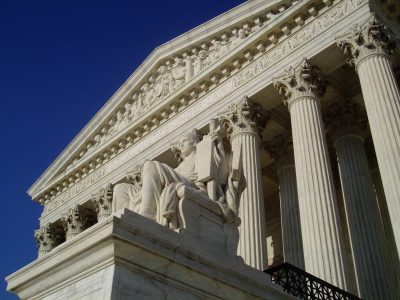
Supreme Court Considering Whether Misdemeanor Results in Automatic Deportation
Last Tuesday, the Supreme Court heard oral arguments in Torres v. Lynch, a case that provides a harsh reminder of the real life consequences of our unforgiving immigration laws. The petitioner in the case, Jorge Luna-Torres, a lawful permanent resident, was convicted of a misdemeanor offense for which he… Read More

Immigrant Rights Advocates Sue to Reveal Policies and Procedures at Artesia Family Detention Facility
Washington D.C. – Immigrant rights groups today filed Freedom of Information Act (FOIA) litigation to compel the release of documents regarding the use of the expedited removal process against families with children, including those detained at the family detention center in Artesia, New Mexico. To date, the government has… Read More

The Battle Over Birth Certificates in Texas
In May, a group of undocumented parents, represented by South Texas Civil Rights Project and Texas Rio Grande Legal Aid, filed a lawsuit against the State of Texas for denying their children, born in the state, birth certificates. The legal team also asked the judge to issue a preliminary injunction—a… Read More

Immigration Courts Have New Rules Governing Legal Representation Processes
Last week, the Executive Office for Immigration Review (EOIR) announced changes to the regulations governing legal representation in immigration court and at the Board of Immigration Appeals (BIA). Every year, thousands of immigrants are forced to represent themselves in immigration court. The changes are intended to increase representation of… Read More

Restrictionists Continue to Attack H-4 Work Authorization
Save Jobs USA—an organization comprised of IT workers who claim they lost their jobs to H-1B workers—still wants to overturn the Department of Homeland Security (DHS) rule that allows certain H-4 spouses (i.e., spouses of H-1B workers) to apply for work authorization. Although Save Jobs was unsuccessful in stopping… Read More

Immigration Courts Desperately Need More Judges
Although this year’s presidential primary contests are dominated by the topic of immigration, the focus is on politically charged, hot-button issues like border walls and birthright citizenship. And while the media remains transfixed by the inflammatory rhetoric of some candidates, more mundane yet equally important problems go unaddressed. Case in… Read More

Government Ordered to Promptly Release Children From Family Detention
In a decision issued Friday, a district court in California ruled yet again that the government is violating a long-standing settlement agreement protecting the rights of children in immigration detention. Advocates for immigrant children went to court in February to argue that the government’s family detention centers violate the… Read More
Your support moves the American story toward justice, dignity, and belonging.
America's story is an immigrant story.