Due Process and the Courts
What does the constitution say about due process?
The Fifth Amendment to the Constitution says clearly that no person shall be deprived of life, liberty, or property without the due process of law. Note that this says person, not citizen, and over the years the Supreme Court has consistently ruled that the Due Process Clause applies to all people in the United States.Do non-citizens have the right to due process in the U.S.?
Yes. The Constitution guarantees due process rights to all "persons," not just citizens. This means non-citizens, including undocumented immigrants, are entitled to fair treatment under the law. This includes the right to defend themselves in court. But recent Trump administration policies that speed up deportations and limit access to legal representation make it harder for non-citizens to get their fair day in court.- Access to legal representation Access to legal counsel is an essential part of our justice system and our democracy. In the criminal justice system, anyone facing even one day in jail gets a lawyer if they can't afford one. But immigrants facing deportation usually don't get that chance.The research is clear – the most effective way to ensure some level of due process for people navigating our complicated immigration system is for them to have trained attorney at their side. But Trump administration is now working to strip attorneys from as many people as possible, all in the name of increasing its deportation numbers. This attempt to eliminate basic due process will hurt people who already have few options.
- Fair day in court Due process guarantees that individuals have the opportunity to defend themselves in court. This includes non-citizens facing deportation.
Why is due process important?
We are seeing right now the importance of due process when it comes to President Trump's actions to carry out the so-called Alien Enemies Act, a 1798 wartime law that permits people to be deported outside of the normal framework of immigration law. President Trump has alleged that this law allows him to simply point at any person, declare them to be an alien enemy, and kick them out of the country without ever having a chance to see a judge. Thankfully, the Supreme Court said that is not true, and in a unanimous decision, ruled that people can challenge the Trump administration's invocation of the Alien Enemies Act. That is why due process is so important, because it means that no person can be rounded up and sent to another country without a chance to go to court and make the government prove their case.How is the American Immigration Council working to protect due process?
- We serve thousands of individuals in immigration detention centers through the Immigration Justice Campaign, our initiative with the American Immigration Lawyers Association. The Justice Campaign provides free legal services for immigrants who would otherwise have to navigate our complicated immigration system without a lawyer.
- We use the courts to demand a fair process for immigrants. Our litigation team is fighting back against the Trump administration’s blatant disregard for due process including filing a lawsuit challenging their illegal detention of immigrants in El Salvador’s notorious Terrorism Confinement Center (CECOT).

Court Issues Decision in Washtech, Case Challenging Training for U.S.-Educated Noncitizens
This week, a federal district court issued a decision in Washtech (Washington Alliance of Technology Workers v. DHS), a lawsuit brought, in part, by the Immigration Reform Law Institute, to prevent foreign students from having an opportunity to gain meaningful practical experience in the United States. The court… Read More

Immigrant Children Without Attorneys are Still Being Ordered Deported
It would seem to be a simple matter of conscience that no child should ever stand before a judge without having an attorney as an advocate. Younger children in particular may not even understand the significance of their day in court or how a judge’s ruling can profoundly impact the… Read More

Court Finds Federal Officers Can be Sued for Mistreatment of Immigrants in Detention
The Court of Appeals for the Second Circuit ruled last month that eight immigrant men who were detained under extremely punitive conditions in maximum security facilities following 9/11, could proceed with their lawsuit against the individual federal officials responsible for their mistreatment. All of the plaintiffs in Turkmen v. Ashcroft were caught up in the post 9/11 frenzy that targeted Muslims or those who appeared to be Muslim. None were terrorists or even charged with a crime. Instead, they were detained in connection with civil deportation proceedings—proceedings premised solely on their lack of valid immigration status. Read More

Story of Unaccompanied Child Underscores Importance of Legal Representation Needed for All Refugee Children
Elvis Garcia is a migration counselor at the Catholic Charities Community Services of New York. He is also a former unaccompanied child who fled from his native Honduras in 2005 when he was 15 years old. Last week, Garcia and several others participated in a roundtable discussion sponsored by Lutheran Immigrant and Refugee Services to evaluate the response to the humanitarian situation at the southern U.S. border and highlight the recommendations regarding the treatment of children in their new report. During the roundtable, Garcia pointed to the lack of lawyers for kids as one of the biggest challenges confronting unaccompanied children. He said many children are eligible for asylum, yet lack the access to attorneys to navigate the system. Read More
Judge’s Order in Flores Should Signal the End of Family Detention
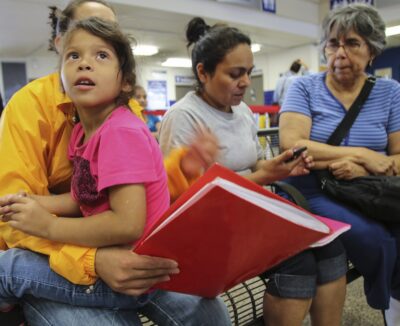
A federal judge issued an order in the Flores case that should go a long way to ending the government’s practice of detaining children and their mothers in unlicensed, secure facilities in Dilley and Karnes, Texas. Since the summer of 2014, the government has detained thousands of women and children fleeing violence in Central America. The longstanding Flores settlement guarantees minimum standards for the detention, release, and treatment of children in immigration detention. These standards, the court concluded, are not being met. Read More
Appellate Court Hears Oral Argument in Texas v. United States
Last week, the Fifth Circuit Court of Appeals in New Orleans heard oral argument in the most closely watched immigration case in years, Texas v. United States. This is a case brought by Texas and a number of other states challenging the legality of two key components of President… Read More

U.S. Settles With 4-Year-Old U.S. Citizen They Wrongfully Deported
Some say the wheels of justice turn slowly; however, when justice is finally delivered it is sweet. After more than two years of litigation, the U.S. government has agreed to settle a lawsuit filed by Leonel Ruiz on behalf of his minor daughter, alleging that in 2011, U.S. Customs… Read More

Border Patrol Criminally Prosecuting Asylum Seekers, Government Report Finds
For years, the Border Patrol program “Operation Streamline” has criminally prosecuted asylum seekers in a terribly misguided effort to discourage them from reentering illegally again. A recent U.S. government report from DHS’ Office of Inspector General (OIG) said this practice may “violate U.S. treaty obligations.” Specifically, according to the… Read More

Supreme Court Finds Conviction for Possession of a Sock Was Not a Deportable Offense
Earlier this week, the Supreme Court determined that the mere possession of a sock did not constitute a deportable offense in Mellouli v. Lynch. This unsurprising pronouncement serves as a first step in unwinding the legal spiral that led to Moones Mellouli’s deportation in 2012 and a reaffirmation… Read More

Court Rejects Restrictionists’ Attempts to Derail Work Authorization for H-4 Spouses
Despite immigration restrictionists’ efforts to derail implementation, a new rule went into effect this week allowing certain H-4 spouses (i.e., spouses of H-1B workers) to apply for work authorization. This new policy, announced as part of the Administration’s package of Executive Actions on immigration, permits H-4s to obtain work… Read More
Your support moves the American story toward justice, dignity, and belonging.
America's story is an immigrant story.