Integration

Lawmakers Attempt to Gut Census by Defunding American Community Survey
How can you make good policy in the absence of good information? That seems to be a question that some Republicans in the House and Senate have not asked themselves. In recent months, these lawmakers have proposed that funding for the Census Bureau’s annual American Community Survey (ACS) be cut entirely from the federal budget, or that the ACS be scaled back to a “voluntary” program. Given that the data generated by the ACS is used to guide the distribution of more than $400 billion in federal funding each year, this would be an ill-advised move. Read More

Michigan Pushes Plan to Welcome Immigrants and their Revitalizing Power to State
While some states pushed for punitive immigration measures over the last year—measures designed to drive immigrants away —others, like those in Michigan, were busy putting together a plan that welcomes immigrants and their revitalizing power to the state. This month, leaders in Michigan—including state Rep. Rashida Tlaib (D-Detroit) and U.S. Rep. Hansen Clarke (D-Detroit)—helped launch “Welcoming Michigan,” a statewide initiative that seeks to welcome immigrants and their entrepreneurial talents to Michigan. Read More

New Data Sheds Light on the Potential Power of Immigrant Voters
It is difficult to quantify the electoral power of immigrant voters. However, new data from DHS' Office of Immigration Statistics provides us with one way to gauge the electoral potential of the immigrant population. The numbers tell us how many Legal Permanent Residents (LPRs) arrived in each county of the United States since 1985. Using this data, it is possible to compare the number of post-1985 LPRs in each county against the margin of victory in the 2008 McCain-Obama contest. This helps to pinpoint where immigrants could be a potent electoral force if they naturalized and voted en masse. Read More

Rubio Proposal Overlooks Obstacles Ahead For DREAMers
Though it has yet to be introduced in Congress, Senator Marco Rubio’s alternative to the DREAM Act received an appraisal from the Washington Post this week, which noted that it represents an effort to shake the hard-line anti-immigrant sentiment voiced by many leading conservative politicians. The editorial also noted, however, that the outlines of his proposal promote what’s tantamount to “permanent second-class status.” Read More

Congressional Budget Cuts Threaten Vital USCIS Integration Grant Program
This month, United States Citizenship and Immigration Services (USCIS) announced $5 million in government grant opportunities available to service providers who help immigrants integrate and prepare for the naturalization exam. The money for these grants, awarded through the Citizenship and Integration Grant program, however, was not appropriated through Congress. Congress actually voted not to fund this vital program, leaving USCIS to cut costs elsewhere in order to keep the program afloat. Read More

States Continue to Propose Tuition Equity for Undocumented Immigrants
While some state lawmakers continue to push extreme “get tough” immigration enforcement measures through their state houses, others are contemplating the benefits of having more highly educated students in their state. In Indiana, for example, one Republican lawmaker recently amended an education bill to grant in-state tuition to undocumented students already enrolled in state schools, asking “if they’re going to be living here anyway, why not let them be productive members of Indiana society?” Lawmakers in other states, including Colorado and New York, are also pushing for better access to higher education for qualifying undocumented students. Read More
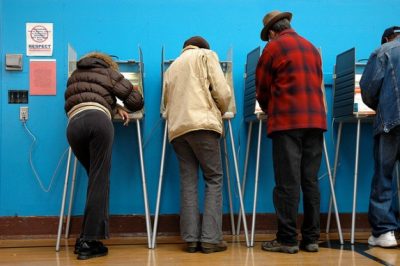
Number of Potential Immigrant Voters on the Rise in Key Super Tuesday States
Three of the twelve states holding Republican primaries or caucuses on Super Tuesday—Georgia, Massachusetts and Virginia—show especially strong trends in the numbers of foreign-born residents who have become U.S. citizens. This trend is significant given that these new Americans are able to register and vote. Immigrant communities in each of these states are large, exceeding 800,000 persons, and make up almost 10% or more of the statewide population. In fact, these three states are home to 71% of all immigrants living in the Super Tuesday states. While we don’t yet know how many of these naturalized U.S. citizens will vote on Super Tuesday or in the general election, GOP presidential candidates—many of whom have taken a hard line on immigration—would do well to take note of this trend. Read More
Number of Potential Immigrant Voters on the Rise in Key Super Tuesday States
Three of the twelve states holding Republican primaries or caucuses on Super Tuesday—Georgia, Massachusetts and Virginia—show especially strong trends in the numbers of foreign-born residents who have become U.S. citizens. This trend is significant given that these new Americans are able to register and vote. Immigrant communities in each of these states are large, exceeding 800,000 persons, and make up almost 10% or more of the statewide population. In fact, these three states are home to 71% of all immigrants living in the Super Tuesday states. While we don’t yet know how many of these naturalized U.S. citizens will vote on Super Tuesday or in the general election, GOP presidential candidates—many of whom have taken a hard line on immigration—would do well to take note of this trend. Read More

New Data Highlights Immigrant Integration and Economic Contributions
A recent analysis of data from the Census Bureau highlights the degree to which immigrants integrate into U.S. society and contribute to the U.S. economy. In its latest statistical profile of the foreign-born population, the Pew Hispanic Center presents statistics which illustrate that most immigrants have been here for more than a decade, more become homeowners the longer they are here, and growing numbers are becoming U.S. citizens. Moreover, the data show the degree to which immigrants fuel labor-force growth and fill valuable roles in the economy as workers in both high-skilled and less-skilled occupations. Read More
All gifts are matched dollar for dollar up to $75,000
No one should face the immigration system alone