Economic Impact
Immigrants are essential to the U.S. economy, filling roles from high-skilled tech sectors to agricultural labor and driving economic growth. They also contribute to the tax base and consumer spending. We champion reform that will maximize this effect and create a more diverse and competitive workforce.
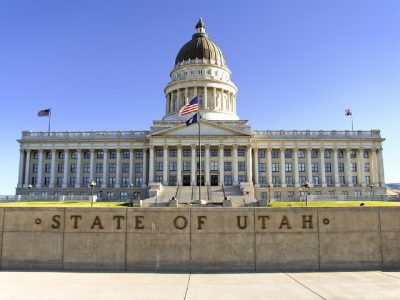
Utah Attorney General Pushes Sensible Immigration Policies
Republican Utah Attorney General Mark Shurtleff has become a poignant and effective advocate for smart immigration policies, including the DREAM Act. On Monday, Shurtleff spoke at the Immigration Law and Policy Conference, in Washington D.C., where he concluded that the “biggest casualty in the immigration debate is the truth.” Shurtleff understands prosecutorial discretion, and is firmly behind the Obama Administration’s recent decisions to exercise prosecutorial discretion for immigrant youth (Deferred Action for Childhood Arrivals, DACA) and in cases where the individuals are not enforcement priorities. Shurtleff went on to describe Utah’s recent immigration legislation, which includes an enforcement law, as well as a provision that creates a state guestworker program. He explained that he is still in conversations withthe federal government about how Utah can exercise prosecutorial discretion for unauthorized “guestworkers” and the employers who hire them. Read More

Arizona’s Immigration Policies are an Economic Disaster
Faced with a battered, post-recession economy, lawmakers in Arizona adopted a unique approach to fostering economic recovery; they passed a law that beat down or drove out tens of thousands of the state’s workers, consumers, and taxpayers. The rationale for this counterintuitive action was that the workers, consumers, and taxpayers in question were unauthorized immigrants, and therefore undeserving of support. Some of Arizona’s lawmakers even thought that an exodus of unauthorized immigrants from the state would magically create job openings for unemployed natives. But that’s not how an economy actually works. The unsurprising end result of the attack on unauthorized immigrants has not been recovery, but the shrinking of a state economy that was already contracting. Read More
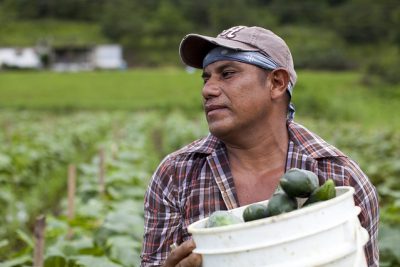
Agriculture Industry Harmed by Restrictive State Immigration Laws
The American agricultural industry is facing billions of dollars in losses due to labor shortages resulting from recent anti-immigrant laws passed in various states around the country. The American farming industry is heavily dependent on undocumented workers, and according to a recent article in Time Magazine, has had an extremely difficult time replacing those who have fled as a result of laws like Arizona’s SB 1070 or Alabama’s HB 56. Read More

Lifting Up Cities That Are Welcoming Immigrants
When it comes to immigration policymaking at the state and local level, all eyes have been focused for quite some time on train wrecks like Arizona and Alabama. These are places in which policymakers have chosen to deal with unauthorized immigration by embarking on a path of economic self-destruction—blindly lashing out at immigrants and Latinos no matter what the cost in terms of wasted taxpayer money, labor-force contraction, lost economic growth, community upheaval, and violations of fundamental human rights. Read More

No Paid Sick Days for Immigrant Caregivers Risky to Workers, U.S. Economy
By Elisa Batista, Women Immigrants Fellow, New America Media. In 91-year-old Elda Frank’s apartment is a scenario that plays out every moment of every day. An immigrant caregiver with no paid sick days scrambles for backup when she becomes ill on the job. In caregiver Paula Osorio’s case, she called Frank’s son, Bruce, and offered to send her partner, Roberto, in her place. Read More

Immigrant Integration is a Two-Way Street
The process by which immigrants integrate into the economic and social fabric of the United States is very much a two-way street. Naturally, immigrants must harbor the desire to climb the socioeconomic ladder of success. But there must be a ladder for them to climb. If the community within which immigrants live and work makes the collective decision to deprive them of opportunities, then their upward mobility is hindered—to the social and economic detriment of the entire community. Yet, if the community actually welcomes newcomers and helps to facilitate their upward mobility, then the community eventually reaps the rewards of having workers and neighbors who are more highly skilled, more integrated, and more heavily invested in the community itself. Read More

What Early DACA Application Numbers Tell Us About the Future of the Program
It hasn’t even been a month since the United States Citizenship and Immigration Services (USCIS) first started accepting requests for deferred action under its Deferred Action for Childhood Arrivals (DACA) initiative, yet the New York Times reported this week that the first approvals are already on their way. The Times also reported that the agency has received 72,000 applications as of September 11—almost double the 40,000 reported in the Wall Street Journal just the day before. That’s not bad at all for a program that was only announced three months ago and put into place by the government in 60 days. Read More

The Economic Advantages of U.S. Citizenship
Becoming a naturalized U.S. citizen has many benefits – citizens can vote and run for public office, bring family members to the U.S., hold certain jobs reserved for citizens, and they are protected from deportation. There are also a range of economic benefits to citizenship, highlighted by the Migration Policy Institute (MPI) in their new report, The Economic Value of Citizenship for Immigrants in the United States. Read More
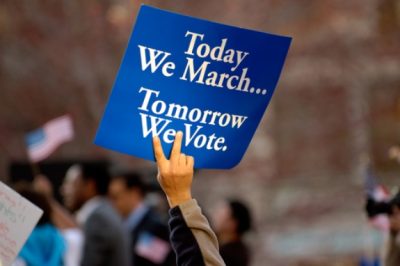
Nativist Group Trivializes the 2012 Latino Vote
The nativist Center for Immigration Studies (CIS) has an implicit message for the Republican Party heading into the 2012 elections: stop worrying about Latino voters and just play to your predominantly Anglo base. Such is the kamikaze message contained within a new CIS report, innocuously titled Projecting the 2012 Hispanic Vote. The report dismisses the claims of innumerable analysts that Latino voters could tip the electoral balance one way or the other in the so-called “battleground” states and, by extension, in the nation as a whole. After all, argues CIS, veterans and senior citizens outnumber Latinos in the national electorate, so why not focus on winning them over instead? This may seem comical to some observers, but CIS is saying it with a straight face. Read More

Nativist Group Publishes a Distorted Portrait of the Foreign-Born Population
The latest report from the Center for Immigration Studies (CIS), Immigrants in the United States, suffers from a bad case of selective statistics. While purporting to be a neutral and scholarly demographic profile of the foreign-born population in the United States, the report is actually an anti-immigrant treatise adorned with charts and bar graphs. On the one hand, the report lumps the native-born children of immigrants in with the immigrant population when tabulating rates of poverty, public-benefits usage, and lack of health insurance among the foreign-born. On the other hand, the report overlooks or minimizes the enormous economic contributions which immigrants make as consumers, entrepreneurs, and innovators. Reading the CIS report, you’d never know that immigrants pay taxes, create new jobs by opening businesses, or make scientific discoveries that transform entire industries. Read More
All gifts are matched dollar for dollar up to $75,000
No one should face the immigration system alone