Healthcare
In the coming years, as our country’s 76.4 million baby boomers enter their elderly years, our country’s healthcare system will face unprecedented demand, adding jobs faster than any other segment of our economy. Yet, employers are already finding that there are not enough unemployed healthcare workers to fill vacant positions, and in some rural areas, shortages are particularly acute.
For several reasons, immigrants have been a particularly important stopgap filling some of our most glaring healthcare needs. Immigrants are twice as likely as native-born to fill lesser skilled home health aide positions, but also twice as likely to fill high-skilled positions as physicians and surgeons. And because immigrants tend to be more willing to move for a job than the native-born, and there are visa provisions to encourage this, immigrants also fill doctor vacancies in some of our rural communities with the greatest need. A smarter immigration system, however, could help fill far more gaps in our healthcare system, benefiting patients.

Sun Journal Opinion: Heritier Nosso: Welcoming immigrants to Maine is good for senior citizens
I came to the United States as an asylum seeker from sub-Saharan Africa. As memories of the violence I fled fade, I am proud I have been able to embrace my new life working at a nonprofit to promote public health. I am filling a critical labor gap and showing… Read More
Los Angeles Daily News Opinion: Two years later, the continuing cost of the Muslim ban
Several years ago, a client of mine at the Council on American-Islamic Relations came to the United States from Yemen to study dentistry. After graduating from one of the nation’s most prominent programs, he was hired on as a professor and is now training the next generation of U.S. dentists. Recently, though,… Read More
Free Times Opinion: Sound Off: It’s Time to Protect South Carolina’s Dreamers
With the government shutdown continuing, pundits are asking whetherPresident Trump might resurrect a deal that came tantalizingly close last year: reopening the government and funding a border wall in exchange for protecting Deferred Action for Childhood Arrivals (DACA) recipients, the young… Read More
Texas Tribune Opinion: Proposed federal rule could penalize legal immigrants, like my parents
When my parents took my brothers and me to visit my grandparents in Mexico last summer, it was meant to be a relaxing family reunion. But I spent the week feeling terrified. I couldn’t stop thinking about what would happen when we crossed the border and returned to Texas. In… Read More
Houston Chronicle Opinion: Why my immigrant clients are avoiding doctors
An immigrant client recently told me her newborn received Medicaid, and she asked me if this could harm her chances of getting a green card. I hated the answer I had to give her: Yes, it might. A new Trump administration regulation could penalize immigrants, like my client, from obtaining… Read More
New Analysis Shows Proposed Public Charge Rule Could Affect Up To 7 Million Immigrants
NEW YORK, N.Y.—Today, following the Trump Administration’s move to open public comment on a proposed rule change regarding the inadmissibility of immigrants on public charge grounds, New American Economy released a new analysis of the potential economic impact of this proposed rule. The Trump Administration has proposed a new… Read More
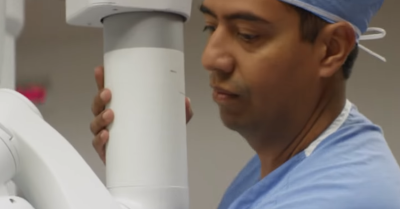
Dr. Omar’s Story: Immigration in West Virginia
To celebrate Citizenship Day, we’re sharing the story of Dr. Omar and his patient, Kim. Dr. Omar immigrated from Mexico City to West Virginia where he specializes in urogynecology. He was able to get Kim back on her feet after a condition kept her mostly housebound. He’s one of only… Read More
Pakistani Engineer Manages 700-Employee Facility, Oversees Life-Saving Drug Production
Usman Chaudhri dreamed of becoming an engineer, and by 23, he had more than achieved his goal. He had received bachelor’s and master’s degrees in mechanical engineering from Pakistan’s National University of Sciences and Technology and had his research on synthetic engine fuel published in journals around the world. Riding… Read More
Without DACA, South Dakotan Will Lose Chance to Fill Critical Healthcare Role
Mario Gonzalez is on the front line of emergency care at North Kansas City Hospital. A cardiac sonographer, Gonzales conducts ultrasounds of patients’ hearts. It is a critical diagnostic tool for cardiologists, and trained health technicians like Gonzales are in high demand as an aging population across the United States… Read More
We’re Really Hardworking, Says Colorado DACA Recipient
When Acacia Mendoza was a baby, her parents, who had been laid off from their finance industry jobs in Guadalajara, Mexico, brought her and her twin sister to the United States, where her uncle worked as a tax preparer in Dallas. Her mother went to work for her uncle’s firm,… Read More
Help Wanted
In all 50 states, there are already far more healthcare jobs open than there are workers available to fill them. Many policymakers worry that extreme demands on the healthcare system are coming at a time when many parts of the country still lack enough physicians and healthcare providers to offer adequate—or even basic—levels of care.
Healthcare Jobs Advertised for Each Unemployed Health Worker, 2013
Rural Provider Shortages
Rural communities, in many ways, feel healthcare worker shortages most acutely. Rural counties, on average, have far fewer doctors or home health aides per capita than more urban ones. But their healthcare needs are often greater—particularly given their older populations and higher rates of disability. Foreign-born physicians, who are often more willing to relocate than native-born colleagues, are a valuable resource for these medically underserved areas.
Indicators of Health Demand, Metro vs. Nonmetro Areas, 2014
Ratio of Providers to Population in Different County Types, 2014
The Role of Immigrants
In many health occupations, from surgeons to home health aides, immigrants already make up a large share of active workers. As the U.S. population continues to age and as healthcare demands increase, immigrants are expected to play an increasingly important role in the health of the nation.
Top Healthcare Jobs by Share of Foreign-Born Workers, 2018
Aging Baby Boomers
The 76.4 million baby boomers living in America represent a major challenge to our broader healthcare system. Baby boomers are expected to live longer than past generations, while also battling chronic, longstanding conditions. If caregivers remain scarce in some parts of the country, adult children could drop out of the labor force in large numbers to care for aging parents—a potential setback for the economy overall.
Sources:
2 Wan He et al., “65+ in the United States: 2005,” Current Population Reports: Special Studies (U.S. Department of Health and Human Services, National Institute of Aging and U.S. Census Bureau, December 2005). Available online.; Carrie A. Werner, “The Older Population: 2010,” 2010 Census Briefs, November 2011. Available online.
3 Keehan, Sean P, Helen C. Lazenby, Mark A. Zezza, and Aaron S. Catlin, “Age Estimates in the National Health Accounts,” Health Care Financing Review 2, no. 2 (2003). Web Exclusive.
4MetLife, “Caregiving Costs to Working Caregivers: Double Jeopardy for Baby Boomers Caring for Their Parents,” June 2011. Available online.
Size of U.S. Population, Age 65+
Home Health Aides
As the share of the U.S. population over 65 continues to increase, demand for home health aides is expected to soar. But the U.S.-born workers who typically fill such jobs—working age women with less than a bachelor’s degree—is shrinking. Immigrants are already playing an outsized role as home health aides, and can help address our country’s growing needs for such workers in the future.
Psychiatrists
An estimated one in five Americans experiences a mental health issue each year, yet more than 40 percent never receive care.5 One reason why so many individuals go untreated and undiagnosed: The country’s large and growing shortage of mental health professionals, an issue that is particularly acute in America’s rural communities. While immigrants already play a large role in our psychiatry workforce, more could be done to leverage their training and skills.
Sources:
5 Pamela S. Hyde and Paolo Del Vecchio, “Five Point Plan to Improve the Nation’s Mental Health,” Substance Abuse and Mental Health Services Administration, n.d. Available online.; Patrick W. Corrigan, Benjamin G. Druss, and Deborah A. Perlick, “The Impact of Mental Illness Stigma on Seeking and Participating in Mental Health Care,” Association for Psychological Science, August 1, 2014. Available online.
States with the Most Days of Decreased or Compromised Worker Productivity Due to Inadequate Mental Healthcare
Visa Obstacles
Despite the critical role immigrants play in the healthcare workforce, the U.S. immigration system makes it difficult for employers to recruit immigrants, even when no U.S.-born workers are available. Many foreign medical residents who study in the United States come on the J-1 visa, a visa that requires them to return home for at least two years after completing their training. One program, The Conrad 30 Waiver, allows states to waive this return requirement for foreign medical residents willing to take jobs in underserved areas. The program, however, is far too limited to meet current needs. Expanding the Conrad 30 program and exploring other fixes—like offering a dedicated temporary work visa to health workers—would go a long way towards addressing our healthcare labor force challenges. So would streamlining the relicensing process for some foreign-trained doctors already here.
Sources:
6 José Ramón Fernández-Peña, Founder and Director of Welcome Back Initiative, August 2015.
7 Ibid.
All gifts are matched dollar for dollar up to $75,000
No one should face the immigration system alone