Immigration 101
Immigration in the United States is complex and ever-evolving. Start here to understand the fundamental aspects of immigration policy, its history, and its impact on both individuals and the country at large. Learn commonly used terms about immigration law and how the U.S. immigration system is designed. Explore layered topics like how and whether immigrants can become citizens, as well as what individual protections look like under the law.

Using SAVE to Verify Voter Eligibility Comes with Unexplored Risks
The lack of evidence of immigrant voter fraud hasn’t stopped some states from pushing efforts to require photo ID at the polls, purge voter rolls of ineligible voters, and other measures that may result in voter suppression and the disenfranchisement of racial and ethnic minorities or other social groups. Some states have asked the federal government for access to immigration data in order to determine whether non-citizens are on the voter registration rolls. After initial refusals, in July 2012, the Director of USCIS advised the Florida Secretary of State that states, under limited circumstances, may use the Systematic Alien Verification for Entitlements (SAVE) program for verification of the citizenship status of registered voters. Since then, other states have expressed an interest in using SAVE for this purpose. However, the status of SAVE is unclear because the Department of Justice is again challenging Florida’s efforts, claiming they violate the Voting Rights Act of 1965. Read More
Restrictionists Misrepresent Data on Immigration Enforcement
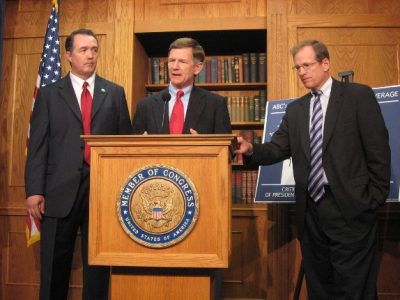
Some members of Congress are intent on portraying the Obama administration as “weak” on immigration enforcement, and they aren’t going to let facts get in their way. Yesterday, for example, the Congressional Research Service (CRS) released new data on individuals who had been identified through Secure Communities (S-Comm) but against whom ICE had not taken enforcement action. House Judiciary Chair Lamar Smith characterized the data as proof that the Obama administration has used prosecutorial discretion “recklessly and to the detriment of the American people.” However, a close look at the data reveals that Smith’s sweeping allegations do not hold water. By misusing terms like “recidivism,” and by failing to distinguish between arrests and convictions, Smith intends to paint immigrants as criminals—a link that has been disproven over and over again. Read More
Voter ID Laws Tackle Non-Existent Problem of Immigrant Vote Fraud
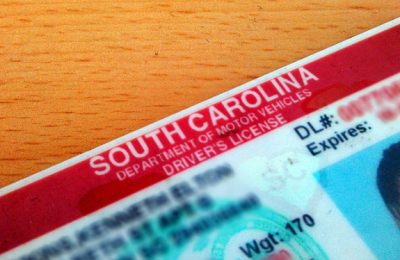
It is election season and voter-fraud hysteria is in the air. A raft of restrictive voter ID legislation from coast to coast is aimed primarily at one imaginary problem: fraudulent voting by immigrants who are not U.S. citizens. Supporters of these laws like to pretend that hordes of non-citizens are stampeding into voting booths and illegally changing the outcome of critical elections. But the reality is that voter ID laws have little to do with the exceedingly rare occurrence of illegal voting by immigrants, or any other kind of voter fraud. These are laws designed to disenfranchise racial and ethnic minorities, the poor, and other social groups that might be inclined to vote for the “wrong” candidates. In other words, voter ID laws are meant to limit democracy, not protect it. Read More
Why Human Trafficking Cases are Falling Through the Cracks
Human trafficking is a big yet commonly overlooked problem in the United States and abroad. Each year, roughly 600,000 to 800,000 people are trafficked across international borders, according to the Department of State, with about 17,500 into the United States. Despite an uptick in laws aimed at addressing this problem, U.S. law enforcement and state prosecutors haven’t identified or prosecuted as many cases as expected given the large number of cases, leaving many to question why. In a recent report, however, experts at the Urban Institute and Northeastern University shed some light on why so many cases seem to be falling through the cracks. Read More
DHS’s NSEERS Program, While Inactive, Continues to Discriminate
For a long time after 9/11, immigration reform was only discussed as a national security issue, and many policies were put in place aimed at stopping terrorists from entering the country. Unfortunately, some of these policies—such as the National Security Entry-Exit Registration System (NSEERS) program—targeted particular ethnic groups, promoted profiling, and resulted in discrimination and civil rights violations. In recent years, the Obama administration has made efforts to end the NSEERS program, but NSEERS still exists and the impact of these policies is still being felt in immigrant communities. In fact, the Rights Working Group, a coalition of civil rights organizations, recently released a report, The NSEERS Effect: A Decade of Racial Profiling, Fear, and Secrecy, which analyzes the continuing impact of this post-9/11 policy. Read More

Does the Supreme Court Think Most Immigrants are Criminals?
Even as the Supreme Court struck down three provisions of Arizona’s anti-immigrant law (SB 1070), the Justices appeared to embrace a major falsehood of nativist ideology: that immigrants are more likely to be criminals than the native-born. On page six of the majority opinion, the Court maintains that unauthorized immigrants are “reported to be responsible for a disproportionate share of serious crime” in Arizona’s Maricopa County. The source cited for this bold statement is a 2009 report from the Center for Immigration Studies (CIS)—a deeply flawed report which attempts to overturn a century’s worth of research demonstrating that immigrants are less likely than the native-born to commit violent crimes or end up behind bars. Read More
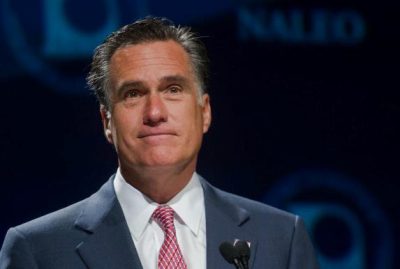
In Speech, Romney Provides Few Details on Immigration Policy
On Thursday, Mitt Romney gave a much-anticipated speech in which he was expected to address whether—as President—he would reverse the new Obama administration policy toward immigrant youths who would qualify for the DREAM Act. The answer? It’s still unclear. Despite adopting a noticeably softer tone toward undocumented immigrants, Romney again failed to say whether he would overturn the policy and provided few other details as to how he would tackle the most intractable problem of the immigration debate. Read More
New Data Reveals Immigrants’ Voting Potential at the Local Level
Newly obtained data from the DHS Office of Immigration Statistics provide another indication that immigrants in the United States hold untapped electoral power. There are 8.1 million legal immigrants who arrived in this country between 1985 and 2005 and who are likely eligible to become naturalized U.S. citizens with the power to vote. If these immigrants were already U.S. citizens, and if they registered to vote at the same rate as other naturalized citizens (61%), counties across the nation would see their voter registration rolls jump dramatically. Read More
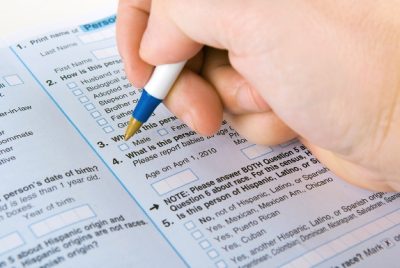
Lawmakers Attempt to Gut Census by Defunding American Community Survey
How can you make good policy in the absence of good information? That seems to be a question that some Republicans in the House and Senate have not asked themselves. In recent months, these lawmakers have proposed that funding for the Census Bureau’s annual American Community Survey (ACS) be cut entirely from the federal budget, or that the ACS be scaled back to a “voluntary” program. Given that the data generated by the ACS is used to guide the distribution of more than $400 billion in federal funding each year, this would be an ill-advised move. Read More

Anti-Immigration Group Blames Students for Maryland’s Budget Gap
In a case of very creative accounting, the nativist Federation for American Immigration Reform (FAIR) is blaming students for Maryland’s fiscal woes. In a new report, FAIR lumps together students who are unauthorized immigrants with U.S.-born students who have unauthorized parents and claims that they are all costing Maryland taxpayers astronomical sums in educational expenditures. However, the report (entitled The Cost of Illegal Immigration to Marylanders) mistakenly treats the education of these students as nothing more than a “cost” attributable to unauthorized immigration. In reality, the educational expenses targeted by FAIR are an investment in the future U.S. workforce and tax base; an investment that will pay off later as students become taxpayingattr workers. Read More
All gifts are matched dollar for dollar
No one should face the immigration system alone