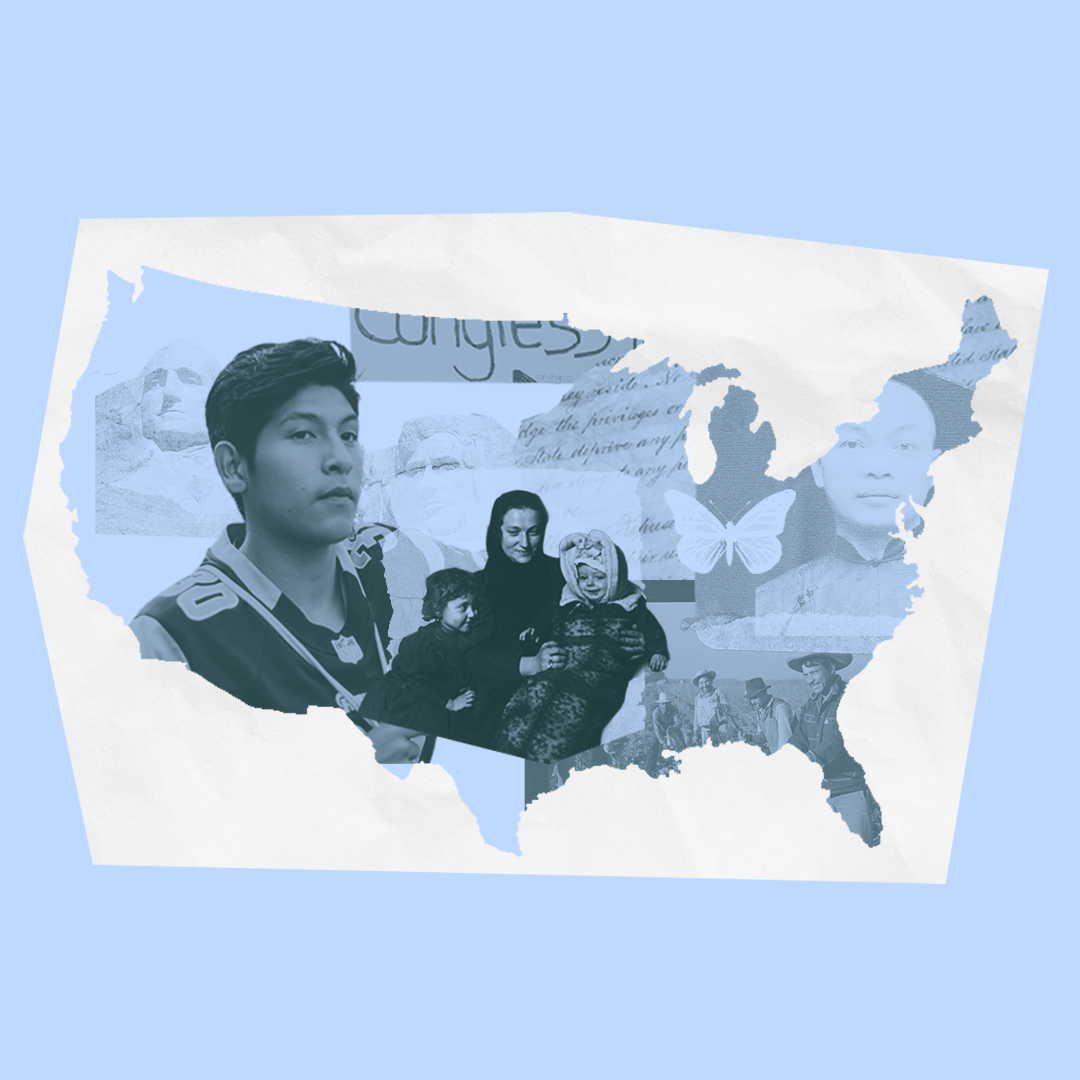
Immigration 101
Immigration in the United States is complex and ever-evolving. Start here to understand the fundamental aspects of immigration policy, its history, and its impact on both individuals and the country at large. Learn commonly used terms about immigration law and how the U.S. immigration system is designed. Explore layered topics like how and whether immigrants can become citizens, as well as what individual protections look like under the law.

Nativist Group Pretends That All Unauthorized Immigrants Are Criminals
Unauthorized immigrants come to this country primarily for two reasons: to work, and to be reunited with family members who are already here. They would obviously prefer to come to this country legally, but our legal limits on immigration have for decades not matched either the realities of U.S. labor demand or the natural human desire for family unity. And so they opt to make the expensive, difficult, and dangerous decision to come without authorization because that is what they judge to be the best chance they and their families have for a better future. In other words, the overwhelming majority of unauthorized immigrants are as far from being hardened criminals as you could possibly get. They are gardeners and housekeepers; husbands and wives; parents with children. They are members of U.S. society and integral to the U.S. economy. Read More

From Coast to Coast, Immigrants Drive Local Economies
Immigrant entrepreneurship has transformed Atlanta’s northeastern suburbs along and near Buford Highway into “International Village” – an area filled with immigrant restaurants, markets, specialty stores, and other businesses. Through ventures such as Chinatown Square, Asian Square Mall, and Plaza Fiesta immigrants have “economically and socially revived an area that faced economic stagnation and population decline.” As one researcher noted, “the five-mile stretch of highway running through Chamblee, Doraville, and Norcross constitutes the greatest concentration of ethnic-owned businesses in the southeastern U.S.” Read More

Months After Passage, Anti-Immigrant Group Still Mischaracterizes Senate Bill
The immigration reform bill (S.744) that the Senate passed in June would fix our broken work visa programs for lower skilled, higher skilled, and agricultural workers; eliminate decades-long backlogs in our immigrant visa programs; increase job and wage protections for U.S. workers; and greatly increase our investment in border security. In addition, the bill would have fiscal and economic effects that would be overwhelmingly positive, according to the Congressional Budget Office (CBO). If enacted, the bill would help reduce the federal budget deficit by approximately $1 trillion over 20 years, would boost the U.S. economy as whole without negatively affecting U.S. workers, and would greatly reduce future undocumented immigration, according to the CBO. However, the Federation for American Immigration Reform (FAIR) released a report this week criticizing the bill. They claim S.744 offers an immediate “amnesty” for the undocumented, lacks specific metrics for measuring border enforcement, weakens the visa entry-exit system, and creates a “nebulous new system” that fails to protect Americans from illegal foreign workers. Read More

Immigration is a Positive Force for Economic Growth in Cities
Posters on metro buses and trains in St. Louis will now welcome you to the city in 17 different languages, one of the many initiatives begun by the St. Louis Mosaic Project to create an atmosphere that welcomes and encourages immigrants to the area. Signs in the public transit system aren’t just designed to look pretty, however, but acknowledge that for many immigrants, particularly those new to the St. Louis region, this is their primary means of going to work or school, shopping, and taking part in all the community has to offer. “The Mosaic Project says a lot about where our region is going,” St. Louis County Executive Charlie Dooley said. “We want to be more diverse and see things from different points of view.” Read More
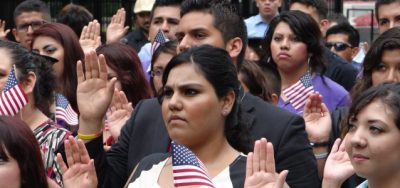
Taking the Important Leap to Citizenship
Each year on September 17, the United States observes Constitution Day and Citizenship Day, a combined event that commemorates the anniversary of the nation’s constitution and recognizes all those who are or have become U.S. citizens. It is considered a time for Americans to reflect on the importance of the rights and responsibilities of citizenship, as well as what it means to be a U.S. citizen. However, it’s also an important time to applaud those who have worked hard to become citizens, while exploring ways to remove barriers for those who are eligible, but still haven’t taken the leap. Read More

Local Immigration Enforcement Harms Community Policing and Public Safety
Many local municipalities and law enforcement agencies are concerned that local immigration enforcement programs such as the 287(g) program, which deputize local police to perform duties of federal immigration agents, destroy the relationship between the police and the immigrant communities on whom they rely for cooperation and crime reporting. A report released this month by the Center for Immigration Studies (CIS) states that these fears are unfounded and that local immigration enforcement has no effect on cooperation with police. However, the data cited by CIS, which include crime reporting statistics and a study of the effects of the Prince William County 287(g) program, do not support these claims, and in fact suggest the opposite, that immigration enforcement by local police severely damages relationships with immigration communities and harms public safety. Read More

New Report Provides Specific Measures of Latino, Asian, and Immigrant Voters in Upcoming Elections
Following the 2012 presidential election, many Republican leaders and pundits concluded that Mitt Romney’s position on immigration hurt him with a range of voters, particularly Latinos and Asians. As a result, senior Republicans began to argue that immigration reform was not only inevitable, but was vital to the survival of the Republican Party. While this philosophy has been embraced by many national leaders, some rank-and-file congressional Republicans in districts where non-Latino white voters are still in the majority have found the argument less compelling. Read More

Immigrant Business Owners Continue to Contribute to Communities Across America
During the August recess, Members of Congress have been meeting with constituents in their home states and districts. During this time, many have likely dined at an immigrant-owned restaurant or used the services of an immigrant-owned business within their home state. The fact is, immigrant businesses are important in many communities across America. Immigrant entrepreneurs bring in additional revenue, create new jobs, and boost local and state economies. Indeed, immigrant entrepreneurs and innovators continue to make contributions throughout the U.S. Read More

Lessons from the Civil Rights Era for Immigration Reformers
On the 50th Anniversary of the historic “March on Washington” which led to some of the most significant legislative victories in the civil rights movement, it’s hard to not reflect on the influence that activists and legislators in the 1960’s have had and should have on the immigrant rights movement today. There are, in fact at least two very important takeaways for immigration reformers. First, the activists in the 60’s showed that the power was indeed in the hands of the people and flexing political muscle would pay off. Second, final passage of the 1964 Civil Rights Act demonstrated how strong political leaders can negotiate controversial bills and get them across the finish line. Read More

New Study Shows How Native-Born Workers Benefit from Immigration
One of the fears recurrently raised by those who oppose immigration is that inflows of immigrants negatively affect the native-born labor force in general, and less-educated working class individuals in particular. The idea upon which this assertion relies is that when less-educated workers immigrate into the host country, they systematically bring down the wages of similarly educated native-born workers. This notion is oftentimes overstated and is to a large extent fueled by prejudice rather than being backed by hard evidence. Read More
Your support moves the American story toward justice, dignity, and belonging.
America's story is an immigrant story.