Immigration at the Border

Criminal Alien Program (CAP) FOIA Documents
American Immigration Council and AILA’s Connecticut chapter initially sought records related to CAP through a FOIA request to ICE in December 2011. When ICE refused to release records responsive to the request, Plaintiffs filed suit under FOIA for declaratory and injunctive relief to compel the disclosure and release of agency records improperly withheld by DHS and its component ICE Read More

Berks Detention Center Employee Convicted of Sexual Assault of Young Honduran Mother
A judge in Pennsylvania this week sentenced Daniel Sharkey, a 41-year-old former counselor at the Berks County Residential Center, to six to twenty three months of jail time. Sharkey previously worked at the county-run detention center for children and their parents. His sentence came down after he pled guilty… Read More
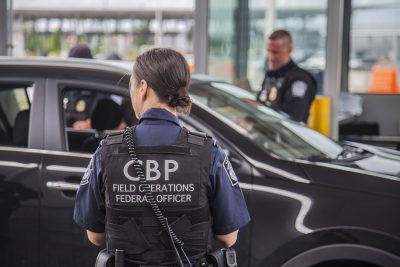
Custom and Border Protection Use–of-Force Data Raises More Questions
Use-of-force by U.S. Customs and Border Protection (CBP) personnel in Fiscal Year (FY) 2015 declined more than 26 percent compared with the previous year, according to statistics released last week by CBP. During FY 2015, which ended in September of last year, CBP reported 756 uses-of-force, down from the… Read More

These Two States Are Pushing Back on Private Immigration Detention
Immigration detention is being addressed at the state and local level in a variety of ways. In Indiana, local advocates are opposing a new private detention facility, and in California, legislators are attempting to limit private detention and enforce national detention standards. California State Senator Ricardo Lara recently introduced the… Read More

When Immigrants Are Deported Without Their Belongings or IDs, They Are Placed in Even Greater Danger
26 Mexican nationals say the Department of Homeland Security (DHS) deported them from the El Paso Border Patrol sector, which covers West Texas and all of New Mexico, without their identification, money, cell phones and other possessions, exposing them to greater danger in Mexico and making it nearly impossible to… Read More
Comments on U.S. Immigration and Customs Enforcement Draft Detainer Policy
Recommendations that DHS promulgate new regulations that ensure more effective oversight over the issuance of detainers and better protection for those subject to detainers.
Response to DHS’s request for comments in connection with a review of existing regulations (submitted April 13, 2011)
Reducing Regulatory Burden; Retrospective Review Under Executive Order 13563, 76 Fed. Reg. 13526 (Mar. 14, 2011) Read More
Ashcroft v. Abbasi (formerly Turkman v. Ashcroft) – U.S. Supreme Court
The Council, along with the National Immigration Project of the National Lawyers Guild (NIPNLG), is seeking to preserve federal court review of damages actions brought by noncitizens for abuse of authority by immigration agents. In actions brought under Bivens v. Six Unknown Named Agents of the Federal Bureau of Narcotics, 403 U.S. 388 (1971), the government routinely moves to dismiss these cases on a variety of jurisdictional grounds, including by arguing that INA § 242(g) bars the court’s review of damages claims in any case involving removal procedures, and that a remedy under Bivens is not available in immigration-related actions. In essence, the government is attempting to deprive those who have been harmed by immigration agents of any remedy in federal court. Read More

Avalos-Palma v. United States – District Court for the District of New Jersey
The American Immigration Council and National Immigration Project of the National Lawyers Guild (NIPNLG) are seeking to preserve federal court review of damages actions brought by noncitizens for abuse of authority by immigration agents. Read More
F- P- v. Holder – Ninth Circuit
Long used in criminal trials, motions to suppress can lead to the exclusion of evidence obtained by the government in violation of the Fourth Amendment, Fifth Amendment, or related provisions of federal law. While the immediate purpose of filing a motion to suppress is to prevent the government from meeting its burden of proof, challenges to unlawfully obtained evidence can also deter future violations by law enforcement officers and thereby protect the rights of other noncitizens. The Supreme Court held in INS v. Lopez-Mendoza, 468 U.S. 1032 (1984), that motions to suppress evidence under the Fourth Amendment in immigration proceedings should be granted only for “egregious” violations or if violations became “widespread.” Despite this stringent standard, noncitizens have prevailed in many cases on motions to suppress. Read More
