Immigration at the Border

ICE Releases 2013 Deportation Data
U.S. Immigration and Customs Enforcement (ICE) deported 368,644 immigrants during the 2013 fiscal year, according to the agency’s year-end removal numbers. ICE officials report that 235,093 of those removed were apprehend at the border, and 133,551 people were apprehended in the interior of the U.S. Of… Read More

New Legal Analysis Shows State Compliance with ICE Detainers May Violate the Constitution
Chicago, New York, and San Francisco now prevent local jails from honoring immigration detainers—requests from federal immigration officials for state and local jails to hold a person so that Immigration and Customs Enforcement (ICE) agents can investigate the person’s immigration status—unless an arrestee has been charged with or convicted of certain criminal offenses. And California’s Trust Act, which does virtually the same thing, will go into effect early next year. Yet, while these states have limited who can be subject to an immigration detainer, there are legal questions surrounding this selective enforcement that call into question whether detainers are legal at all. Read More
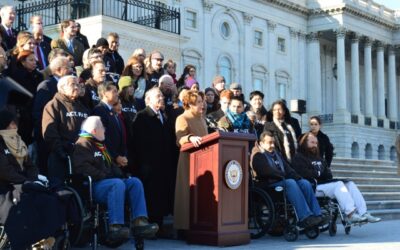
House Bi-Partisan Budget Deal Gives Hope to Immigration Activists
One day before Congress left town for the holiday recess, the House of Representatives approved a two-year budget deal by a wide margin. Despite some GOP opposition to the plan, House Speaker John Boehner allowed a vote on the plan, which passed with a majority of Democratic and Republican votes. The budget outline now heads to the Senate for a vote. Before the vote on Thursday, Boehner attacked extremely conservative factions within his party who he said were standing in the way of progress. He told reporters these groups were “misleading” and added, “I think they’re pushing our members in places where they don’t want to be. And frankly, I just think that they’ve lost all credibility.” Read More

Nuevos Informes Revelan Cultura de Crueldad dentro de la Patrulla Fronteriza
Esta semana el American Immigration Council publicó dos nuevos informes que muestran a las claras ciertos patrones sistemáticos en el uso de la fuerza por parte de la Patrulla Fronteriza de los Estados Unidos. En particular, los informes ponen en evidencia una serie de abusos, tanto físicos como verbales, ejercidos contra inmigrantes indocumentados durante el proceso de aprehensión o mientras los mismos están detenidos. Asimismo, documentan prácticas corrientes de retención de pertenencias de los migrantes ocurridas durante el proceso de deportación. Read More

House Hearing Misses the Mark on Asylum Claims
The House Judiciary Committee held a hearing Thursday about whether or not abuse of the asylum system is “overwhelming our borders.” What the committee ended up focusing on, however, was the alleged abuse of the credible fear screening process, a preliminary step in the application process for some asylum seekers. Although credible fear is different from asylum, this distinction was lost at times during the hearing despite the best efforts of the witnesses. Read More

New Reports Expose Subculture of Cruelty Within the U.S. Border Patrol
There is a subculture of cruelty within the Border Patrol—and, more broadly, within the entire machinery of the U.S. deportation regime. From the ranks of frontline Border Patrol agents to the guards in private, for-profit detention facilities, the abuse of detainees is widely tolerated and even accepted. This is the central finding to emerge from the second wave of the Migrant Border Crossing Study (MBCS). Wave II of the MBCS is currently housed in the Center for Latin American Studies at the University of Arizona and the Department of Sociology at George Washington University. The survey is a study of 1,110 randomly selected, recently repatriated migrants who were surveyed in six Mexican cities between 2009 and 2012. The results of this study are being released in a series of three reports titled Bordering on Criminal: The Routine Abuse of Migrants in the Removal System. Read More

As Congress Looks to Next Year, Activists Keep Immigration Reform Alive
Congress takes a holiday break at the end of this week and won’t return from recess until January. This pause in the legislative calendar, however, has little meaning for immigration activists who are continuing to push Congress to act on immigration reform. While the timetable may be changing, the… Read More
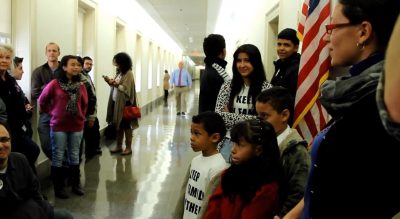
From the Mouths of Babes: Children Demand Immigration Reform
Families across the U.S. are facing the holidays separated from mothers, fathers, and siblings due to deportations and years-long waits for visas. Children—some of whose parents are undocumented immigrants—have taken to the halls of Congress this week to go to congressional offices, meet with members, and ask them to support immigration reform so that their families won’t be separated. Read More

Local Officials Improve Immigration Enforcement Policies as Congress Fails to Act
The county council in King County, Washington, decided this week that local law enforcement officials will stop honoring federal immigration agents’ requests to detain immigrants who are arrested for low-level crimes. They voted 5-4 for the new policy on Monday, and supporters hope the change “will build trust between local police and immigrants who don’t report crimes for fear they or a family member will be deported,” according to the Seattle Times. Read More

The Punishment Should Fit the Crime for Immigrants, Too
The punishment should fit the crime. That maxim is as old as law itself, dating at least as far back as the Old Testament and Hammurabi’s Code. It’s firmly rooted in our Constitution’s Due Process Clause and the Eighth Amendment’s prohibition against excessive fines and cruel and unusual punishment. That principle—referred to as proportionality—appears in both our criminal and civil law. It forbids, for example, the imposition of a life sentence for passing a bad check. It means that the state cannot sentence juveniles for non-homicide crimes to life without parole. And it disallows extreme punitive damages awards. So what does proportionality have to say when the government tries to deport a lawful permanent resident who, a decade ago, shoplifted $200 worth of merchandise from a department store? Right now, astonishingly, nothing: immigration judges do not even consider whether a person’s banishment from the United States is a disproportionate punishment for a crime before ordering the person’s removal. But advocates are working to change this. Read More
All gifts are matched dollar for dollar up to $75,000
No one should face the immigration system alone