Immigration at the Border
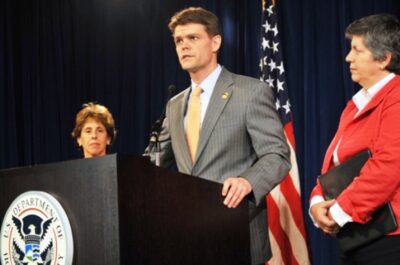
Prosecutorial Discretion Survey Demonstrates Need for More Training, Consistency Across ICE Field Offices
It’s been almost six months since ICE Director John Morton issued new guidelines on prosecutorial discretion to help ICE agents, attorneys and other officials distinguish between high priority cases (national security threats and serious criminals) and low priority cases (DREAM Act students). A recent survey released by the American Immigration Lawyers Association (AILA) and the American Immigration Council takes a look at how well those guidelines are translating into actual practice at ICE offices around the country. While the results show that prosecutorial discretion was applied in some cases, the majority of cases show that ICE field offices are confused and hesitant to make decisions, demonstrating the need for more guidance and training from DHS headquarters. Read More

Arizona’s SB1070 Champion, State Senator Russell Pearce, Loses in Recall Election
Arizona state senator Russell Pearce, the leading force behind Arizona’s SB 1070 and other anti-immigrant legislation, was defeated in a recall election Tuesday. Fellow Republican Jerry Lewis—a moderate on immigration issues—won with 54% of the vote. Citing Pearce’s narrow anti-immigrant agenda and the damage SB 1070 inflicted on the state, a group called Citizens for a Better Arizona began the recall effort back in January. Today, many in Arizona and across the U.S. celebrate Pearce’s defeat as a victory for practical solutions over extremist rhetoric and anti-immigrant proposals. Pearce is believed to be the first Arizona state legislator to face a recall election. Read More

AILA-AIC Survey Reveals ICE Officials’ Sporadic Exercise of Prosecutorial Discretion
Washington, DC – The American Immigration Lawyers Association (AILA) and the American Immigration Council (AIC) released a new survey today finding that Immigration and Customs Enforcement (ICE) officers and attorneys across the country are applying different standards on prosecutorial discretion despite the issuance of national policy memoranda this summer. Read More

Provisions in Alabama’s Immigration Law Go Further Than You Think
It’s no stretch to call Alabama’s new immigration law (HB 56) extreme—especially the provision (since enjoined) which required schools to check the immigration status of students and made it a criminal misdemeanor for an unauthorized immigrant to fail to carry immigration documentation. Two provisions that may have flown under the radar, however, are the contract and business transaction which infringe on individuals’ ability to navigate everyday life (such as access to water) and leave them vulnerable to exploitation and abuse. Sadly, this is exactly what the law’s author had in mind. A new report, Turning Off the Water: How the Contracting and Transaction Provisions in Alabama's Immigration Law Make Life Harder For Everyone, analyzes just how far these provisions go. Read More

Thousands of Children Stuck in Foster Care after Parents Deported, Report Finds
A report released this week reveals yet another devastating consequence of the enforcement-only approach to immigration—a startling number of children whose parents have been detained and deported are placed in foster care and face enormous barriers reuniting with their families. According to the Applied Research Center, 1 in 4 people deported in FY 2011 (nearly 100,000 people) left behind a U.S. citizen child. The report found that the odds of reuniting the families are so low that the parents “basically fall off the face of the earth when it comes to the child welfare system.” Sadly, because of the regular increase in the number of annual deportations, this number is expected to triple in the next five years. Read More
DOJ Responds Forcefully to Civil Rights Disaster in Alabama, What Will DHS Do?
Washington D.C. – This week, the Department of Justice (DOJ) announced that it was filing suit in South Carolina to block Act No. 69 (formerly SB 20), South Carolina’s new anti-immigrant law—modeled on Arizona’s SB1070. DOJ argues—like it did in Utah and Alabama—that the law is unconstitutional and interferes with… Read More

Congressional Members to Join Civil Rights Groups in Fight Against Alabama’s “Juan Crow” Law
In the days following passage of Alabama’s extreme immigration law (HB 56), many business, religious and civil rights leaders spoke out about the law’s damaging impact on immigrant communities, farms, businesses, and schools. Since then, many notable community and civil rights leaders have stepped forward to add their voice to those demanding a repeal of the law. The Alabama NAACP, for example, recently joined immigrant rights groups to call for an end to what one African American minister described as “Alabama’s worst times since the days of segregation and Jim Crow.” This week, Illinois Congressman Luis Gutierrez met with members of several congressional caucuses—Hispanic, Black, Asian Pacific American and Progressive—to address what he calls Alabama’s “civil rights emergency.” Read More

New Data Highlights Devastating Impact of Secure Communities on Immigrant and Latino Communities
New data on the Immigration and Customs Enforcement’s (ICE) controversial Secure Communities reveals the program’s devastating impact on immigrants, Latinos and U.S. citizens. Released by the Warren Institute at Berkeley Law School, the report, “Secure Communities by the Numbers,” examines the profile of individuals who have been apprehended through the program and funneled through the system. The results are startling. Many communities, in fact, are questioning their level of cooperation with the government on certain aspects of this flawed enforcement program. Read More
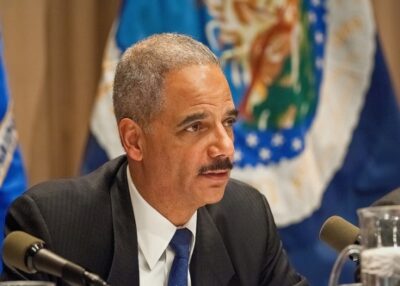
DOJ’s Lawsuit Against South Carolina Latest Legal Challenge to State Immigration Laws
BY KAREN TUMLIN, MANAGING ATTORNEY, NATIONAL IMMIGRATION LAW CENTER Yesterday, the U.S. Department of Justice (DOJ) filed suit against South Carolina, challenging the state’s extreme anti-immigration law (SB 20). With this action, the Department of Justice charges that South Carolina, like Arizona and Alabama, have passed unconstitutional immigration laws. Civil rights groups (including the National Immigration Law Center) agree. Coalitions have filed suit in five states—Utah, Indiana, Georgia, Alabama, and South Carolina—that passed their own Arizona-inspired laws in 2011. Fortunately, most of these states have seen their new, misguided laws lose much of their bite through civil rights coalition-led legal challenges. Here’s a round-up of the status of these legal cases. Read More

Alabama Law Enforcement, Courts Implementing New Law in Different Ways Across State
As if things weren’t chaotic enough in Alabama, reports now find that law enforcement and courts vary widely on how they apply the state's new immigration law, creating different rules and consequences for individuals depending on a judge or officer’s understanding of the law. As the controversial law (HB 56) itself continues to change as it makes its way through the court system, many law enforcement officers are unclear about which provisions still stand and have yet to receive the training necessary to implement the law. Judges, too, are on different pages on how to interpret the law, meaning that an individual might receive a different ruling from one judge to the next depending on the judge's understanding of the law. Read More
All gifts are matched dollar for dollar up to $75,000
No one should face the immigration system alone