Immigration at the Border

New Data Shows Government Still Prioritizing Immigration Prosecutions over Dangerous Crime
Two recent reports by the Transactional Records Access Clearinghouse (TRAC), a research center out of Syracuse University, confirm that the federal government is prioritizing immigration enforcement over potentially far more dangerous activities, such as gun smuggling. While prosecutions for illegal re-entry are up in criminal courts, prosecutions for weapons-related offenses are down in the last year. Not surprisingly, this prioritization of immigration prosecutions over dangerous crime has largely gone unnoticed by immigration restrictionists who routinely underscore “violence along the border” as a reason to bolster a border-only agenda. Read More

South Carolina Governor Signs $1.3 Million Immigration Enforcement Law
This week, on the same day that a federal judge enjoined key provisions of Georgia’s immigration law, South Carolina Governor Nikki Haley signed an Arizona-style immigration bill into law. To date, federal judges in four states (Arizona, Utah, Indiana and Georgia) have blocked key provisions of their Arizona-inspired immigration laws, arguing that these laws unlawfully interfere with federal authority over immigration matters. So what makes South Carolina any different? Nothing, except for the $1.3 million price tag in addition to the cost of implementation and legal fees incurred from defending the law. Read More

Senate Hearing on DREAM Act Emphasizes Need for Relief
Today, the U.S. Senate held its first ever hearing on the Development, Relief, and Education for Alien Minors (DREAM) Act. Witnesses such as Department of Homeland Security Secretary Janet Napolitano, Secretary of Education Arne Duncan and Dr. Clifford Stanley, Under Secretary of Defense for Personnel and Readiness, testified to an overflowing Senate hearing room. The hearing renewed hope that despite a failure on the part of the Senate to pass the DREAM Act last year, Congress may yet be willing to help these deserving young adults fulfill their potential and contribute to the U.S. Read More

Federal Courts Block Key Provisions of Restrictive Immigration Laws in Georgia and Indiana
Today, a federal judge in Georgia granted a preliminary injunction against key provisions of the state’s immigration law, HB 87, which was slated to take effect Friday. Today’s decision follows another federal court decision handed down last week in Indiana which also blocked key provisions of the state’s new immigration law, SB 590. And these restrictive immigration laws aren’t the only ones caught up in legal battles. Several restrictive immigration laws are being challenged in court with more likely to follow. This week, the Department of Justice (DOJ) requested a meeting with Alabama law enforcement officials to determine whether or not to file suit against their immigration law while civil rights groups threatened to sue South Carolina if Gov. Nikki Haley signs their restrictive bill, S 20, into law. Read More

Why the Enforcement-Only Mentality Leads to an Economic Dead-End
In the world of immigration restrictionists, there is no economic or social problem for which immigrants cannot be blamed. So it should come as no surprise that the Center for Immigration Studies (CIS) released yet another report yesterday blaming immigrants for unemployment and underemployment among native-born workers. While the report does marshal an impressive array of grim employment statistics, none of them has anything to do with the report’s main conclusion: that millions of under- and unemployed natives would magically have jobs were unauthorized immigrants to go away. Read More

Are States Training Law Enforcement to Implement Restrictive Immigration Laws?
Washington, D.C. – While many states legislatures rejected Arizona-style immigration laws this year in anticipation of high costs, legal challenges and charges of racial profiling, others states—like Georgia, Alabama and South Carolina—passed laws requiring law enforcement to determine the immigration status of anyone that is stopped or detained for any… Read More
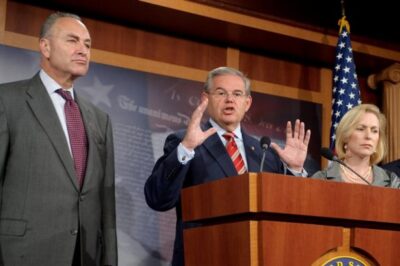
Sen. Menendez Introduces Comprehensive Alternative to Enforcement-Only Immigration Legislation
While some in Congress continue attempts to enforce a way out of our immigration problems, others, like Senator Robert Menendez (D-NJ), are offering balanced solutions that address not just one, but many facets of our broken immigration system. Today, Senator Menendez (D-NJ), along with Senators Harry Reid (D-NV), Patrick Leahy (D-VT), Richard Durbin (D-IL), Charles Schumer (D-NY), Kristen Gillibrand (D-NY) and John Kerry (D-MA), introduced the “Comprehensive Immigration Reform (CIR) Act of 2011,” a bill which offers a comprehensive framework for lasting reform. Read More

What ICE’s Latest Memo on Prosecutorial Discretion Means for Future Immigration Cases
Last week, Director of Immigration and Customs Enforcement (ICE), John Morton, reminded ICE officials of their duty and obligation to use good judgment in the prosecution of immigration cases. In a culture where many people still believe that “enforcing the law” and “removing people” are exactly the same, Morton’s new memo is likely to shake some things up. While the memo doesn’t change the law in any way or end controversial programs like Secure Communities, it does serve as a much-needed guide for ICE officials on how, when and why to exercise prosecutorial discretion in immigration cases. Read More

Making E-Verify Mandatory Will Not Magically Solve Our Immigration Woes
Here we go again with the next round of “how we’re going to look tough on immigration without actually accomplishing anything.” This year, mandatory E-Verify is the magic bullet of choice. On Tuesday, House Judiciary Committee Chairman Lamar Smith (R-TX) introduced the “Legal Workforce Act,” which would expand the E-Verify program, making it mandatory for all employers in the United States. A hearing on the bill was held today in the Immigration Policy and Enforcement Subcommittee. Read More
Once Again, Congress Pursues Costly E-Verify Legislation to the Peril of U.S. Economy
Washington D.C. – On Wednesday, the House Judiciary Subcommittee on Immigration Policy and Enforcement will hold a hearing on the “Legal Workforce Act,” another enforcement-only bill introduced today by Judiciary Chairman Lamar Smith (R-TX). The bill would make the electronic employment verification system “E-Verify” mandatory for all employers within two… Read More
All gifts are matched dollar for dollar up to $75,000
No one should face the immigration system alone