Immigration at the Border
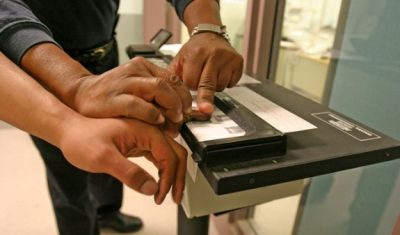
Secure Communities Program Continues to Take Heat for Targeting Non-Criminals
At a conference last week, DHS Secretary Janet Napolitano raised a few eyebrows when she implied those who are fingerprinted through ICE’s Secure Communities program are presumably guilty of a crime—a particular sticking point considering the program’s reputation for sweeping up non-criminals. Although ICE officials claim the program targets criminal aliens, nearly 28% of people deported through the Secure Communities program are actually non-criminals. But that’s just one of the many problems immigrant advocate and community groups are voicing over this rapidly expanding program. Read More

Yet Another State Leaves Immigration Enforcement Bill on Cutting Room Floor
The legislative graveyard got a little bit bigger this week as lawmakers in Mississippi pronounced a series of restrictive immigration measures dead. More than 30 immigration-related bills—including an Arizona-style enforcement bill—failed to meet a legislative deadline due to disagreements over the laws’ impact on the business community. Mississippi joins nine other states (Colorado, Iowa, Kansas, Kentucky, Nebraska, New Hampshire, South Dakota, Virginia, Wyoming) where legislators have cut Arizona-style enforcement bills—bills that are, according to the Washington Post editorial board, causing many businesses to speak out for fear of sharing Arizona’s economic fate. Read More

Tuition Equity Could Be Coming Soon to a State Near You
BY SUMAN RAGHUNATHAN, PROGRESSIVE STATES NETWORK Those who follow state immigration policy may have taken note of an interesting phenomenon—the recent momentum behind state level tuition equity proposals. Just this week, Oregon’s Senate passed a Republican-sponsored tuition equity bill which proposes to level the playing field for promising and motivated undocumented students by ensuring that they pay the same in-state tuition rates as their US citizen and legal permanent resident classmates. In states without tuition equity laws, talented undocumented students who are eager to attend state colleges or universities must pay out-of-state tuition rates, which in some states are as much as 350% higher. As a result, many exemplary undocumented high school graduates are forced to abandon their dreams of higher education and a better future for themselves, and their family due to the high cost of tuition. Read More

Tide Turning Against Authors of Restrictive Immigration Measures
Over the last few weeks, the media has slowly picked up on the tepid response state legislatures have given to copycat immigration enforcement measures, noting the gradual cooling of enthusiasm and support for these highly divisive measures. Lawmakers, under pressure from business groups, have already shot down enforcement measures in Arizona, Colorado, Iowa, Kentucky, Nebraska, New Hampshire, South Dakota, Virginia, and Wyoming while other states, like Kansas, draw closer to permanently stalling these bills. While these battles are far from over, the response of key supporters indicates that they, too, know that the public is becoming disenchanted. Today, Politico ran an editorial by Arizona state Senator and author of SB 1070, Russell Pearce, who, in what sounded like a cross between a crusader and a sore loser, attempted to defend his honor against the recently failed package of immigration measures in Arizona. Read More

State Legislators Continue to Throw Restrictive Immigration Measures Overboard
Throughout the months-long debate over restrictive immigration measures, many state lawmakers have considered the fiscal and political impacts and decided to throw them overboard. This week was no different as opposition to costly enforcement legislation continued. A tough immigration bill was likely killed in Kansas this week after the House refused to move the bill out of committee. In Georgia, more than 3,000 people took the streets outside the State Capitol urging Republican Governor Nathan Deal to re-consider two Arizona-style bills which recently passed the state’s legislature. And in Mississippi, Governor and GOP presidential hopeful, Haley Barbour, is wrestling with Arizona-style legislation—weighing his own political ambitions against the contributions immigrants make to the state. Read More

New Report Highlights Economic Destructiveness of S.B. 1070-Style Laws
The fans of anti-immigrant laws such as Arizona’s infamous SB 1070 often claim that they are trying to save the jobs and tax dollars of average, hard-working Americans. However, as a new report from the Center for American Progress (CAP) and the IPC makes clear, this is a claim without credibility. The report, entitled A Rising Tide or a Shrinking Pie: The Economic Impact of Legalization Versus Deportation in Arizona, provides a stark illustration of a basic economic fact: you can’t uproot hundreds of thousands of unauthorized workers, consumers, and taxpayers from a state’s economy without wrecking it in the process. Read More

A Rising Tide or a Shrinking Pie
Washington, D.C. – As Arizona approaches the one-year anniversary of the passage of SB 1070, the Immigration Policy Center and Center for American Progress release a new report, A Rising Tide or a Shrinking Pie: The Economic Impact of Legalization Versus Deportation in Arizona, by Raúl Hinojosa-Ojeda… Read More

New “E-Verify Self Check” Pilot Program is Not a Cure-All
BY TYLER MORAN, NATIONAL IMMIGRATION LAW CENTER E-Verify has a problem: Washington politicians want to force American employers to use the electronic employment verification system, but the system is still not ready for prime time. On Monday, the Department of Homeland Security (DHS) took a step toward remedying the database error rates by announcing E-Verify “Self Check.” This pilot program will allow people in select states and the District of Columbia to go online and verify their identity and authorization to work in this country—and to fix any errors before applying for a job with an employer who uses E-Verify. While a positive step, the pilot program is only one piece of the puzzle in fixing E-Verify and will likely be inaccessible to many—including the low-income workers who most need it. Read More
Is Arizona’s Rejection of Anti-Immigrant Measures a Bellwether for Other States?
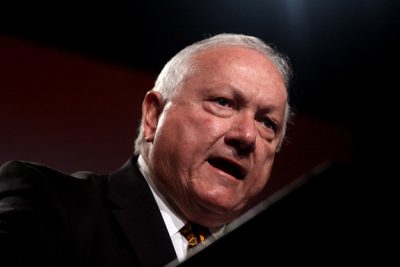
SB 1070 author, state Sen. Russell Pearce, also authored the latest string of anti-immigrant measures which were rejected last week . Photo by Gage Skidmore. Last week, Arizona’s business community worked with state Senators to kill an omnibus package of anti-immigrant bills—bills which included provisions to limit citizenship to the U.S. born children of immigrants and would have teachers and medical professionals checking people’s papers. While the content of these bills seemed like a draconian stretch, many thought if any state was going to pass such measures, it would be Arizona. But common sense prevailed when these anti-immigrant bills were overcome by sensible voices asking the right questions—are these bills economically or politically feasible for our state? The question now is whether other states will again take Arizona’s cue on immigration. Read More

Businesses Warn State Lawmakers That Immigration Legislation Will Break the Bank
As many state legislative sessions come to a close, lawmakers are giving serious thought about proceeding with restrictive immigration legislation. Legislators in some states (Colorado, Iowa, Kentucky, Nebraska, New Hampshire, South Dakota, Virginia, Wyoming, and most recently, Arizona) have canned restrictive enforcement legislation due to prohibitive costs and push back from business and community groups while lawmakers in other states (Kansas, Indiana, and Oklahoma) continued the debate this week. Although legislation continues to move in states like Georgia and South Carolina, one thing is certain—the fiscal consequences of these laws are real and business groups are putting their legislators on notice. Read More
All gifts are matched dollar for dollar up to $75,000
No one should face the immigration system alone