State and Local

Alabama’s Anti-Immigrant Law Fosters Anti-Latino Discrimination
According to a new report from the National Immigration Law Center, anti-Latino discrimination is alive and well in Alabama, and has gotten a seal of approval from the governor and the state legislature. HB 56, the state’s increasingly infamous anti-immigrant law, went into effect on June 9, 2011, and has since inspired all manner of bias aimed at Latino residents of the state. Stories abound of police pulling over and harassing Latino drivers for no justifiable reason; cashiers demanding proof of legal status before they will take the money of Latino customers; white shoppers telling brown-skinned shoppers to “go back to Mexico.” In short, more and more self-appointed defenders of the nation’s immigration laws are degrading and dehumanizing their fellow Alabamans. In the process, they are dehumanizing themselves as well. Read More

California TRUST Act Awaits Governor’s Signature
The California TRUST Act (AB 1081) has now passed both houses of the state’s legislature and is awaiting Governor Jerry Brown’s signature. Passage of the TRUST Act would be an important step toward mitigating the harmful impact of the Secure Communities Program (S-Comm). Immigrant advocates from across the country are calling on Gov. Brown to sign the bill into law. Read More
Why States Should Grant DACA Beneficiaries Driver’s Licenses
In the early 2000s, one of the ways states attempted to control unauthorized immigration was by limiting immigrant eligibility for driver’s licenses and state-issued identification documents. The arguments for and against extending eligibility for driver’s licenses to undocumented immigrants takes a new twist with the Deferred Action for Childhood Arrivals (DACA) program. Because those who receive deferred action will also receive work authorization, it seems only logical that they should have access to driver’s licenses, like many other people who have permission to remain in the country. But some are opposing extending licenses to this group, ignoring the fact that both safety and security argue in favor of generous licensing policies. Read More

Alabama Ruling Yet Another Rebuke to State Immigration Laws
As with the Supreme Court’s recent opinion on Arizona SB 1070, initial media coverage portrayed the (technically) mixed rulings on the Alabama and Georgia immigration laws as a split decision. But do not be fooled: yesterday’s opinions from the U.S. Court of Appeals for the Eleventh Circuit represent a sweeping win for the immigrants’ rights movement and a crushing blow to the legal crusade led by Kris Kobach. While yesterday’s victory was not unqualified, the provisions struck down by the Eleventh Circuit were far more significant than those that were upheld. Read More

Can Deferred Action Beneficiaries Get Driver’s Licenses?
As the Deferred Action for Childhood Arrivals (DACA) initiative begins accepting applications this week, many are wondering whether beneficiaries of the program will be eligible to obtain a state driver’s license. At this point the answer is: it depends. Read More

States Apply Brakes on Immigration Legislation in 2012
The National Conference on State Legislatures (NCSL) released its annual review of immigration legislation moving in statehouses around the country. NCSL found a significant, 40% decrease in the introduction of immigration legislation and a 20% decrease in states enacting immigration-related laws when compared to 2011. This decline is the first in years, and is reportedly due to two factors: lawmakers being too busy dealing with budget issues and redistricting, and waiting to see how the Supreme Court would rule in Arizona v. United States. Read More
What the Show Me State Shows Us About Immigration
According to data released by the Immigration Policy Center, there are approximately 6,500 young people in Missouri who may benefit from President Obama’s plan to grant deferred action to DREAM eligible youth. This isn’t a huge amount in the grand scheme of things, as Missouri ranks 31st in the country with respect to the number of youth eligible for this new program. And because these numbers roughly parallel distribution of undocumented people around the country, if you are going solely by the numbers, Missouri shouldn’t be a big player in the debate over immigration, especially unauthorized immigration. But the numbers don’t tell the full story when it comes to the importance of the issue to the people of a state, and the importance of a state to the way the immigration debate plays out nationally. Looking at it from other perspectives, Missouri matters a lot. Read More
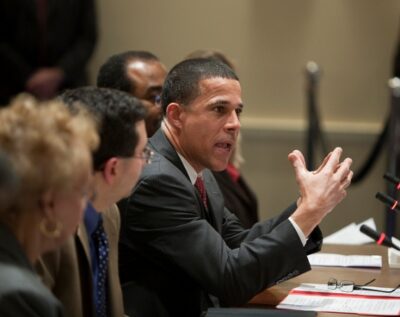
Lieutenant Governor Makes Plea for Maryland DREAM Act
At the end of its 2011 legislative session, Maryland lawmakers passed a bill that would allow certain undocumented students to pay in-state tuition rates at Maryland community colleges, joining 12 other states with similar laws. Now, however, opponents of the law have gathered enough signatures to suspend the law and force a referendum come November. Maryland’s Lieutenant Governor Anthony Brown, an advocate for affordable higher education, responded with a plea to voters to consider the contributions of these students and the value of education for all Maryland residents. Meanwhile, lawmakers in other states like Ohio and New Jersey are considering legislation that makes higher education more affordable to all its residents. Read More

New Injunction Sought in Challenge to Arizona SB 1070
Late Tuesday night, opponents of Arizona SB 1070 filed new papers in court seeking to block Section 2(B) from taking effect, arguing that state legislators were driven by anti-Latino bias and that the provision will inevitably result in constitutional violations. The motion, filed by civil rights groups, cited numerous previously undisclosed emails from former State Sen. Russell Pearce, the main sponsor of SB 1070, containing inflammatory comments about Mexico and unauthorized immigrants. The filing, submitted in federal district court in Phoenix, also sought an injunction against a separate provision of SB 1070 that attorneys argue is invalid under the Supreme Court’s recent decision in Arizona v. United States. Read More
Voter ID Laws Tackle Non-Existent Problem of Immigrant Vote Fraud
It is election season and voter-fraud hysteria is in the air. A raft of restrictive voter ID legislation from coast to coast is aimed primarily at one imaginary problem: fraudulent voting by immigrants who are not U.S. citizens. Supporters of these laws like to pretend that hordes of non-citizens are stampeding into voting booths and illegally changing the outcome of critical elections. But the reality is that voter ID laws have little to do with the exceedingly rare occurrence of illegal voting by immigrants, or any other kind of voter fraud. These are laws designed to disenfranchise racial and ethnic minorities, the poor, and other social groups that might be inclined to vote for the “wrong” candidates. In other words, voter ID laws are meant to limit democracy, not protect it. Read More
All gifts are matched dollar for dollar up to $75,000
No one should face the immigration system alone