Immigration Enforcement

Clearing the Air on Immigrants, the Military, and Deferred Action
President Obama’s June 15 announcement on deferred action for DREAMers raised a number of questions about what it means and how it will be administered. One of the biggest questions is regarding military service. According to the DHS memo, among those eligible to be granted deferred action are an individual who is an “honorably discharged veteran of the Coast Guard or Armed Forces of the United States.” Then, during his speech to NALEO, GOP presidential candidate Mitt Romney stated that he would support a path to legal residency for “those who have risked their lives in defense of America.” The language of the DHS memo compounded by Romney’s remarks led some to believe that undocumented immigrants could serve in the military and therefore qualify for deferred action or some sort of legalization program. But this is not the case. Read More
DHS’s NSEERS Program, While Inactive, Continues to Discriminate
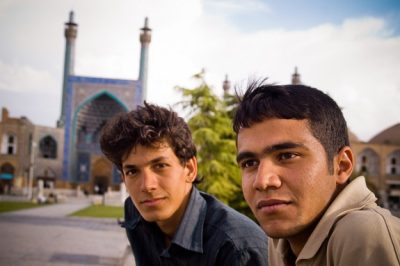
For a long time after 9/11, immigration reform was only discussed as a national security issue, and many policies were put in place aimed at stopping terrorists from entering the country. Unfortunately, some of these policies—such as the National Security Entry-Exit Registration System (NSEERS) program—targeted particular ethnic groups, promoted profiling, and resulted in discrimination and civil rights violations. In recent years, the Obama administration has made efforts to end the NSEERS program, but NSEERS still exists and the impact of these policies is still being felt in immigrant communities. In fact, the Rights Working Group, a coalition of civil rights organizations, recently released a report, The NSEERS Effect: A Decade of Racial Profiling, Fear, and Secrecy, which analyzes the continuing impact of this post-9/11 policy. Read More
In Arizona Case, Supreme Court Affirms Legality of Prosecutorial Discretion
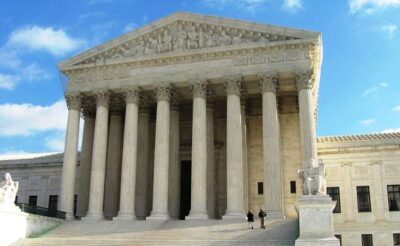
The Supreme Court dealt a blow to the restrictionist movement on Monday by striking down three provisions of Arizona SB 1070 and leaving a fourth vulnerable to future challenge. But in a lesser noticed development, the Court also undercut the arguments of critics who contend the President violated the Constitution by recently directing his administration not to deport otherwise removable immigrants who were brought to the country as children. As the majority opinion confirmed—and not even Justice Scalia denied—the President’s authority to set enforcement priorities is a valid and important aspect of the immigration system. Read More

DHS Rescinds Part of Controversial 287(g) Program in Arizona
The Obama administration suspended part of its controversial 287(g) program in Arizona this week following the Supreme Court’s ruling in Arizona v. United States. DHS announced that it was ending its “287(g) task force agreements” in Arizona —agreements which deputize certain local police to enforce immigration laws. Other state immigration programs, however, like Secure Communities and the 287(g) jail agreements (which allow deputized arresting officers to enforce immigration laws in jails), will remain in effect. Read More

Does the Supreme Court Think Most Immigrants are Criminals?
Even as the Supreme Court struck down three provisions of Arizona’s anti-immigrant law (SB 1070), the Justices appeared to embrace a major falsehood of nativist ideology: that immigrants are more likely to be criminals than the native-born. On page six of the majority opinion, the Court maintains that unauthorized immigrants are “reported to be responsible for a disproportionate share of serious crime” in Arizona’s Maricopa County. The source cited for this bold statement is a 2009 report from the Center for Immigration Studies (CIS)—a deeply flawed report which attempts to overturn a century’s worth of research demonstrating that immigrants are less likely than the native-born to commit violent crimes or end up behind bars. Read More
Supreme Court Issues Mixed Decision on Arizona SB 1070
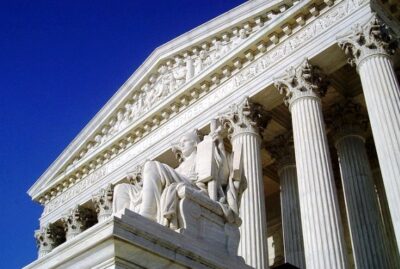
The Supreme Court issued a mixed ruling on Monday in the Obama administration’s challenge to Arizona SB 1070. By a 5-3 margin, the Justices upheld the injunction against provisions of the law that authorize police to arrest immigrants suspected of committing removable offenses (Section 6), and that impose penalties under state law for immigrants who fail to carry “registration” papers (Section 3) or attempt to work without federal authorization (Section 5). Although the Court allowed the implementation of the provision of SB 1070 requiring police to determine the immigration status of people in custody “reasonable suspicion” exists that they are in the country unlawfully (Section 2(B)), it left open the door to future legal challenges. Read More
In Speech, Romney Provides Few Details on Immigration Policy
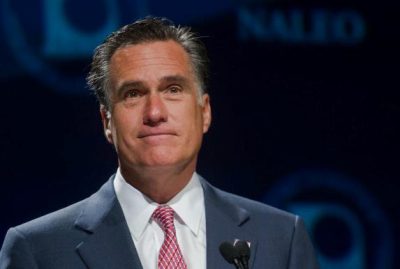
On Thursday, Mitt Romney gave a much-anticipated speech in which he was expected to address whether—as President—he would reverse the new Obama administration policy toward immigrant youths who would qualify for the DREAM Act. The answer? It’s still unclear. Despite adopting a noticeably softer tone toward undocumented immigrants, Romney again failed to say whether he would overturn the policy and provided few other details as to how he would tackle the most intractable problem of the immigration debate. Read More

DHS Creates Obstacles for Small Businesses Seeking High-Skilled Immigrants
Politicians love small businesses. They also love high-skilled workers. One might assume, then, that entrepreneurs and start-up companies would have a relatively easy time hiring immigrant professionals through the H-1B program. Not so. In fact, a recently released memo confirms that far from receiving preferential treatment, small businesses are singled out for heightened fraud investigations by the Department of Homeland Security (DHS). Read More
President Obama Issued a Directive, Not an “Executive Order” or “New Law”
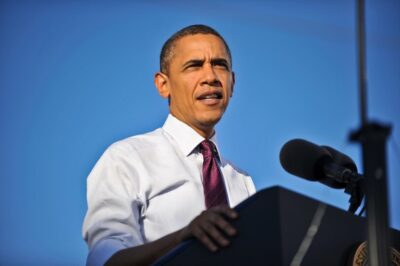
Immigration hardliners were predictably quick to criticize President Obama’s recent announcement that DHS will use discretion to halt the deportations of eligible immigrant youth. They wasted no time hurling some base-stirring claims—“administrative amnesty,” “end-runs around Congress,” “executive fiat.” However, while folks are free to criticize the President, they should at least strive for accuracy. The President did not create a new law, sign an executive order or grant anyone citizenship or amnesty, he merely directed DHS to exercise discretion to grant deferred action to qualified immigrant youth—an action that is well within his power as President. Read More
A Breakdown of DHS’s Deferred Action for DREAMers
While today’s headlines assess the significance of President Obama’s deferred action announcement on Friday, many are still sorting through the news to get answers to basic questions about who is covered under the new program. Prior to President Obama’s statement that DHS would halt the deportation of immigrant youth who met criteria similar to the DREAM Act, DHS Secretary Janet Napolitano released a memo and a set of questions and answers that outline eligibility and a basic timeline for implementing the new directive . Read More
All gifts are matched dollar for dollar
No one should face the immigration system alone