Immigration Reform
The last time Congress updated our legal immigration system was November 1990, one month before the World Wide Web went online. We are long overdue for comprehensive immigration reform.
Through immigration reform, we can provide noncitizens with a system of justice that provides due process of law and a meaningful opportunity to be heard. Because it can be a contentious and wide-ranging issue, we aim to provide advocates with facts and work to move bipartisan solutions forward. Read more about topics like legalization for undocumented immigrants and border security below.
Why Should We Support a Legalization Program for Unauthorized Immigrants?
As the immigration debate heats up in Congress, the central question for much of the American public will be whether or not to create a pathway to legal status for the 11 million unauthorized immigrants now living in the United States. In formulating an answer to that question, however, it is necessary to ask two others. First, exactly who are the unauthorized immigrants who would be attaining legal status? Secondly, what would the impact be on the U.S. economy were so many unauthorized immigrants to be legalized? The answer to the first question is relatively simple: unauthorized immigrants are just like everybody else; they are adults and children, mothers and fathers, homeowners and churchgoers. The short answer to the second question is that legalization would be a stimulus to the U.S. economy. Workers with legal status earn higher wages, and these extra earnings generate more tax revenue for federal, state, and local governments, as well as more consumer spending, which sustains more jobs in U.S. businesses. Read More
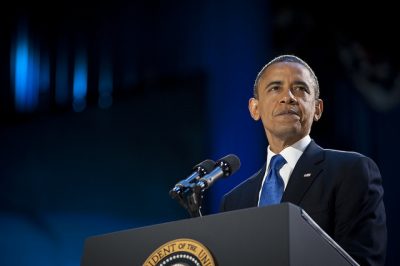
President Lays Out His Vision For Immigration Reform
After eight Republican and Democratic senators yesterday released their framework for comprehensive immigration reform, President Obama laid out his administration’s vision today of what he thinks should be included in the bill to overhaul the nation’s immigration system. He praised the bipartisan principles, which mirror the White House’s 2011 blueprint for immigration reform. “At this moment, it looks like there’s a genuine desire to get this done soon,” he said in his speech from Nevada. “And that’s very encouraging.” Read More

President Obama Provides Moral Imperative for Immigration Reform
Washington D.C. – Today, in Las Vegas, President Obama urged the country to join him in moving forward on immigration reform, offering a proposal that addresses the pressing economic, cultural, and moral crisis facing the nation over immigration. In doing so, he brought policies and principles down to one very… Read More

Senators Unveil Framework for Effective Immigration Reform
Eight Senators today released a “Bipartisan Framework for Comprehensive Immigration Reform” which proposes an overhaul of our legal immigration system while expanding border security measures and hardening current employment verification procedures. Most notably, the proposal would give unauthorized immigrants already in the country a chance to earn U.S. citizenship. Although the framework is only a very rough outline of what comprehensive immigration reform legislation might look like, the principles it espouses constitute an excellent starting point for the legislative negotiations that will now being in earnest. The Senators involved in the negotiations—Democrats Chuck Schumer (NY), Dick Durbin (IL), Bob Menendez (NJ), and Michael Bennet (CO); and Republicans John McCain (AZ), Marco Rubio (FL), Lindsey Graham (SC), and Jeff Flake (AZ)—outlined four “legislative pillars” for immigration reform: Read More
The American Immigration Council Welcomes Senate’s Bipartisan Principles on Immigration Reform
Washington D.C. – Today, a bipartisan group of eight Senators unveiled a new set of comprehensive immigration reform principles, adding to the growing body of evidence that legislation to fix our nation’s broken immigration system is not only necessary, but possible. Although the framework offers only a very rough… Read More

Senate’s Symbolic Bill Rings Opening Bell on Immigration Reform
This week, the White House revealed that President Obama will lay out a proposal for immigration reform at a speech in Nevada next week. The visit to the home state of Senate Majority Leader Harry Reid may reflect the strong support Reid and Nevada Latinos have given to Obama. It also follows Senator Reid’s clear message this week of his ongoing intent to press for immigration reform by putting it at the top of the Senate legislative priorities list for the 113th Congress. Although symbolic, the first bill introduced in the Senate this year, S. 1, is a bill to reform America’s broken immigration system or “The Immigration Reform that Works for America’s Future Act.” It contains ten principles for reform that reflect much of the common wisdom on what is needed to create a working and productive immigration system. Now, all we need is the actual bill. Read More
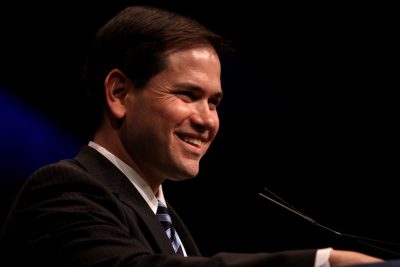
Getting to a Citizenship Consensus
Immigration reform is enjoying a resurgence of support in both parties, with groups from a variety of backgrounds coming out in favor of a range of changes to our current system. The most striking change may be the melting of opposition to a pathway to citizenship for the 11 million undocumented immigrants in the U.S. But acceding to citizenship and creating a system that will actually allow people to get there are two different things. Read More

Business and Religious Leaders Come Together to Champion Immigration Reform
Immigration reform is an undertaking of such importance that it should transcend partisanship. That was the fundamental message of the business and religious leaders who gathered together yesterday at a press conference organized by the National Immigration Forum. The press conference was part of a campaign called Forging a New Consensus on Immigrants and America, which describes itself as “a growing and diverse constituency of conservative, moderate and progressive leaders that is determined to go beyond the rhetoric and find common ground for practical solutions.” The event comes on the heels of an announcement late last week by Thomas Donohue, President of the U.S. Chamber of Commerce, that a broad coalition of business, labor, religious, law enforcement, and ethnic organizations has coalesced around the cause of immigration reform. Read More

Out of Legal Options, Alabama Files Petition at Supreme Court
Nearly five months ago, a federal appeals court in Atlanta issued a set of opinions that invalidated numerous provisions of Alabama HB 56, the most pernicious state immigration law in the country. After Alabama asked the full court to reconsider its rulings, the active judges unanimously rejected its request. Out of other legal options, the state filed a petition with the Supreme Court on Wednesday seeking to revive some (though not all) of the invalidated provisions. While the odds remain small that the Justices will take up the case, granting the petition could set up another legal showdown similar to the case over Arizona SB 1070. Read More

Immigrants Add Billions to the Arkansas Economy
A perennial question in the immigration debate is whether or not immigrants contribute more to the economy than they cost. That is, do they add more economically as workers, taxpayers, consumers, and entrepreneurs than they “consume” in public education, public healthcare, and public benefits? In some ways, this question is misleading. Education and healthcare are social investments that pay future dividends; they are not merely fiscal expenses. Nevertheless, it is a useful exercise to take the question at face value and do the math. The result, contrary to the convoluted arithmetic of anti-immigrant activists, is overwhelmingly positive. Immigrants add far more to the economy than they take away. And given the aging of the native-born population, the contributions of immigrants (and their children) will only increase over time. Read More
All gifts are matched dollar for dollar up to $75,000
No one should face the immigration system alone