State and Local

Courts, State Legislators Pull Back on Restrictive Immigration Legislation
Although several states were eager to introduce their own restrictive immigration bills following Arizona and Alabama’s harsh laws, some legislators and federal judges are now pulling back on these costly bills. A federal judge in Utah this week refused to issue a ruling on the state’s immigration law in anticipation of a Supreme Court ruling on Arizona’s law while a federal judge in Nebraska struck down part of a restrictive city ordinance, finding a housing provision to be “discriminatory.” Meanwhile, legislators in Kansas and Virginia also failed to move forward on a series of restrictive immigration bills this week, due in part, as one article suggests, to the “political blowback to similar measures that have been enacted in states such as Arizona, Alabama and Georgia.” Read More

Kris Kobach, a Romney Immigration Advisor, Puts Number on Self-Deportation Plan
A recent Salon.com article quotes long-time immigration restrictionist Kris Kobach putting a figure on his self-deportation policy for the first time. “If we had a true nationwide policy of self-deportation,” Kobach said, “I believe we would see our illegal alien population cut in half at a minimum very quickly.” Salon.com did the math, finding that “with an estimated 11 million undocumented residents in the country, Kobach is hoping to force 5.5 million people to leave the country by 2016.” Kobach insists, however, that he does not want “to do it at gunpoint.” Instead, he said undocumented residents “should go home on their own volition, under their own will, pick their own day, get their things in order and leave. That’s a more humane way.” Read More
Kris Kobach, a Romney Immigration Advisor, Puts Number on Self-Deportation Plan
A recent Salon.com article quotes long-time immigration restrictionist Kris Kobach putting a figure on his self-deportation policy for the first time. “If we had a true nationwide policy of self-deportation,” Kobach said, “I believe we would see our illegal alien population cut in half at a minimum very quickly.” Salon.com did the math, finding that “with an estimated 11 million undocumented residents in the country, Kobach is hoping to force 5.5 million people to leave the country by 2016.” Kobach insists, however, that he does not want “to do it at gunpoint.” Instead, he said undocumented residents “should go home on their own volition, under their own will, pick their own day, get their things in order and leave. That’s a more humane way.” Read More

New Mexico Governor Fails to Repeal State Driver’s License Law Yet Again
Yesterday, the New Mexico Legislature ended its 2012 session, leaving intact the 2003 state law that allows driver’s licenses to be issued to individuals regardless of immigration status. This marks the third unsuccessful attempt by Republican Governor Susana Martinez to repeal the state’s driver’s license law. HB103, the bill backed by Martinez, passed the House earlier this month but failed to make it through the Senate. An alternative Senate bill, SB235, which would have tightened residency requirements but not repealed the 2003 law, passed the Senate. Governor Martinez, however, vowed to veto that Senate bill. New Mexico and Washington are the only states that issue driver’s licenses regardless of immigration status (Utah issues a driving certificate that can’t be used for identification). Read More
At Supreme Court, Arizona Gets Help from the Usual Suspects
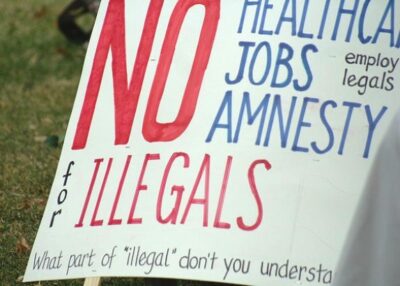
Following the filing last week of Arizona’s brief defending SB 1070, the Supreme Court has received a barrage of briefs supporting the notorious immigration law from a none-too-surprising array of suspects. As might be expected, the arguments range from the predictable (that the Obama Administration fails to enforce the immigration laws) to the provocative (that states can carry out all immigration functions short of deportation) to the preposterous (that the Constitution allows Arizona to wage war against an “invasion” of immigrants). Of course, while neither Arizona nor their lawyers can be held responsible for the arguments of outside organizations, the briefs still offer a revealing look at the identities and motivations of SB 1070’s most ardent supporters. Read More
Report by Maryland State Panel Details Positive Approach to Immigration
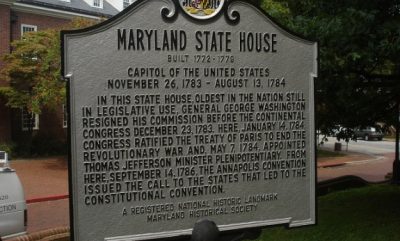
A new report from the Commission to Study the Impact of Immigrants in Maryland concludes that immigrants bring a plethora of economic, social, and cultural contributions to the state of Maryland. The commission, which was created by the Maryland General Assembly, also warns against attempts to deal with unauthorized immigration through enforcement-only policies that needlessly sow fear and distrust in immigrant communities. Rather, the commission admonishes, “Maryland must remain welcoming to immigrants, and the state and its local jurisdictions should further strengthen its efforts to integrate immigrants into the economy and the community.” Read More

Tuition Equity Bills Continue to Build Momentum in State Legislatures
By ALVIN MELATHE AND SUMAN RAGHUNATHAN, PROGRESSIVE STATES NETWORK While federal efforts to fix our broken immigration system remain on hold, support is growing among state lawmakers for common-sense, proactive approaches that welcome immigrants and expand opportunity for all, both immigrant and native-born. Across the country, a growing and diverse number of forward-thinking state legislators are turning away from unconstitutional, divisive, and economically devastating approaches taken by states such as Arizona and Alabama. Instead they are advancing inventive policies that make economic sense for states’ bottom lines and uphold their reputations. One such approach, tuition equity, continues to gain political and popular support and build momentum in statehouses across the country. Read More
In Fight Over SB 1070, Arizona Makes an All-Too-Familiar Case to the Supreme Court
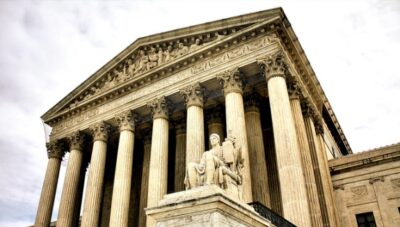
The Supreme Court case involving Arizona SB 1070 has officially entered the home stretch. On Friday, the Justices announced that oral arguments will take place on the fourth Wednesday in April, making it the final case to be heard this term. Yesterday, Arizona filed its much-anticipated brief at the Supreme Court, laying out its legal defense of the four provisions currently blocked by a preliminary injunction. To make its case to the Court, Arizona retained renowned attorney Paul Clement, a former Solicitor General who is simultaneously handling the legal challenge to the Affordable Care Act. But while the state may have brought in new lawyers, much of its brief reads like an all-too-familiar “study” from an anti-immigration organization. Read More

New Report Examines Dire Consequences of “Attrition through Enforcement” Immigration Strategy
Federal immigration enforcement resources have increased significantly in recent years, as have the number of deportations. Meanwhile, states have passed harsh immigration laws intended to crack down on unauthorized immigrants. Presidential candidate Mitt Romney has announced that he supports a policy of “self-deportation.” What do these things have in common? The belief that making daily life miserable for undocumented immigrants will result in “self-deportation”—or “attrition through enforcement.” A new paper today out of the Immigration Policy Center connects the dots between the strategy of “attrition through deportation” and federal and state anti-immigrant proposals and explains how attrition through enforcement has gone from being a catchy phrase coined by immigration restrictionists to a frightening reality in many parts of the U.S. Read More

More States Introduce Costly Immigration Enforcement Bills in 2012
Despite the devastating consequences of state immigration laws in Alabama and Arizona, legislators in other states have introduced similar enforcement bills this year. Legislators in Mississippi, Missouri, Tennessee and Virginia introduced an array of costly immigration enforcement bills in their 2012 legislative sessions—some which are modeled on Arizona’s SB 1070. While study after study continues to document how these extreme state laws are costing state economies, disrupting entire industries and driving communities further underground, state legislators clearly aren’t getting the message. Read More
All gifts are matched dollar for dollar up to $75,000
No one should face the immigration system alone