Department of Justice

Federal Judge Denies DOJ’s Request to Stay Alabama’s Immigration Law
Today, U.S. District Judge Sharon Blackburn denied the Department of Justice’s (DOJ) request to stay her previous ruling last week which kept major portions of Alabama’s restrictive immigration law, HB 56, intact. Following the judge’s ruling, the DOJ requested a stay of the law pending… Read More

What You Should Know About Initial Rulings on Alabama’s Immigration Law
Yesterday’s initial rulings from Judge Sharon Blackburn over Alabama’s new anti-immigrant legislation are disturbing and disappointing on many fronts. Absent a reversal of her decision based on an emergency appeal, many provisions of the law that mirror those struck down in every other jurisdiction will go into effect. If so, everyone in Alabama will pay the price of the law’s implementation—and there can be no doubt that residents of Alabama with dark skin, a foreign sounding name, or an accent will face more questions, intrusions, and humiliations. From a legal perspective, however, declarations of a “victory” for Alabama by media outlets and anti-immigrants’ rights groups are premature. The truth is much more complicated. Read More
Federal Judge Rules to Keeps Key Provisions of Alabama’s Restrictive Immigration Law
Today, U.S. District Judge Sharon Blackburn ruled to keep many of the key provisions in HB 56, Alabama’s restrictive immigration law recently challenged by the Department of Justice (DOJ) and civil and immigrant rights groups. While Judge Blackburn ruled to enjoin some provisions of HB 56, she found that the DOJ and civil and immigrant rights groups did not meet “the requirements for a preliminary injunction” in its claim that major provisions—such as the section requiring schools to determine the immigration status of students’ and their parents’—are preempted by federal law. Signed by Governor Robert Bentley in June, HB 56 was challenged by civil rights groups, religious leaders and the DOJ on the basis that the law interferes with the federal enforcement of immigration laws and places undue burdens on local schools and federal agencies. Read More

Next Stop, Napolitano: DHS Committee Approves Task Force Recommendations on Secure Communities
Last week, a task force created to study DHS’ controversial “Secure Communities” initiative issued a report listing a series of recommendations to improve the program. Among other proposals, the task force recommended that federal authorities standardize the use of prosecutorial discretion around the country, make the program more transparent, and decline to initiate deportation proceedings against immigrants who have not been convicted of serious crimes or otherwise pose a threat to public safety. As of yesterday, those recommendations are one step closer actual implementation as the Homeland Security Advisory Council (HSAC) voted to approve the task force’s findings and submit them for further consideration to DHS leadership, including Secretary Janet Napolitano. While HSAC agreed (almost) unanimously to submit the recommendations to DHS, the committee was careful to characterize the findings as a good first step rather than a cure to problems with Secure Communities. Read More

President Obama’s Very Legal Move on Immigration
DHS’s recent announcement on enforcement priorities suggests that the agency, along with the Department of Justice, is serious about trying to target those persons who pose a threat to public safety. Unfortunately, there has been little official communication from either agency about the initiatives underway to review current immigration court cases or to issue broader guidance within DHS on prosecutorial discretion, both follow ups to guidelines issued in a June memo from ICE Director John Morton. To fill the void, immigration advocacy groups have attempted to explain what these initiatives are not: NOT an amnesty, NOT a blanket deferral of removal program for all DREAMERs or anyone else, and NOT an abandonment of the deportation laws. But because there has been little official guidance, Administration opponents and immigration restrictionists are doing their best to reshape the policy into all of these things and more. Read More
President Obama’s Very Legal Move on Immigration
DHS’s recent announcement on enforcement priorities suggests that the agency, along with the Department of Justice, is serious about trying to target those persons who pose a threat to public safety. Unfortunately, there has been little official communication from either agency about the initiatives underway to review current immigration court cases or to issue broader guidance within DHS on prosecutorial discretion, both follow ups to guidelines issued in a June memo from ICE Director John Morton. To fill the void, immigration advocacy groups have attempted to explain what these initiatives are not: NOT an amnesty, NOT a blanket deferral of removal program for all DREAMERs or anyone else, and NOT an abandonment of the deportation laws. But because there has been little official guidance, Administration opponents and immigration restrictionists are doing their best to reshape the policy into all of these things and more. Read More
Federal Judge Temporarily Blocks Alabama’s Immigration Law
Today, the federal judge hearing the case against Alabama’s harsh anti-immigrant law HB 56 issued a temporary order preventing the law from going into effect on September 1, 2011. The judge made no ruling on the merits of the pending motions but rather temporary blocked it to buy… Read More

Latino Leaders Defend DHS’s Announcement to Focus on High Priority Immigration Cases
Clarissa Martinez, Director of Immigration and National Campaigns at NCLR. As the dust continues to settle around the Department of Homeland Security’s (DHS) announcement last week that it will review some 300,000 pending deportation cases on a case-by-case basis as well as issue agency-wide guidance on using discretion to focus resources on high priority cases, some groups were quick to dismiss the announcement as political pandering. Predictably, restrictionist groups reacted like they always do whenever the administration does something to improve the immigration system—by screaming “amnesty” and accusing the administration of making end runs around congress. Today, however, leaders from the Latino community defended the administration’s actions as “a huge step forward” and even invited critics to come to the table with their own rational immigration policies. Read More
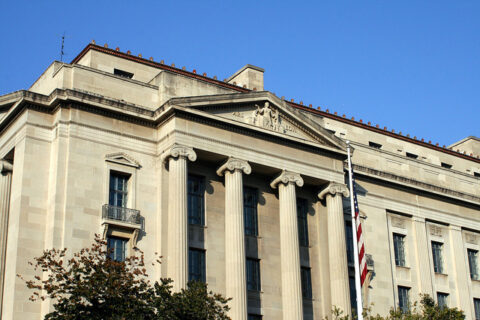
Department of Justice Seeks Injunction Against Alabama’s Anti-Immigrant Law
Yesterday, the Department of Justice (DOJ) filed yet another lawsuit against extreme state-level immigration laws—this time against Alabama’s HB 56. Already the subject of a class action lawsuit filed by the ACLU and other immigrants’ rights groups, Alabama’s HB 56 would require local law enforcement to verify the immigration status of those stopped for traffic violations, public schools to determine the immigration status of students, employers to use E-Verify and makes it a crime to knowingly rent to, transport or harbor undocumented immigrants. In its motion for a preliminary injunction, however, the DOJ argues that Alabama’s law, much like Arizona’s, interferes with the federal enforcement of immigration laws and places undue burdens on local schools and federal agencies. Alabama’s law was signed into law by Governor Robert Bentley in June and slated to take effect September 1. Read More

Federal Courts Block Key Provisions of Restrictive Immigration Laws in Georgia and Indiana
Today, a federal judge in Georgia granted a preliminary injunction against key provisions of the state’s immigration law, HB 87, which was slated to take effect Friday. Today’s decision follows another federal court decision handed down last week in Indiana which also blocked key provisions of the state’s new immigration law, SB 590. And these restrictive immigration laws aren’t the only ones caught up in legal battles. Several restrictive immigration laws are being challenged in court with more likely to follow. This week, the Department of Justice (DOJ) requested a meeting with Alabama law enforcement officials to determine whether or not to file suit against their immigration law while civil rights groups threatened to sue South Carolina if Gov. Nikki Haley signs their restrictive bill, S 20, into law. Read More
All gifts are matched dollar for dollar
No one should face the immigration system alone