Immigration Legislation

Hearing and Report Highlight Lack of Due Process in Immigration System
This week, Senator Christopher Coons of Delaware presided over a public hearing to discuss what so many of us know: the immigration courts are failing to provide a fair, efficient, and effective system of justice. Many of the concerns raised by Senator Coons, as well as some of the witnesses, during Wednesday’s Senate Judiciary Committee hearing, “Building an Immigration System Worthy of American Values,” are discussed in more detail in a report issued by the American Immigration Council this week, Two Systems of Justice: How the Immigration System Falls Short of the Ideals of Justice. Read More

Supporting STEM Education Where It’s Most Needed
Geography is a topic often lost in national-level immigration policy and the ensuing conversations around comprehensive reform. We frequently hear statistics cited at the national level. However, all too often, data at the metropolitan and local level – where the challenges and opportunities of immigration policy play out – are overlooked in policy debates. Read More

Including LGBT Immigrants in Immigration Reform Helps Protect Vulnerable Individuals
Roughly 11 million unauthorized immigrants live in the United States, and their backgrounds and stories are incredibly diverse. DREAM activists helped to change the picture of the 11 million by shining light on young people affected by our broken immigration system, while grassroots movements are highlighting the stories of families. But a new report from the Williams Institute adds another facet to this picture: an estimated 267,000 undocumented adults identify as LGBT. Even more compelling, the report highlights the other struggles LGBT individuals face when dealing with the legal immigration system. Read More

Cato Report Finds Poor Immigrants Use Fewer Public Benefits than Natives
Among the most contentious debates surrounding national immigration reform concerns immigrant use of welfare programs. Opponents of immigration routinely assert low-skilled immigrants consume more public resources than natives, thereby imposing an unfair fiscal burden on U.S. taxpayers. Read More

Recognizing Immigrant Women’s Needs in Immigration Reform
While the recent debate over reauthorization of the Violence Against Women Act and the Trafficking Victims Protection Act may have reminded the nation that there are “women’s issues” in immigration law, it doesn’t necessarily follow that most people regard immigration reform as a woman’s issue. Despite the fact that immigrant women make up a growing share of workers, entrepreneurs, single heads of households, and new voters—while remaining primary caregivers in families—the laws we craft to reform our broken immigration system have often been insensitive to the obstacles and challenges immigrant women face in applying for immigration status. Read More

State Level Immigration Legislation and the Essential Economy
We often take for granted the important role “behind the scenes” workers – farm labor, restaurant work, and home health care – play in driving our economy. That’s one of the many conclusions of a new report from the Essential Economy Council, which studied the economic and social value of industries that make up what they have coined the “essential economy.” The report identifies six industrial sectors important to our daily way of life, including: agriculture and poultry; hospitality and restaurants; light construction and landscaping; personal care and assisted living; building maintenance and facilities service; and distribution and logistics. For the state of Georgia, the essential economy is a significant component of the state’s overall economy. In particular, the essential economy contributed 12 percent ($49 billion) to Georgia’s GDP in 2010; contributed over $114 million in sales tax in 2011; employed just under one million out of 3.7 million workers in Georgia in 2011; and is present in every country in the state. Read More

Jeb Bush Backs Away From Mainstream With His Opposition To A Path To Citizenship
Former Florida Gov. Jeb Bush (R) has been a longtime supporter of comprehensive immigration reform, so it caught many off guard this week when, in his new book, Bush came out against a path to citizenship for the 11 million undocumented immigrants living in the U.S. “It is absolutely vital to the integrity of our immigration system that actions have consequences -- in this case, that those who violated the law can remain but cannot obtain the cherished fruits of citizenship," Bush argues in the book, Immigration Wars: Forging an American Solution, which was co-authored with lawyer Clint Bolick. “To do otherwise would signal once again that people who circumvent the system can still obtain the full benefits of American citizenship.” Instead, Bush and Bolick write, undocumented immigrants should not be allowed to apply for citizenship until they return to their countries of origins. Read More

Putting the White House Immigration Reform Proposal into Perspective
Over the weekend, the press reported on a leaked draft of portions of the White House’s immigration proposal, and the coverage since then has been largely a frenzied discussion of whether the leak will kill Senate negotiations. There shouldn’t be much chance of that, given the immense pressure on the Senate to not only come up with a proposal, but actually draft legislation that can be debated and voted on this year. Now that at least some of the Administration’s ideas are out in the public eye, it’s useful to treat them as what they are: basic discussion points on what might be in an eventual bill. In the long run, the draft proposal may help to encourage the constructive conversation that the Administration has sought to have on reform. Read More

Shoddy Court Process Behind the Record Number of Deportations
The Obama Administration is on record for pursuing the toughest immigration enforcement policies in U.S. history, mostly evidenced by its record numbers of deportations. These numbers speak volumes: last year, nearly 400,000 people were deported from the United States. While these numbers are shockingly high and there has been much discussion about how these actions tear families and communities apart, there has also been an under-reporting of the unfair and often expedited process that leads to the deportation of hundreds of thousands of people each year. In fact, two-thirds of the individuals removed are done so without ever seeing the inside of an immigration courtroom and are not accorded many other basic due process protections. Read More
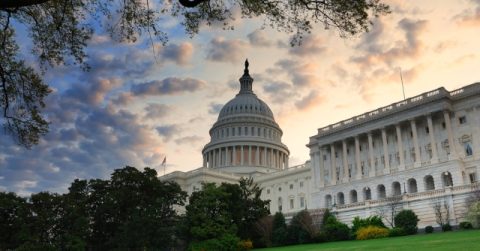
Bipartisan Signals Show Lawmakers Are Seizing The Opportunity On Immigration Reform
After more than a decade of being overshadowed by other events and political causes, there is a distinct opportunity now for Congress to reform our nation’s immigration laws. Voters signaled in the 2012 federal elections that they were tired of enforcement-only immigration policies, record-setting deportations, and the senseless pain they caused by separating families. Now, it seems that lawmakers from both sides of the aisle are coming together to figure out how to fix the broken immigration system. Read More
All gifts are matched dollar for dollar
No one should face the immigration system alone