Immigration Legislation

Can A Nation Have Too Many Smart People?
A February 8 op-ed in the New York Times entitled “America’s Genius Glut” argues that America already has too many high-tech workers, and thus does not need more scientists and engineers from abroad. It is a surprising claim that is at odds not only with the empirical evidence, but is out of touch with the dramatic shift in recent years towards a knowledge-based global economy. The United States is not actually suffering from a surplus of intelligent people, nor is it being economically drained by the presence of intelligent people who were born in other countries. In fact, the U.S. high-tech economy would not exist in its present form if not for the contributions of innovators and entrepreneurs from every corner of the globe. Despite arguments to the contrary, scientists and engineers who come to this country on H-1B visas are an integral part of that high-tech economy. Read More

States Apply Brakes on Immigration Legislation in 2012
The National Conference on State Legislatures (NCSL) released its annual review of immigration legislation moving in statehouses around the country. NCSL found a significant, 40% decrease in the introduction of immigration legislation and a 20% decrease in states enacting immigration-related laws when compared to 2011. This decline is the first in years, and is reportedly due to two factors: lawmakers being too busy dealing with budget issues and redistricting, and waiting to see how the Supreme Court would rule in Arizona v. United States. Read More
House Votes on Immigration Demonstrate Need for Bolder Executive Action
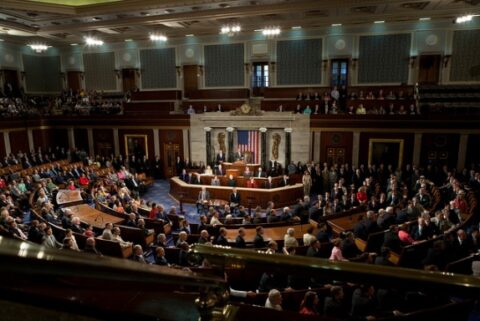
Last week, the House of Representatives passed an appropriations bill that demonstrates how out of step they are with the public on immigration. House Members passed a series of amendments designed to stop the Obama administration from pursuing humane immigration policies, voting to block funds for any prosecutorial discretion activities, including the new 3 and 10 year bar rule that would allow many applicants to remain in the United States while their applications were being processed. Other amendments would prohibit the administration from cutting 287(g) agreements, funding any alternatives to detention or the ICE Public Advocate’s Office, and even providing translation services for people with limited English proficiency. Read More

Courts, State Legislators Pull Back on Restrictive Immigration Legislation
Although several states were eager to introduce their own restrictive immigration bills following Arizona and Alabama’s harsh laws, some legislators and federal judges are now pulling back on these costly bills. A federal judge in Utah this week refused to issue a ruling on the state’s immigration law in anticipation of a Supreme Court ruling on Arizona’s law while a federal judge in Nebraska struck down part of a restrictive city ordinance, finding a housing provision to be “discriminatory.” Meanwhile, legislators in Kansas and Virginia also failed to move forward on a series of restrictive immigration bills this week, due in part, as one article suggests, to the “political blowback to similar measures that have been enacted in states such as Arizona, Alabama and Georgia.” Read More

A Small Step Toward Reform: Bipartisan Bill Seeks to Raise Per Country Immigration Caps
An immigration bill introduced by Congressmen Lamar Smith and Jason Chaffetz and supported by Democrats may actually have a chance at passing in Congress. Scheduled for a mark up this week, the bill (H.R. 3012) would make small but significant changes to the way green cards are distributed by eliminating per country numerical limits on employment-based green cards and raising the limits on family-based green cards which go to immigrants from each country. Read More
All gifts are matched dollar for dollar
No one should face the immigration system alone